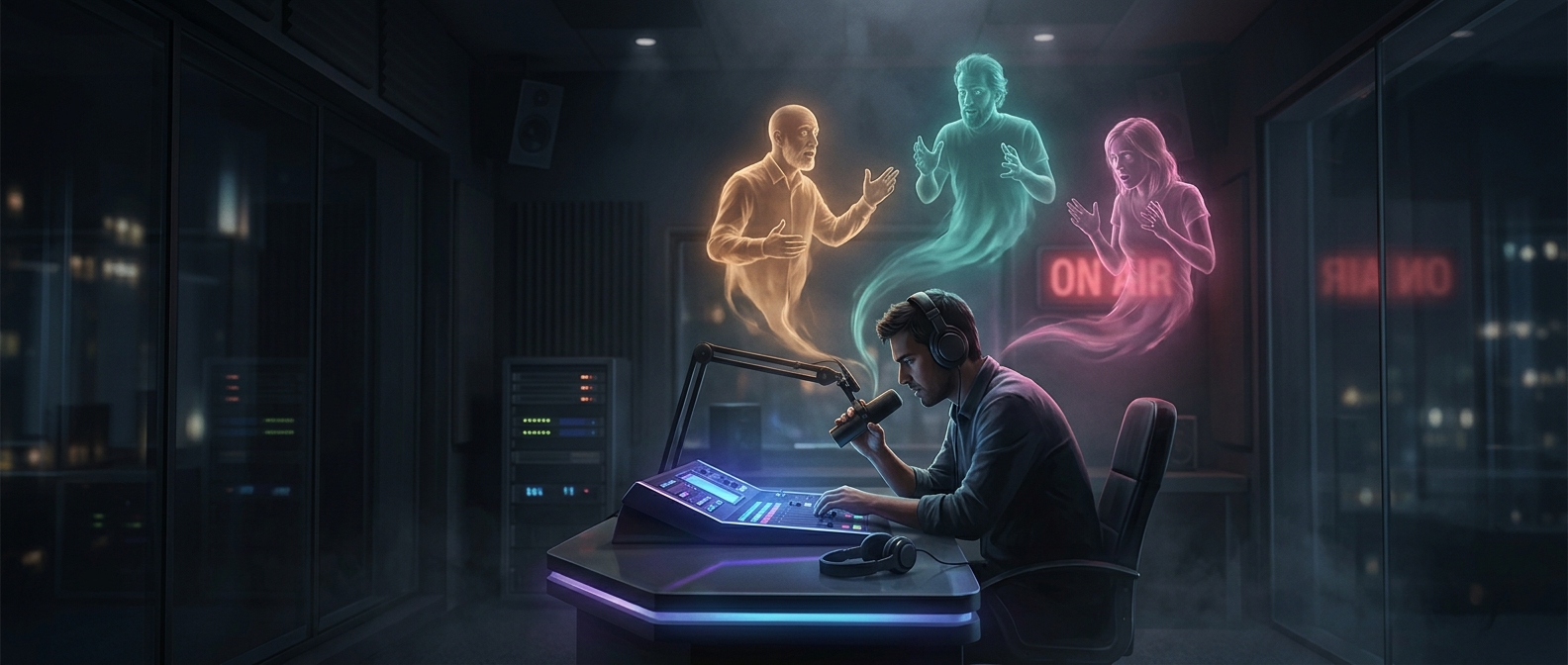
A voice can sound spontaneous without being spontaneous
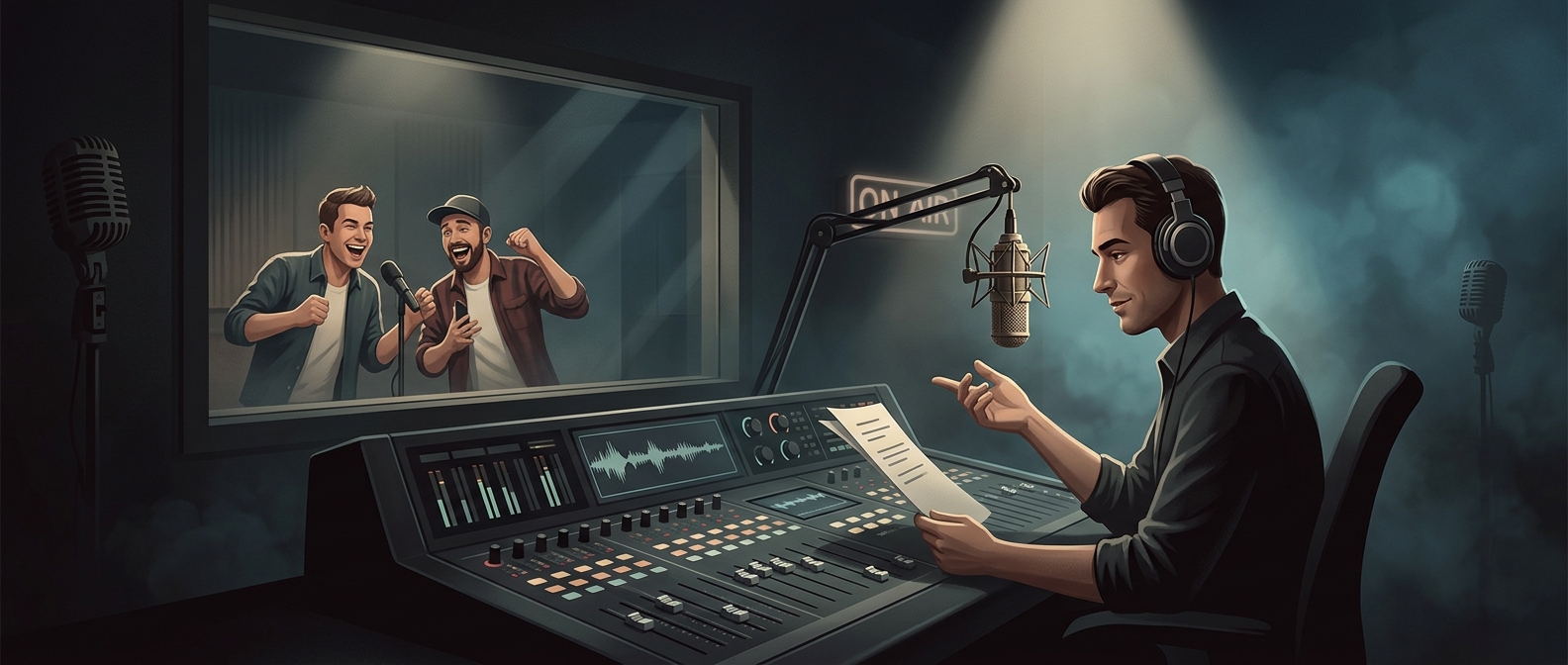
A heated caller can make a host’s show feel unpredictable: the interruption, the escalating argument, the moment the host pushes back. But those beats can be performed. A producer might arrange for someone to call in and play a disruptive character, giving the segment a conflict that is entertaining on cue rather than dependent on a real stranger’s reaction.
That does not mean every eccentric caller is an actor. It means the performance alone cannot establish who is speaking or whether the exchange was planned. A muffled microphone, a distorted phone connection, or a voice heard without a face can make the caller harder to identify—and can lend a staged bit the texture of an unscripted moment.
Why stage a caller?
Live or call-in formats need momentum, but real callers are unpredictable in less convenient ways: they may ramble, freeze, or have little to say. A planted voice can reliably deliver a setup, provoke the host, and keep the conversation moving. The host may still be improvising, even if the caller’s role was arranged in advance.
For listeners, the practical clue is not simply that a caller sounds outrageous. It is whether the segment’s timing and reactions feel unusually tidy. That can raise suspicion, but it is not proof. The entertaining argument may be real, staged, or a mixture of both—and the next-room microphone can hide the difference.