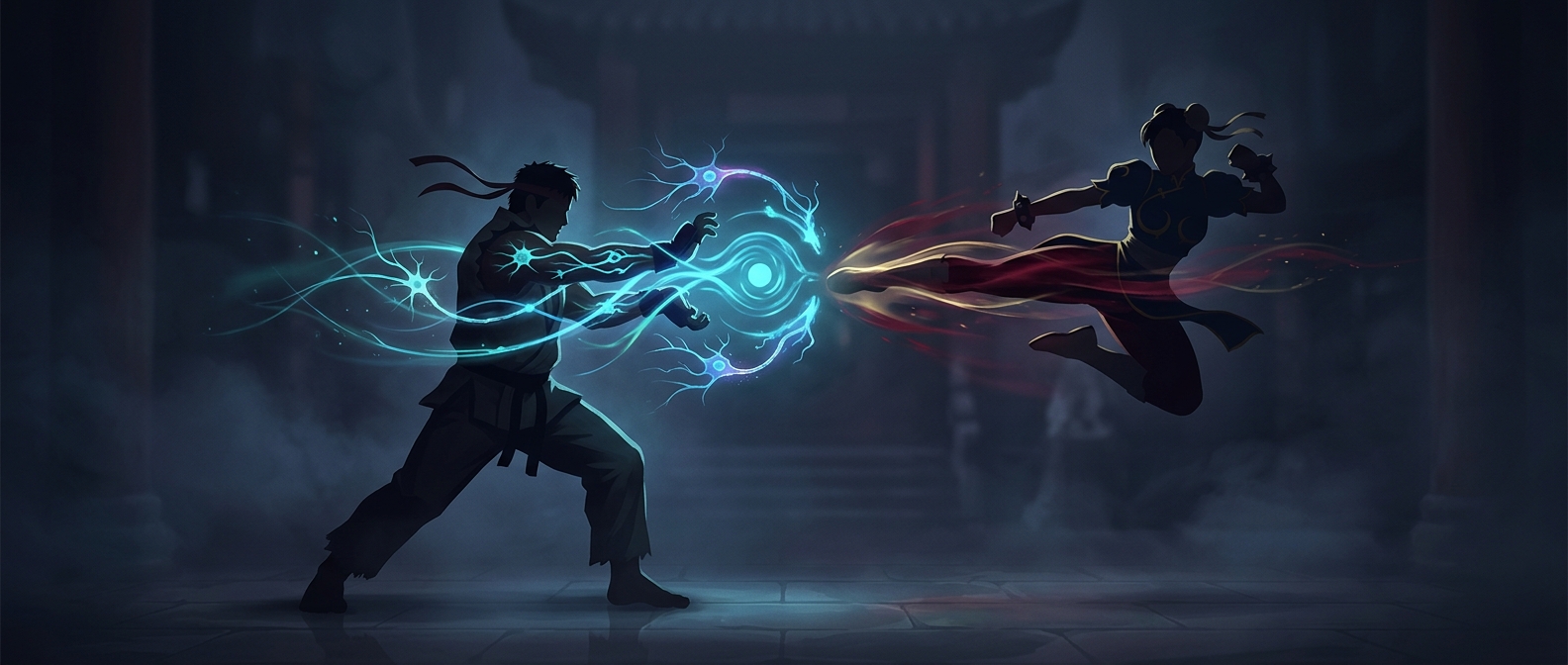
How a barrage becomes one recognizable pattern
Expertise does not necessarily make someone’s eyes or hands dramatically faster. It changes what they can recognize. A beginner may experience a rapid attack as a string of separate flashes and have to decide what each one means. A practiced player has seen related sequences many times; the opening cues can identify the whole pattern before it is over.
Psychologists call this chunking: grouping several details into a meaningful unit. A chess player may recognize a familiar arrangement of pieces rather than inspect each one independently. In a fighting game, an experienced player can recognize the rhythm and shape of a multi-hit move, then prepare for its timing as a sequence.
Recognition buys time for execution
In Street Fighter III, a parry requires a precisely timed forward input as an attack arrives. Against Chun-Li’s super move, there is little room to pause and reconsider between hits. Recognizing the move as a known pattern helps narrow the task: instead of inventing a response to each flash, the player can focus attention on the incoming rhythm and deliver the required inputs at the right moments.
That does not make the sequence automatic. The timing still has to be executed under pressure, and a mistimed input can leave the player exposed. But familiar patterns reduce the mental work competing for attention, making a difficult series of decisions more manageable. What looked to spectators like a reaction to every attack was also the product of recognition built through practice—a reminder that expertise often means seeing a complex event as a smaller, usable whole.