How a glacier turned a valley into a sea inlet
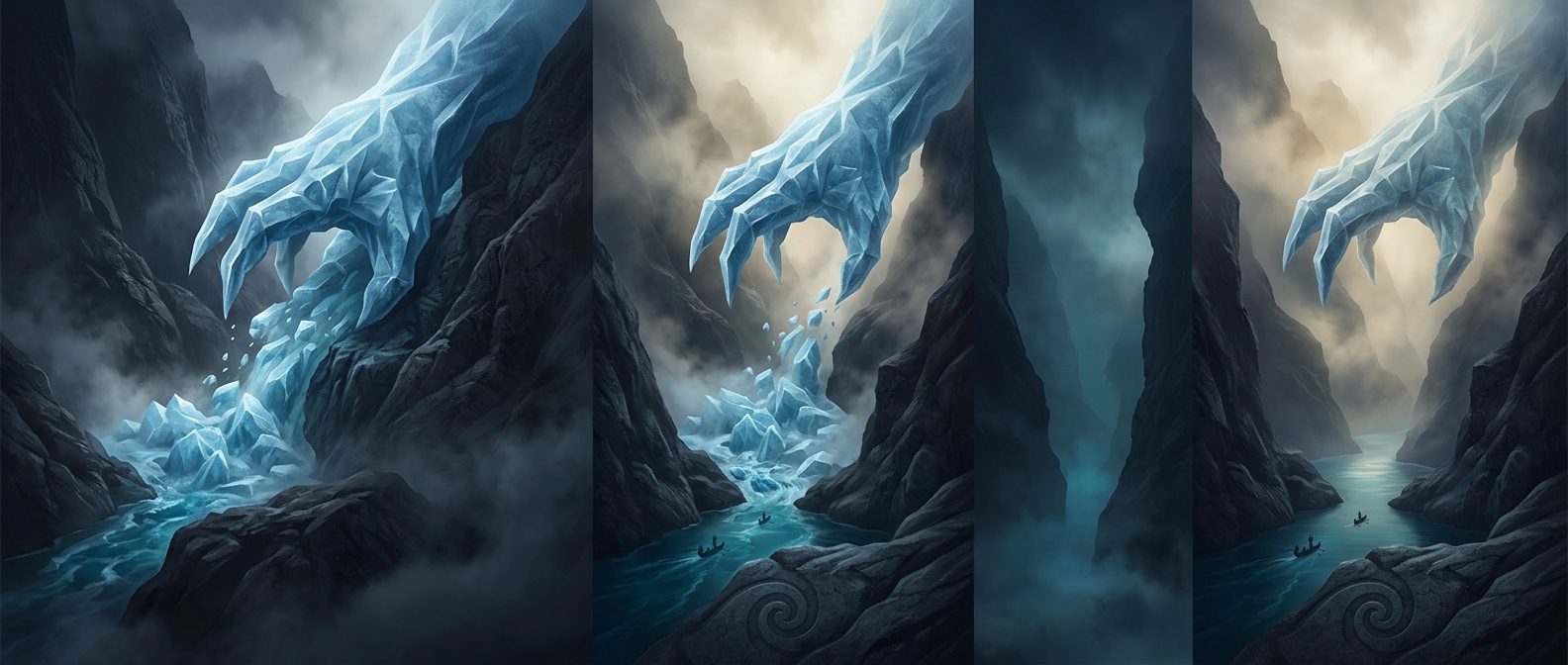
A glacier does not simply scrape the ground as it passes. Its immense weight presses ice against the valley floor and sides, while stones trapped beneath it grind and gouge the bedrock. Over many advances and retreats, this erosion widens a river-cut valley and deepens it into a broad, steep-sided trough. The shape is often described as U-shaped, unlike the narrower V-shaped valleys rivers tend to make.
When the ice that filled Milford Sound’s valley melted back, the ocean flowed into the low-lying trough. That is what makes the inlet a fiord: a glacial valley now flooded by the sea. In New Zealand, “fiord” is the usual spelling for these inlets, though Milford Sound’s name uses “Sound.”
The cliffs reveal a landscape of unequal valleys
Not every small valley was carved as deeply as the main one. Some tributary valleys were left perched high above it, and streams descending from them can plunge down the steep rock faces as waterfalls. The cliffs are therefore not just dramatic scenery; their height and shape preserve clues to how far the ice cut into the mountain landscape.
The result is a striking reversal of scale: a valley made by moving ice now carries seawater beneath walls that once stood beside a glacier. In Milford Sound, the coastline itself is a record of the landscape’s vanished ice.