Why a low fence can stop a powerful hero
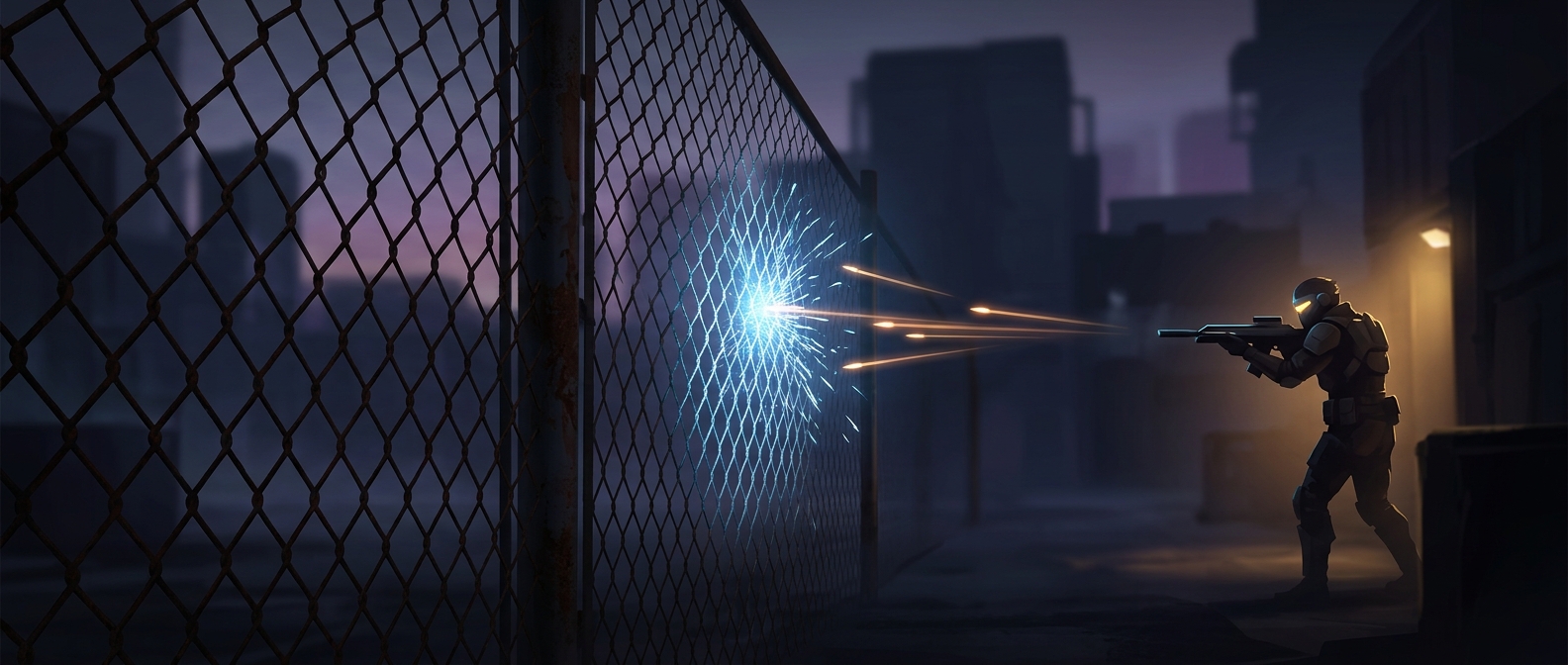
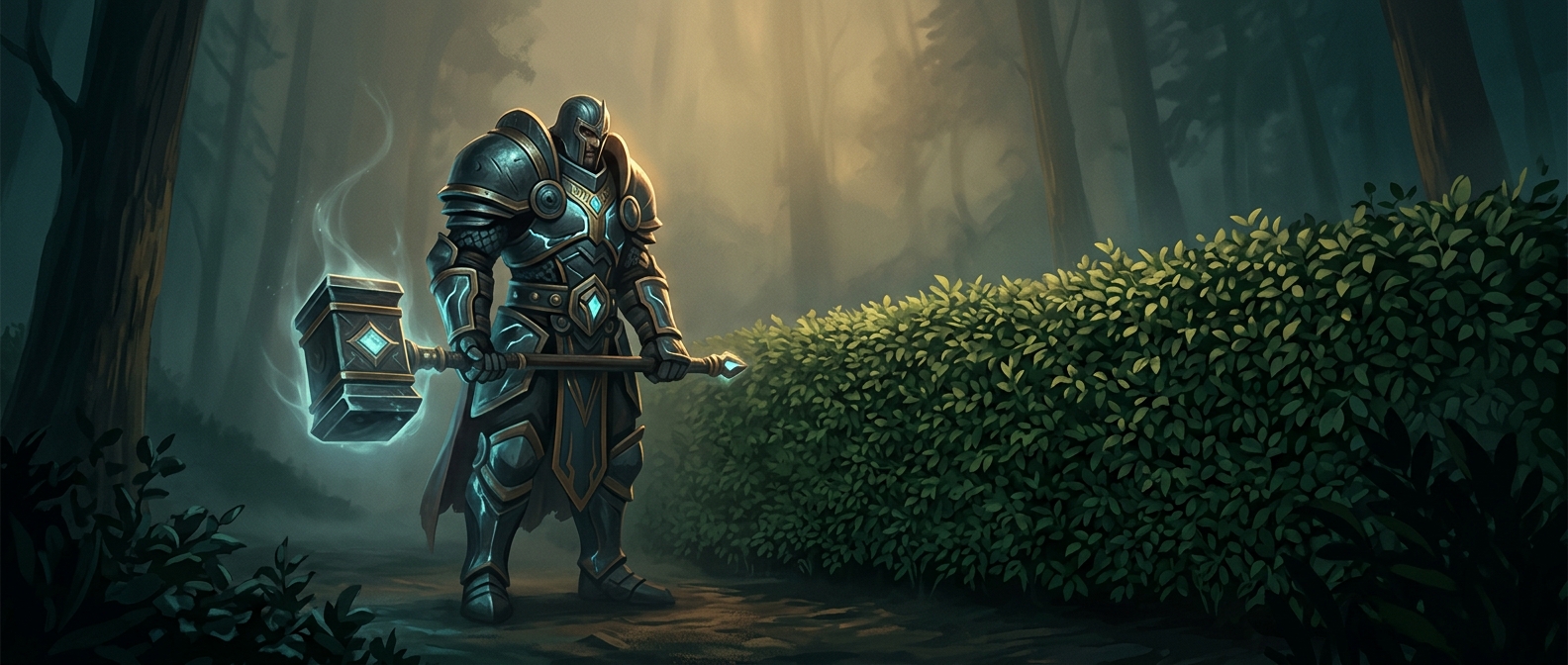
A fence that looks knee-high is not necessarily a small obstacle to the game’s movement system. The character may be controlled by an invisible collision shape—often a capsule or box—that is taller and wider than the visible body. If that shape cannot pass through the fence, the game treats it as a wall, even when the artwork suggests the hero could simply step over.
Games can allow climbing or jumping, but those actions usually need to be designed and tested separately. A step-over animation must fit the character’s movement, camera angle, and nearby terrain; the game also needs rules for when the action starts and where the character lands. Without those rules, a seemingly simple hop can leave the hero snagged on an edge or pop them through the barrier.
One small obstacle, many connected systems
The collision shape is only part of the problem. Levels may use invisible navigation maps to tell enemies or companions where they can walk. If a fence is passable for the hero but still blocks those maps—or if the maps say “open” while the collision says “closed”—characters can behave unpredictably. Designers therefore often favor a consistent boundary over a more realistic but more complicated interaction.
That choice also helps keep movement readable. When a player presses against a fence and stops, the result is predictable. If every low-looking object might be climbable, players must test each one, and the game must communicate which objects support the action. A dragon fight can be a carefully staged exception; thousands of small barriers scattered through a world are a repeated systems problem.
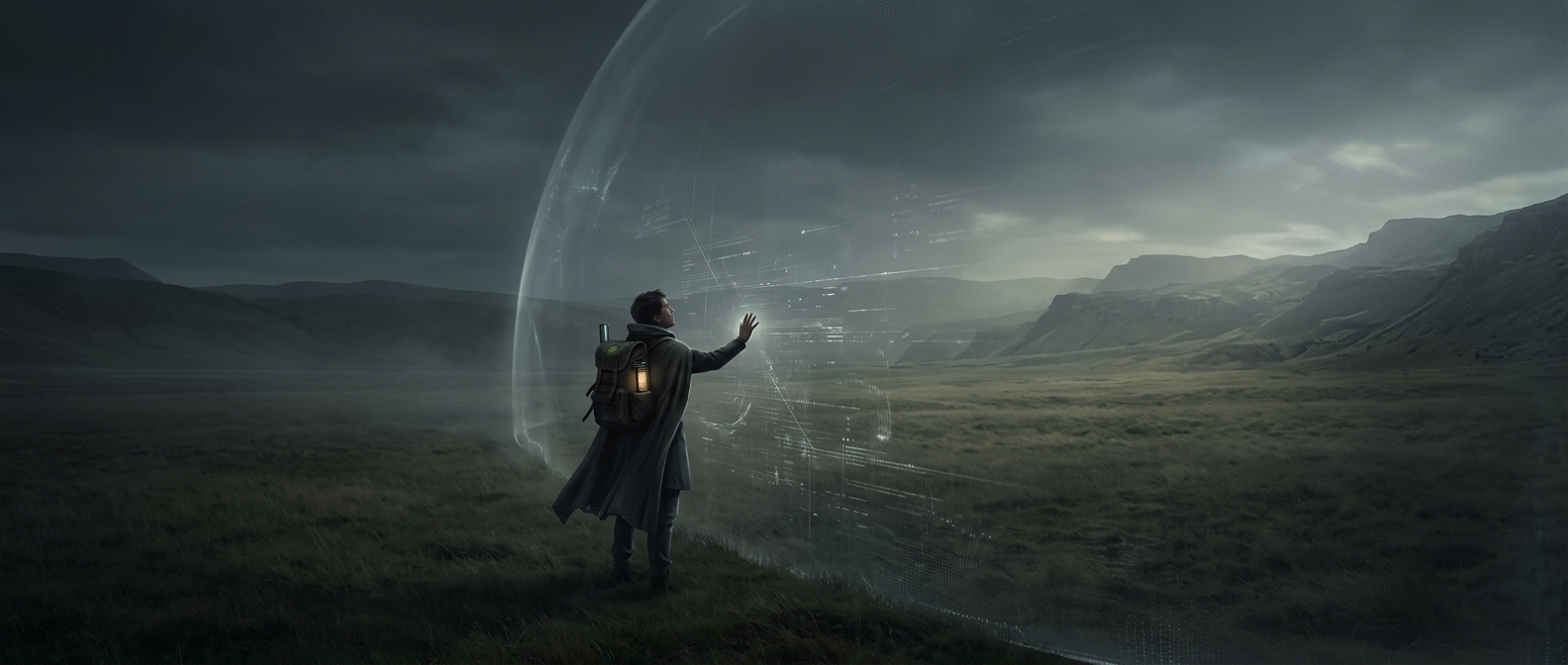
So the tiny fence is less a measure of the hero’s strength than a visible edge of the game’s rules. If it cannot be crossed, the world is telling the player that this boundary was built to be a wall.