Why the Camino turns strangers into companions
The Camino de Santiago is not a single trail but a network of pilgrimage routes leading toward Santiago de Compostela in Spain. Walking it means spending long stretches at the same pace as other travelers, then meeting them again at places to rest or sleep. That repeated contact can make a stranger feel less like a passing face and more like part of the day’s small community.
A story is an offer of trust
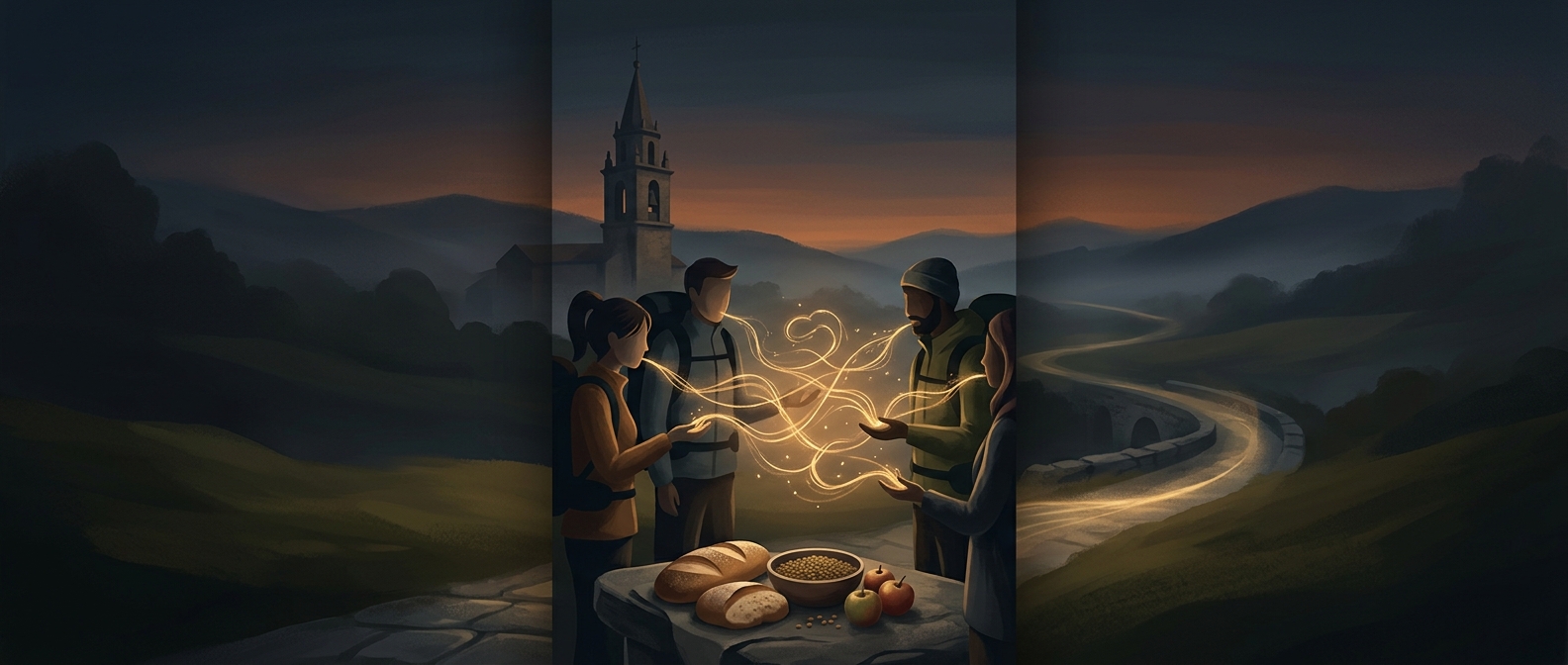
Food and practical help matter on a long walk, but a personal account can offer something different: a reason to pause, listen, and recognize the person behind the backpack. Talking about family, a difficult stretch, or a storm survived gives others a glimpse of what someone carries beyond their gear. In return, listeners may share their own experiences or offer help later.
This is not a formal system with set prices. The exchange works through informal reciprocity: people contribute what they have, without keeping an exact tally of who owes whom. A traveler with little food may still have a memorable account; someone with a spare snack may have a moment of attention or encouragement to give back.
What the exchange leaves behind
Because walkers often meet repeatedly, a shared meal or conversation can become part of a longer chain of mutual help. A story may also travel onward, carried by listeners who remember the person who told it. On a route where people move through unfamiliar places with limited possessions, being known—even briefly—can be its own kind of support.
The trade is valuable not because words replace food, but because a good story can turn a one-time handout into a human connection that lasts beyond the stop.