Why Silent Films Disappeared
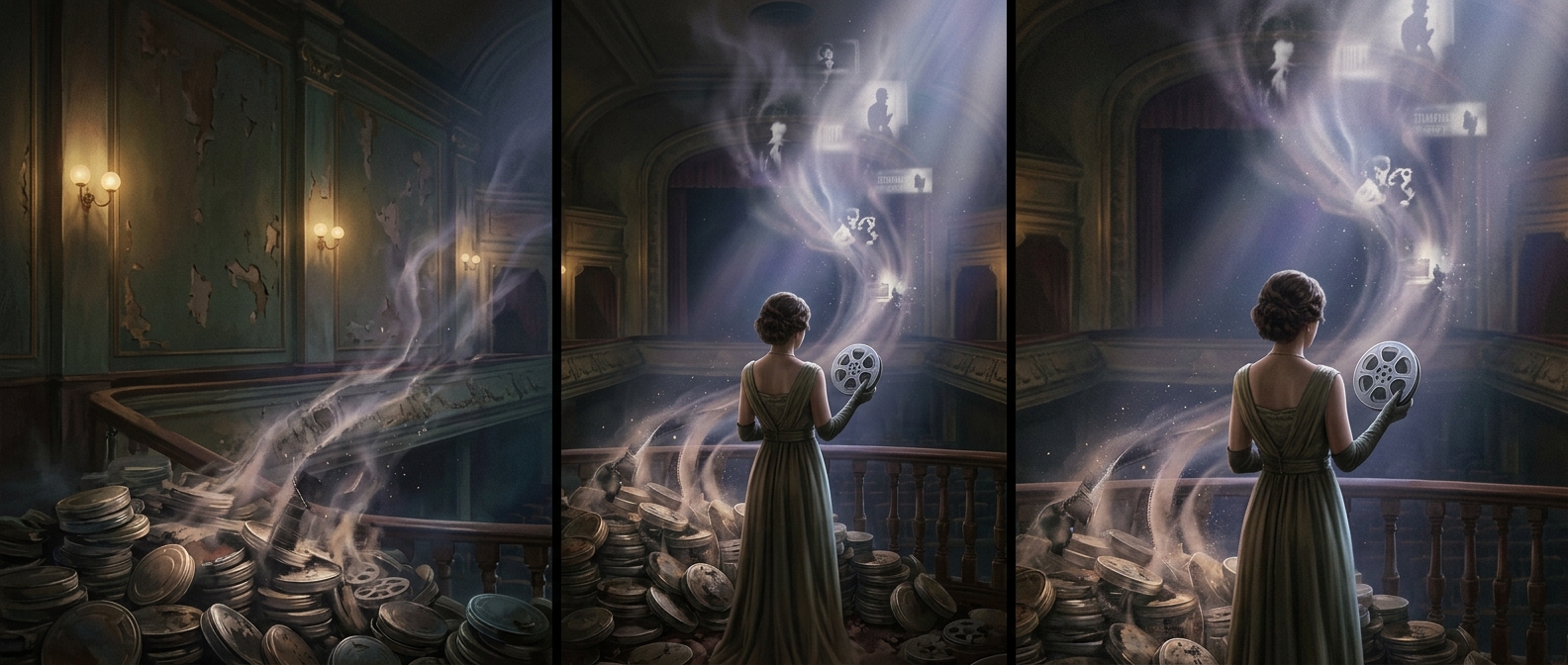
A film reel was once a physical commodity as well as a record of a performance. Early film stock used a base coated with light-sensitive chemicals, including silver compounds. When studios no longer saw value in an old print, recovering the silver could seem more useful than keeping the reel. The film could be melted down, reducing a moving image to material that could be reused.
Preservation Was Not the Default
Silent films were often treated as temporary products. A studio might make prints for theaters, circulate them while audiences wanted them, and then move on to the next release. Keeping bulky reels in good condition cost space and care, while the commercial payoff of storing an older title was uncertain. Before film preservation became a recognized priority, there was often no strong institutional reason to save every print.
That did not mean every lost film was deliberately destroyed. Film can deteriorate, and reels may be discarded, damaged, or lost through fires and poor storage. But salvage offered a direct incentive to destroy some prints: the silver had value even when the film itself seemed to have none.
The Cost of Seeing Them Again
The result is a major gap in the record of early cinema. An estimated three-quarters of silent films are now lost, so surviving films can give a distorted picture of what audiences once watched. A missing title cannot be screened, studied in full, or restored from its original images. Sometimes fragments, still photographs, scripts, or reviews remain—but they cannot substitute for the film’s complete movement and timing.
The loss is especially striking because the films were not always destroyed as art. In some cases, they were dismantled for the useful material inside them.