Why Threats Grab the Mind So Quickly
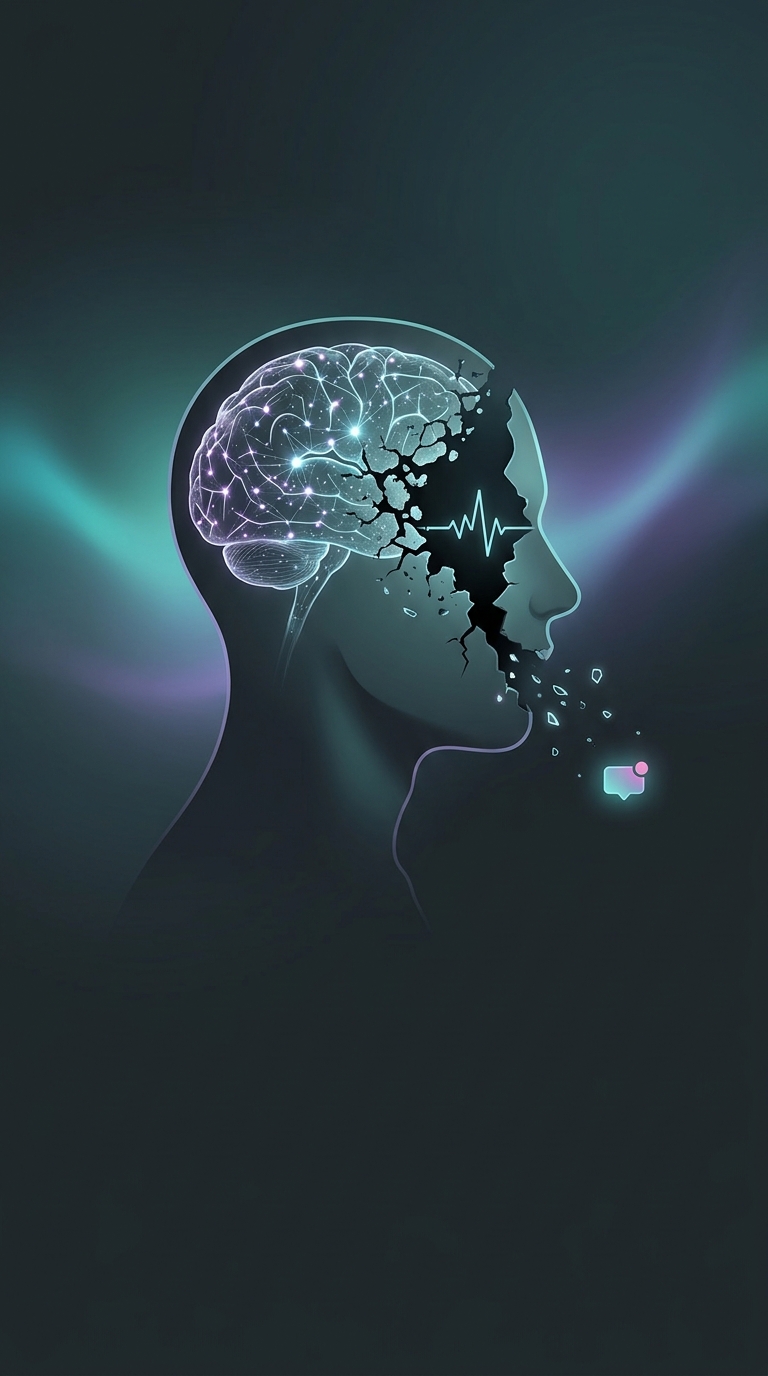
A frightening possibility gives the brain something urgent to solve: What could go wrong, and what should I do? The mind can rapidly assemble scraps of memory into a vivid warning—a crash, a public mistake, a threatening figure—because imagining danger may help prepare us to notice or avoid it. This is part of the brain’s broader tendency to prioritize potential threats, not proof that every frightening image is useful or accurate.
Worry Is a Simulation, Not a Prediction
When a thought feels vivid, it can seem more likely than it really is. But mental detail is not evidence: the brain is generating a scenario, not forecasting the future. Rehearsing a feared outcome can sometimes help with practical planning; repeated rehearsal without a solvable next step can instead keep attention fixed on danger.
The process can become self-reinforcing. A frightening image triggers anxiety, and that anxiety makes the possibility feel more important, encouraging the mind to revisit it. The loop can make a hypothetical event feel immediate even when nothing in the present moment has changed.
Why a Peaceful Scene May Take More Work
A calm beach image usually has no urgent problem to solve. It may also be less familiar or less emotionally charged than a well-practiced worry. Building a soothing scene often takes deliberate attention: choosing details such as the light, the sound of the waves, and the feel of warm sand, then returning to them when the mind wanders. The brain’s first vivid image is not necessarily its truest or most useful one; it may simply be the one carrying the strongest signal of urgency.