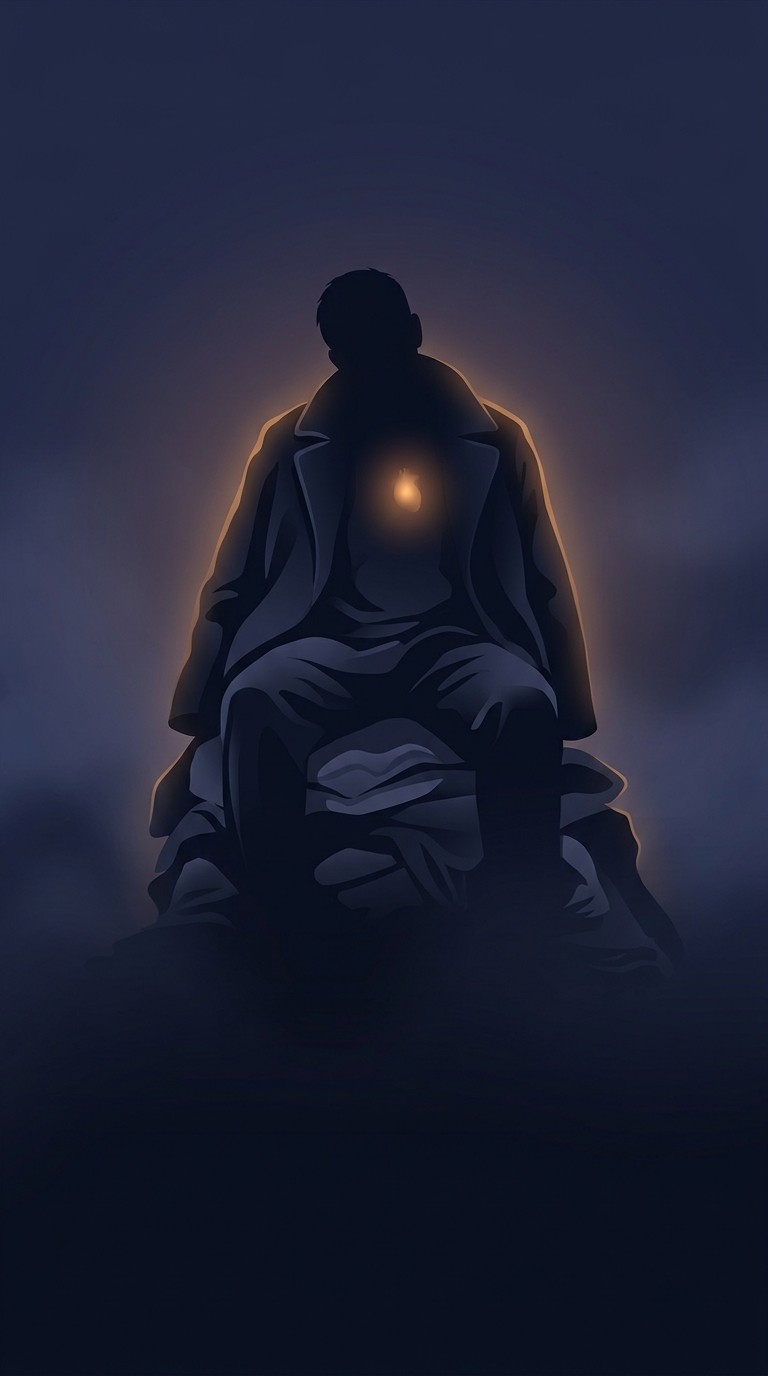
Why a Shadow Can Look Like a Person
Vision is not a camera sending a complete picture to the brain. In dim light, the eyes capture fewer useful details, especially about color and fine edges. The brain has to interpret a rough, incomplete signal—and it does so by combining what little it sees with what it expects to see.
A lump of fabric might provide a few suggestive clues: a head-like bump, a shoulder-like slope, a dark patch where a face could be. The brain can assemble those fragments into a familiar pattern before careful inspection catches up. This kind of mistaken pattern recognition is sometimes called pareidolia: perceiving a meaningful shape in ambiguous information.
Why the Mistake Can Feel Frightening
The brain does not treat every possible interpretation as equally urgent. When a vague shape might be a person, quickly considering danger can be more useful than waiting for certainty. That bias can make a threatening interpretation arrive first, even though the evidence is weak. Anxiety, fatigue, and surprise can make an ambiguous scene feel more alarming, but they do not mean the brain has actually detected an intruder.
Looking directly at the object, turning on a light, or changing your viewpoint supplies clearer evidence. The apparent figure may then resolve into sleeves, a hood, or a crooked stack—details the first quick glimpse could not distinguish. The scare comes from a fast guess made under poor visual conditions, not from seeing the object accurately and then choosing to panic.