How an X-ray Became a Record
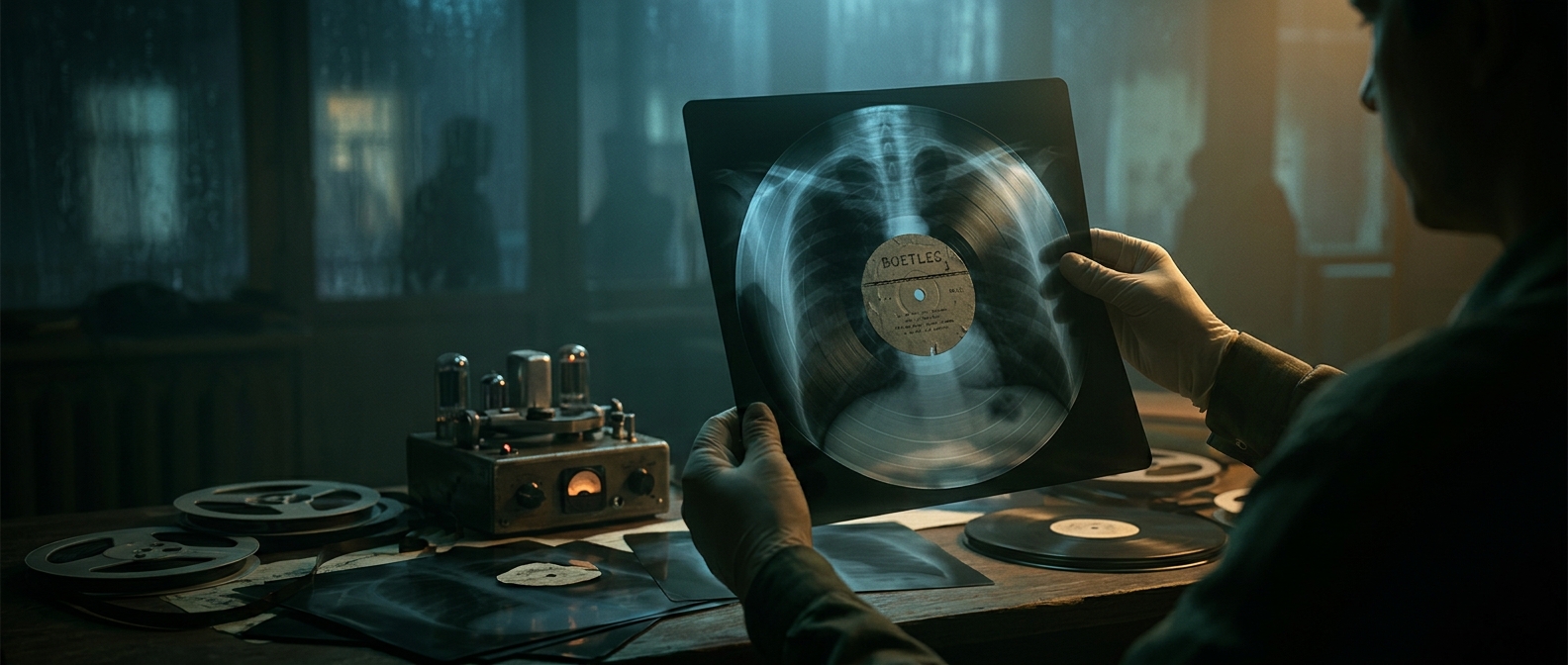
A record is a sound wave translated into a groove: as a stylus follows the groove, its tiny movements make the player’s needle vibrate and produce sound. Bootleggers used the same principle on discarded radiograph film, the thin, flexible plastic sheets used to make X-ray images. With a cutting machine, they traced a playable groove into the film, then added a center hole so it could spin on a turntable.
The material was far from ideal. Radiographs were flimsy compared with vinyl, and the shallow, irregular grooves could make playback noisy and short-lived. But the film was available when commercial records were not. A single sheet could carry a song, and it could be passed from listener to listener or copied again.
A Workaround for Controlled Music
The records offered a way around limits on access to Western popular music. Instead of relying on an officially released disc, bootleggers could copy songs circulating on records or other recordings and make rough, inexpensive versions. Elvis Presley and the Beatles were among the artists listeners sought out.
The X-ray images were not just a striking surface. They were a byproduct of the workaround: medical film that might otherwise have been discarded became both the recording material and a visible reminder of how improvised the process was. A rib cage or skull could show through the music as the record turned—a picture of a body carrying a song that was difficult to obtain through ordinary channels.