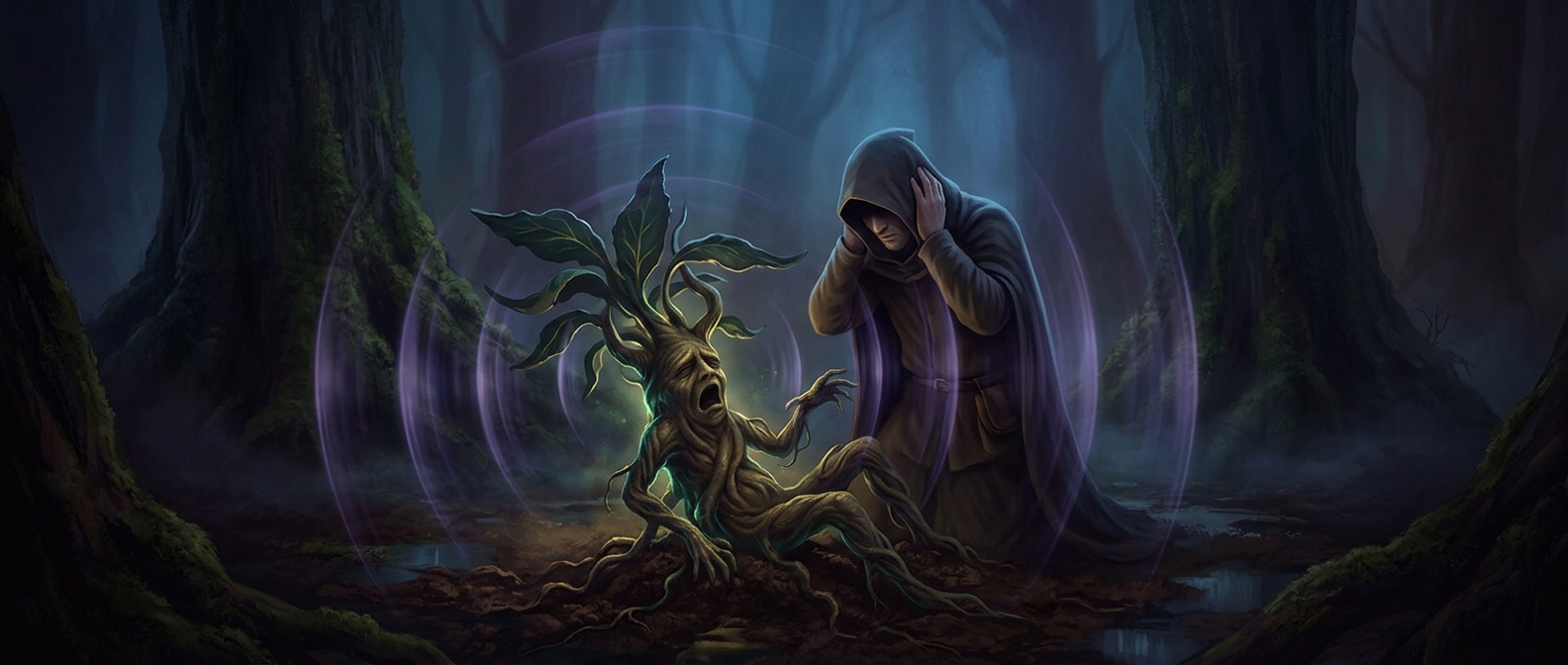
Why a root seemed human
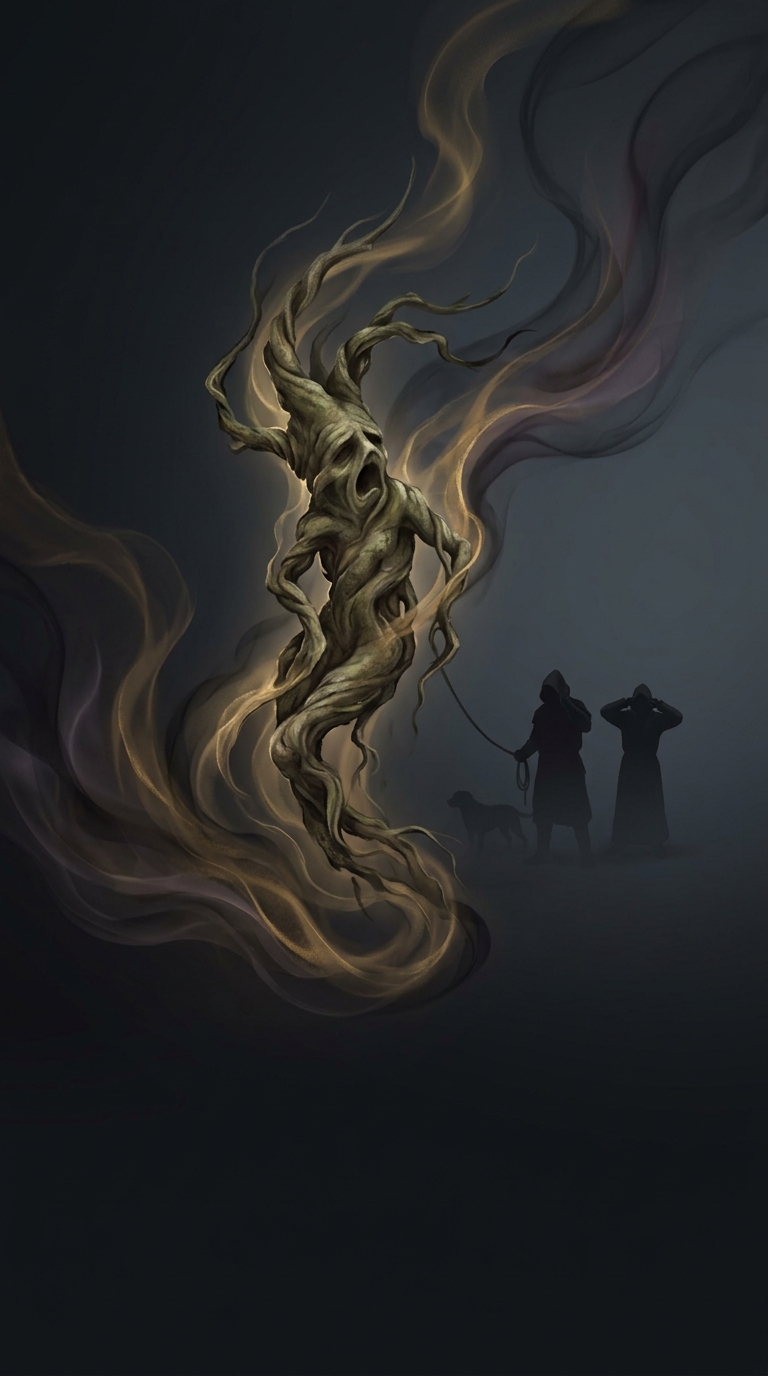
Mandrake is a plant whose thick, forked root can suggest a small body with legs. That resemblance helped make it seem more than ordinary vegetation: in folklore, the root could be treated as a living, potent thing, and pulling it from the earth became a dangerous encounter rather than simple gardening.
The imagined scream gave that danger a sound and a consequence. It turned an unsettling shape into a being that might defend itself—and made harvesting the root a test of caution as well as courage.
Let the dog take the risk
In the legend, the solution was to keep a person away from the root. A dog was tied to it, then tempted with food placed beyond reach. When the animal lunged, it pulled the mandrake free; the fatal scream, people feared, would strike the dog instead of the gatherer.
The detail matters because it makes the tale more than a warning to stay away. It offers a procedure: use a living substitute, create distance, and let appetite do the work. The story turns an invisible threat into a practical problem with a dramatic workaround.
A ritual for an uncanny plant
The dog does not prove that anyone heard a supernatural scream. Rather, the legend shows how people could explain the root’s strange appearance and imagined power through a memorable harvesting ritual. Its sharp logic is what makes the story linger: even when a plant seemed dangerous to touch, someone could devise a way to pull it from the ground without being the one standing beside it.