Two questions turned alignment into nine boxes
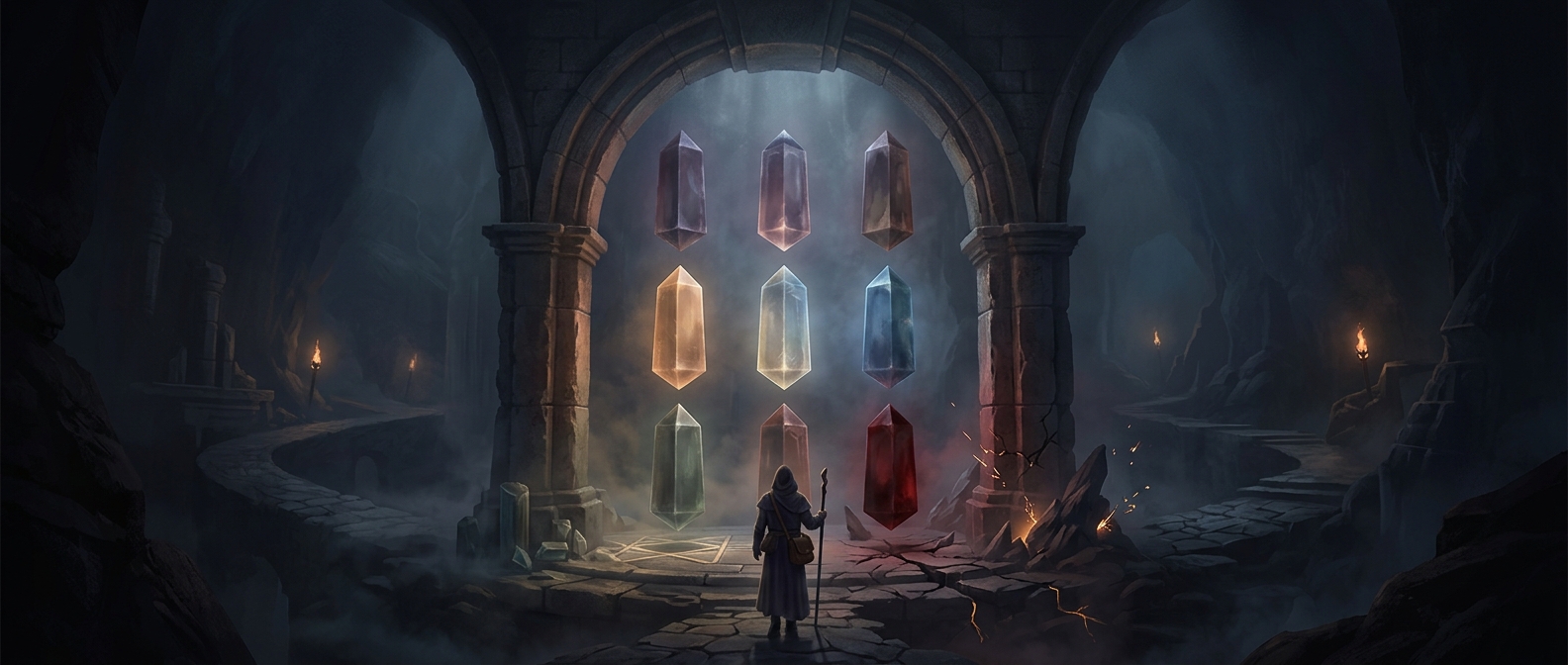
Dungeons & Dragons’ alignment chart works by crossing two questions: does a character favor order or freedom, and do they tend toward helping others or harming them? Each question has a middle ground—neutral—so the two axes produce nine combinations, from lawful good to chaotic evil, with neutral options between.
That grid gave a group a quick way to talk about a character’s outlook without writing a full biography. A lawful character might value rules or a stable code; a chaotic one might resist being governed by them. Good and evil describe concern for others versus willingness to exploit or hurt them. “Neutral” can mean a balance, indifference, or simply that neither extreme defines the character.
A prompt for play, not a permission slip
Alignment is most useful as a starting point for decisions. When a character faces a choice, the player can ask what their stated outlook suggests: Does the principled hero keep a promise when it becomes costly? Does the freedom-loving rogue reject a just rule as readily as an unjust one? The answers make an abstract label visible at the table.
But a box cannot settle every situation. A chaotic character can cooperate, and a lawful one can break a rule when a deeper commitment demands it. The chart describes a broad tendency, not a script that overrides the player’s judgment or the story’s circumstances.
That gap is also why alignment can become a running joke—or an excuse. “I’m chaotic” may explain an impulsive choice, but it does not automatically make the choice interesting, harmless to the group, or true to the character. The label gives players a shared vocabulary; they still have to decide what it means in action.
Why the shorthand stuck
A compact chart is easy to remember and easy to use when a player is building a character or a game master is imagining a foe. It turns vague moral and social instincts into a common reference point. Its staying power comes from that convenience, not from the idea that every person—or every fictional hero—fits neatly into one of nine boxes.