Why Passport Photos Usually Leave Glasses Out
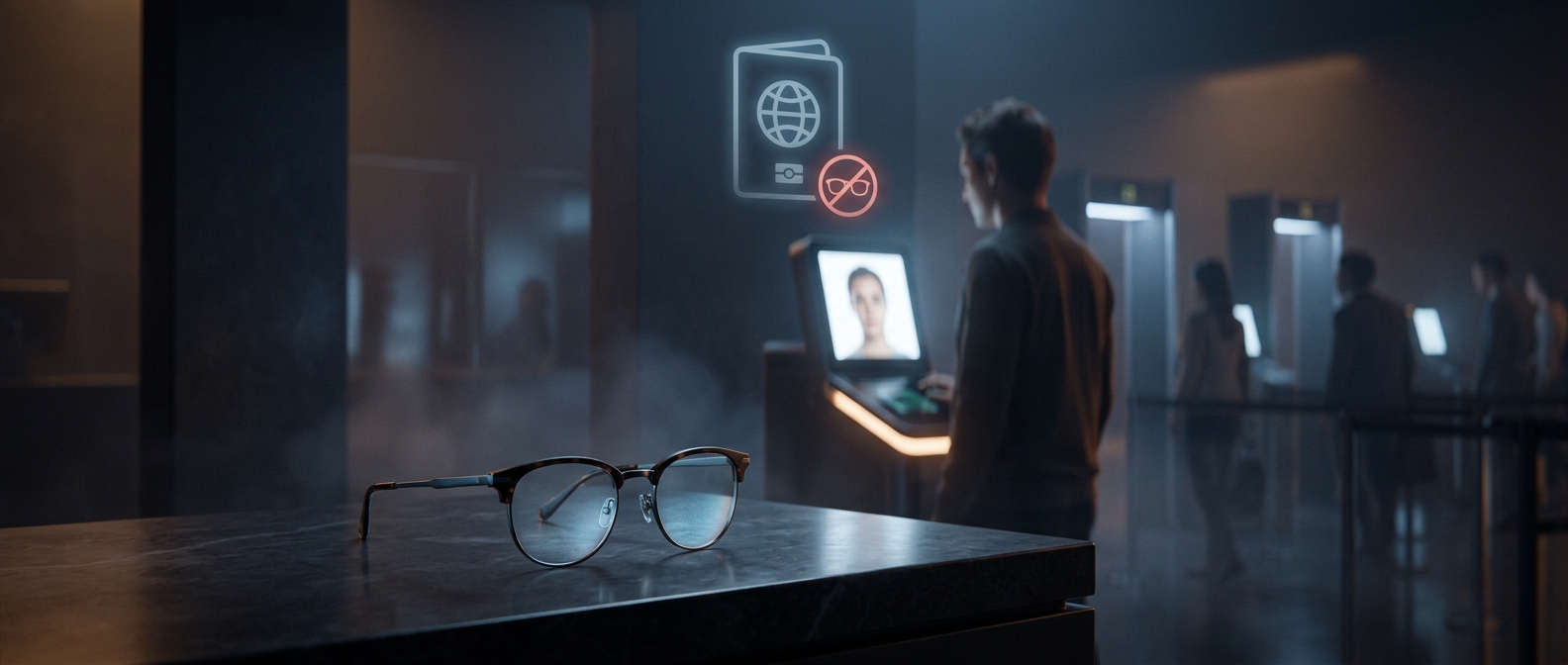
A passport photo has to show the face clearly enough for both a person and an automated system to compare it with the traveler standing at a checkpoint. Eyeglass lenses can complicate that comparison: light reflected from a lens may cover part of an eye, while tinted lenses can obscure details the camera needs to record.
The problem is not simply that glasses change someone’s appearance. Face-matching systems look for visible facial features and their positions. If reflections hide an eye or make one side of the face harder to read, the photo may be less useful as a consistent reference.
A Small Photo Rule With a Practical Payoff
Removing glasses also avoids a common source of photo rejection before the image is submitted. A photo that seems clear on a phone screen can still show glare under different lighting or at the angle required for the official image. Taking them off makes the eyes easier to see and reduces one variable in the photo.
That is why travelers are generally safest following the photo instructions for the specific passport application rather than assuming their everyday glasses will be acceptable. The goal is a clean, unobstructed image that can be compared with the face in front of an officer—not a picture that captures every detail of someone’s usual appearance.