When an Engine Note Becomes a Brand Question
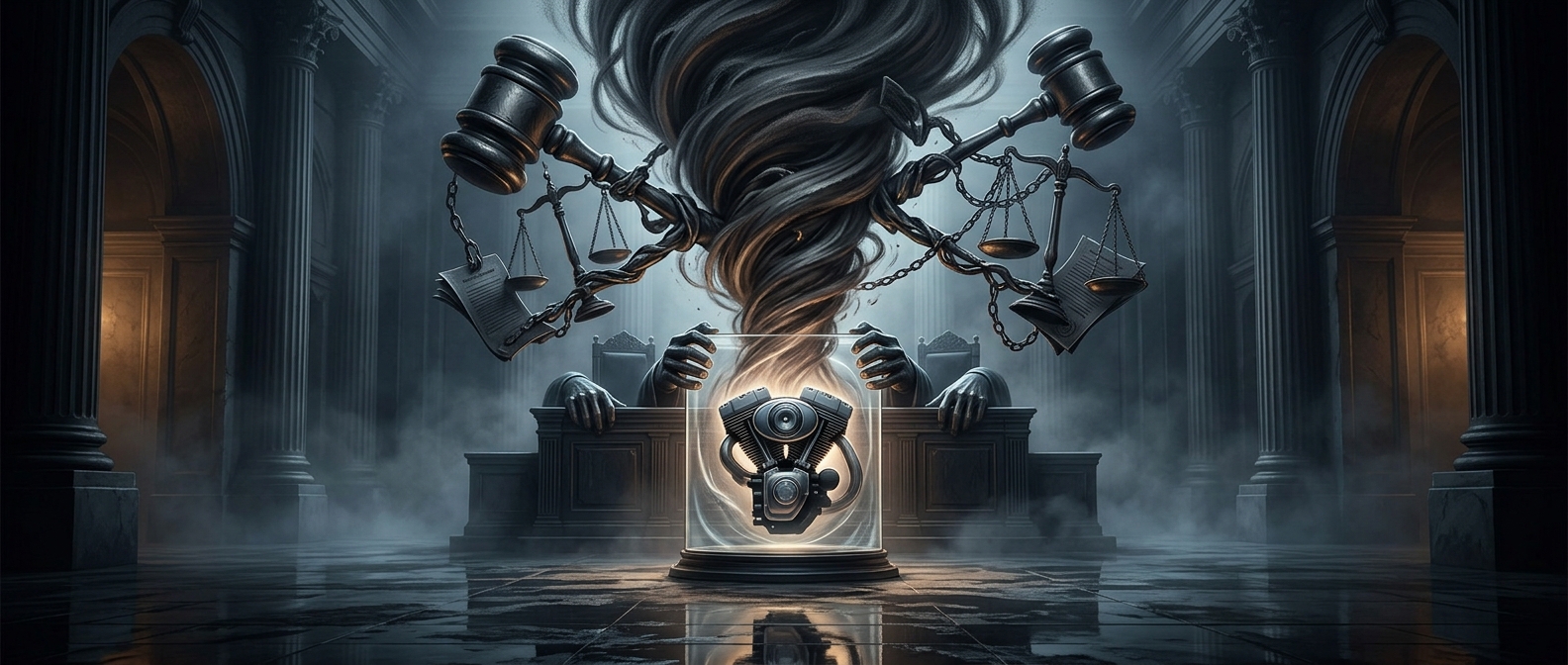
Harley-Davidson’s attempt to trademark its motorcycles’ exhaust sound ran into a basic problem: an engine note is made by working machinery. A V-twin engine’s two cylinders fire in a particular rhythm, sending pressure pulses through the exhaust. The result depends on that rhythm, along with the engine and exhaust design. Other motorcycles built with similar arrangements can produce a broadly similar rumble.
That made the sound difficult to claim as Harley-Davidson’s alone. The company was not simply asking to protect a logo or a jingle; it was seeking rights over a sound that emerged from a product’s operation.
A Trademark Must Point to Its Source
A trademark helps people recognize who made a product. Sounds can qualify when listeners come to associate a particular sound with one company, but a sound that mainly results from how a product works raises a different question: is it identifying the maker, or is it a characteristic of the product itself?
Rival manufacturers objected to Harley-Davidson’s application. Their challenge brought the practical issue into focus: if competing motorcycles use comparable engine designs, a protected claim might reach a sound their own machines could naturally make. The dispute was not just about whether the rumble was memorable, but whether it could fairly function as one company’s exclusive identifier.
The Rumble Stayed Unclaimed
Harley-Davidson eventually withdrew the application rather than secure the trademark. The episode showed how hard it can be to separate a product’s identity from its engineering: the same mechanical choices that give an engine its recognizable voice can also make that voice difficult to reserve for a single brand.