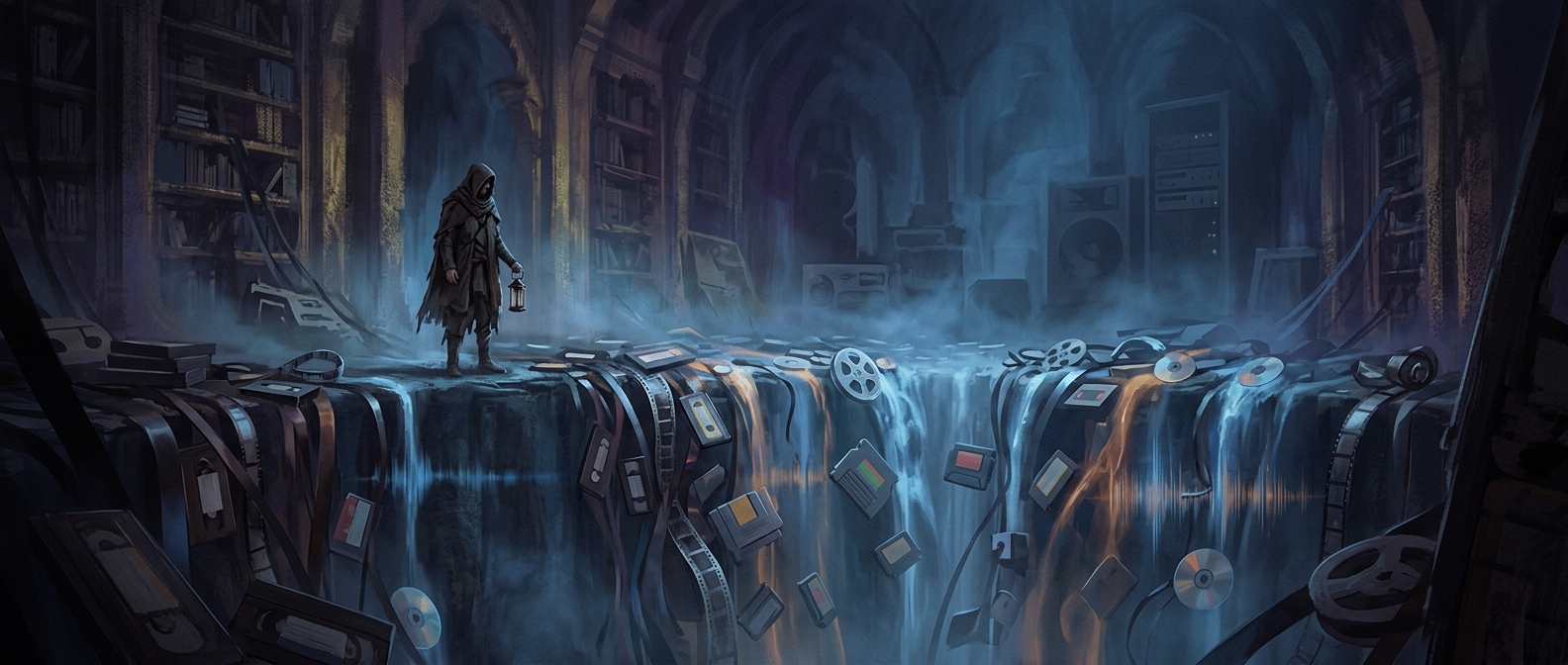
When a game’s source recordings became studio clutter
A game’s finished audio is only the visible tip of a much larger collection. A studio may record many takes of a line, alternate performances, background sounds, and versions in several languages before selecting what ships. The master recording is the original source used to make later copies or edits; a localized recording is a language-specific performance that may not exist anywhere else.
That distinction can disappear during a move or cleanout. To someone sorting a crowded room, labeled reels, tapes, or discs can look like obsolete production material—especially after the game is finished and the team has moved on. Keeping every box takes space and effort, while the value of a recording that might be needed years later is hard to see in the moment.
What gets lost with the original
A released game preserves only the audio chosen for that version. Raw effects may contain alternate sounds or longer recordings that were trimmed during editing. A master can make it possible to revisit a sound without the quality loss or limitations of a copy. And a discarded localized performance can be difficult to recreate: the actor, recording conditions, or exact delivery may no longer be available.
Without those sources, a later rerelease or revision may have to rely on whatever finished audio survives. That can limit edits, make it harder to match old material, or leave a language version with fewer options. The loss is not always immediately noticeable; it becomes consequential when someone needs to change, restore, or reuse the sound.
Preservation is part of production
The practical lesson is that finishing a game does not make its source material worthless. A clear inventory and a deliberate decision about what to retain can protect recordings that otherwise look like surplus. Once an original master is thrown away, clearing a shelf is easy; recreating the sound may not be.