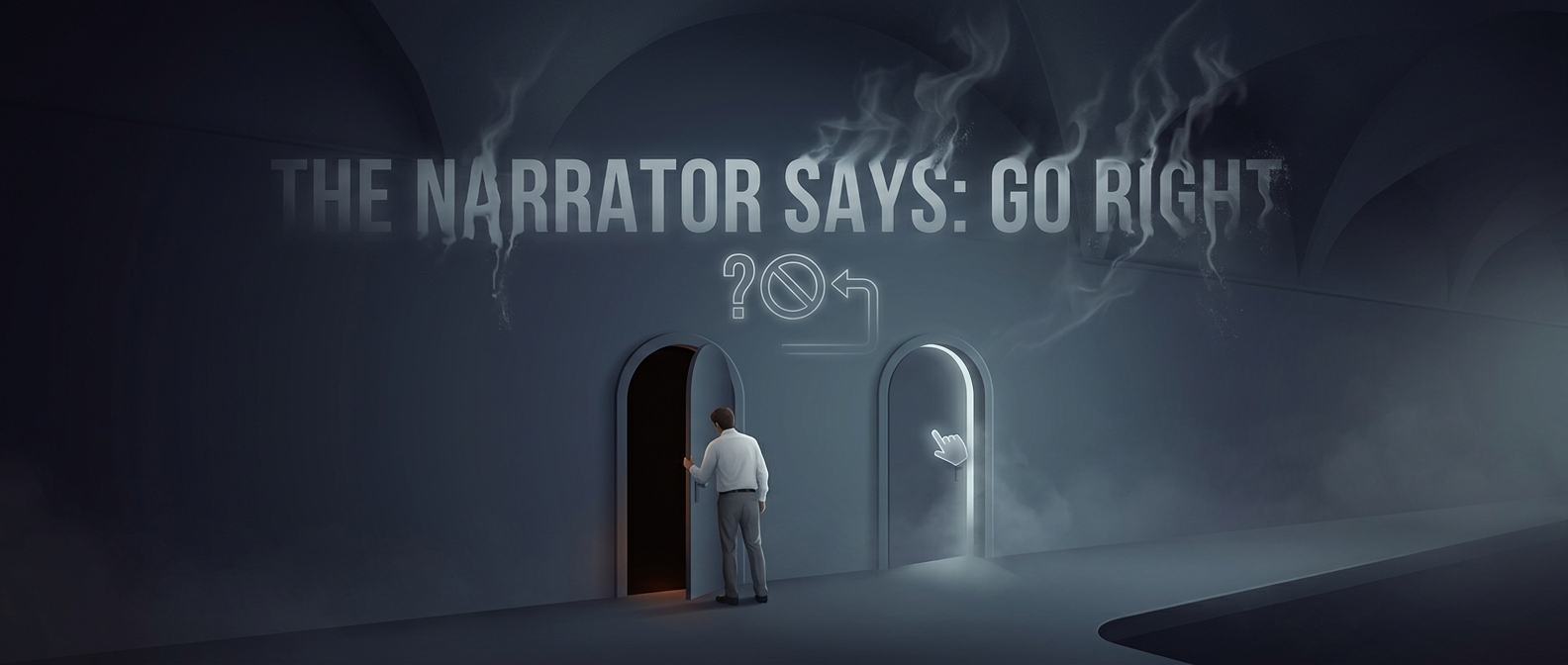
Why one choice can create many versions of a scene
A branching conversation is not just a list of alternative lines. A choice can change what a character knows, how they feel about the player, or which information has already been revealed. Later dialogue must account for those differences. If every response then leads to several more choices, the number of possible paths can grow rapidly—even when most paths are only a few exchanges long.
Writers also have to make each branch feel intentional. A character who was threatened earlier should not greet the player as if nothing happened; a secret already disclosed should not be presented as new. That means writing not only the spoken lines, but the variations and conditions that keep them consistent with the player's past decisions.
How games keep the branches manageable
Games rarely treat every path as a wholly separate conversation from beginning to end. Writers can let a choice alter a short exchange, then bring the conversation back to a shared scene. The game may preserve the consequence in a later line, a relationship state, or an available option rather than maintaining a completely separate script forever.
A flag—a stored note that a particular event or choice happened—helps the game select the right version of a line later. This makes dialogue more responsive without requiring every earlier decision to produce an entirely new route. It also creates practical limits: too many variations are difficult to write, implement, test, and translate.
The hidden cost of a seemingly small choice
Even a brief option can have a long tail. A line that sounds warmer or more hostile may need distinct reactions now and callbacks later, while designers check that unusual combinations of choices still make sense. The result is a balancing act: preserve enough consequences for choices to feel meaningful, but reuse enough scenes that the conversation remains possible to build and verify. Players may see only one path through it; the unseen work is making that path—and its alternatives—fit together.