How The Stanley Parable turns instructions into a game
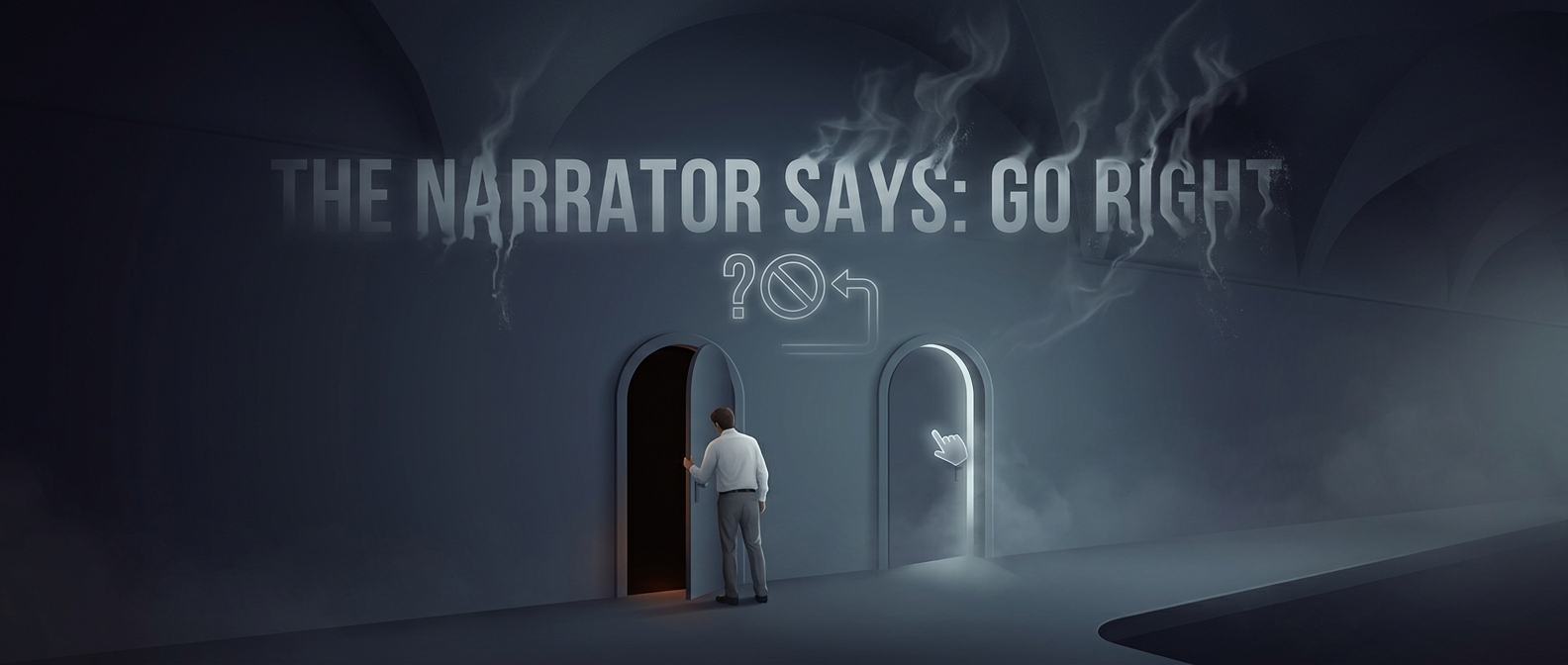
In The Stanley Parable, a narrator describes what the player-character, Stanley, is about to do. The player can follow that account—or walk away from it. A doorway, corridor, or set of stairs becomes a decision point, and taking the “wrong” route makes the narration itself part of the action.
That setup gives an ordinary movement mechanic a comic purpose. Instead of simply asking where to go, the game asks whether the player will accept someone else’s version of events. The narrator may respond to a detour, comment on a refusal, or continue as though Stanley had obeyed. His voice sounds authoritative; the player’s control makes that authority negotiable.
The freedom is built from authored reactions
The apparent contest between player and narrator depends on careful design. A game cannot improvise every possible response, so the creators build specific paths and write narration for the choices those paths allow. Each departure from the expected route leads into another prepared scene, with its own consequences and tone.
That constraint becomes the joke. The narrator can anticipate some acts of disobedience, but the player can still test the limits of what the game has planned. The pleasure comes not from unlimited freedom, but from discovering how a carefully scripted game reacts when you refuse its script. A hallway can therefore feel less like a route to a destination than a challenge to the storyteller’s control.