Why a Fish’s Other Side Stays Facing Down
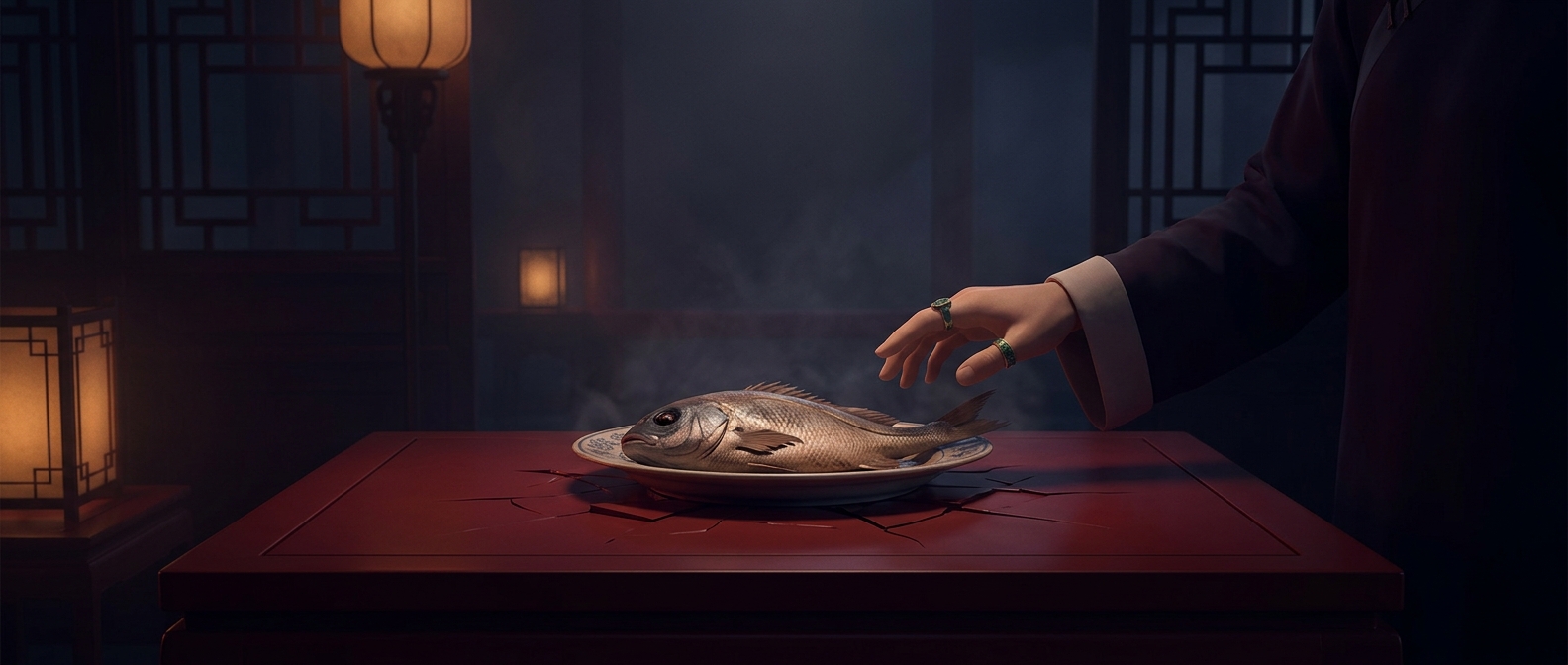
At some Chinese meals, especially in fishing communities, turning a cooked whole fish over is avoided because the motion resembles a boat capsizing. The taboo turns an ordinary table gesture into an unsettling image: a vessel—and the people aboard it—rolling over in the water. It is a folk custom, not a rule followed by every Chinese diner.
How Diners Reach the Underside
Instead of flipping the fish, diners lift away the exposed flesh and remove the central bones, then eat the meat underneath. This keeps the fish in place while making the lower side accessible. The custom is easiest to understand when a whole fish is served intact, with its backbone still running through the body.
The gesture matters because a meal can echo the risks of the work that supplied it. For people whose livelihoods depend on boats, capsizing is not an abstract image; leaving the fish untouched on its underside avoids reenacting it at the table. So a diner carefully picking out bones may be following more than a practical serving technique: they may also be keeping a boat upright in miniature.