A small shape solves a production problem
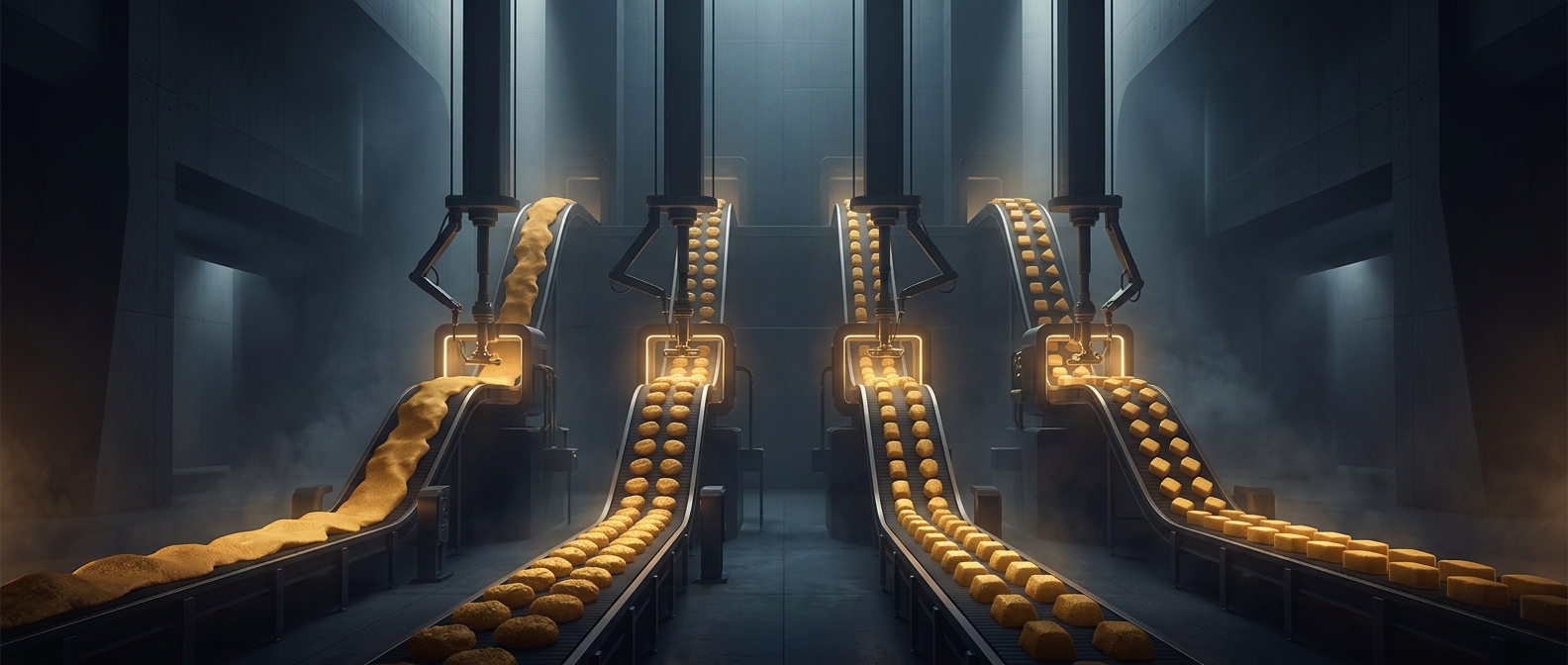
Ground chicken is easier to portion and handle when it is formed into repeatable pieces rather than cut by hand. In commercial production, shaped molds turn the mixture into units of a planned size and thickness. That consistency matters downstream: pieces that are broadly alike are easier to bread, cook, package, and serve predictably.
The familiar silhouettes add variety without requiring different recipes. A bell, boot, bone, or ball can all be made from the same basic mixture; the mold changes the outline, not the essential product. Shape also affects how a piece sits in a dipping sauce, giving customers edges and contours to grab rather than a uniform lump.
Standardization with a little variety
For a food made in enormous batches, predictable portions help keep production and serving manageable. A controlled shape helps limit differences between pieces, while a small set of outlines makes the box feel less monotonous. The tradeoff is that the shapes have to remain practical to form and cook—not merely look distinctive.
That is why the four designs are best understood as a compromise between factory consistency and a more varied eating experience. The same nugget can be standardized on the production line and still arrive at the table in several recognizable silhouettes.