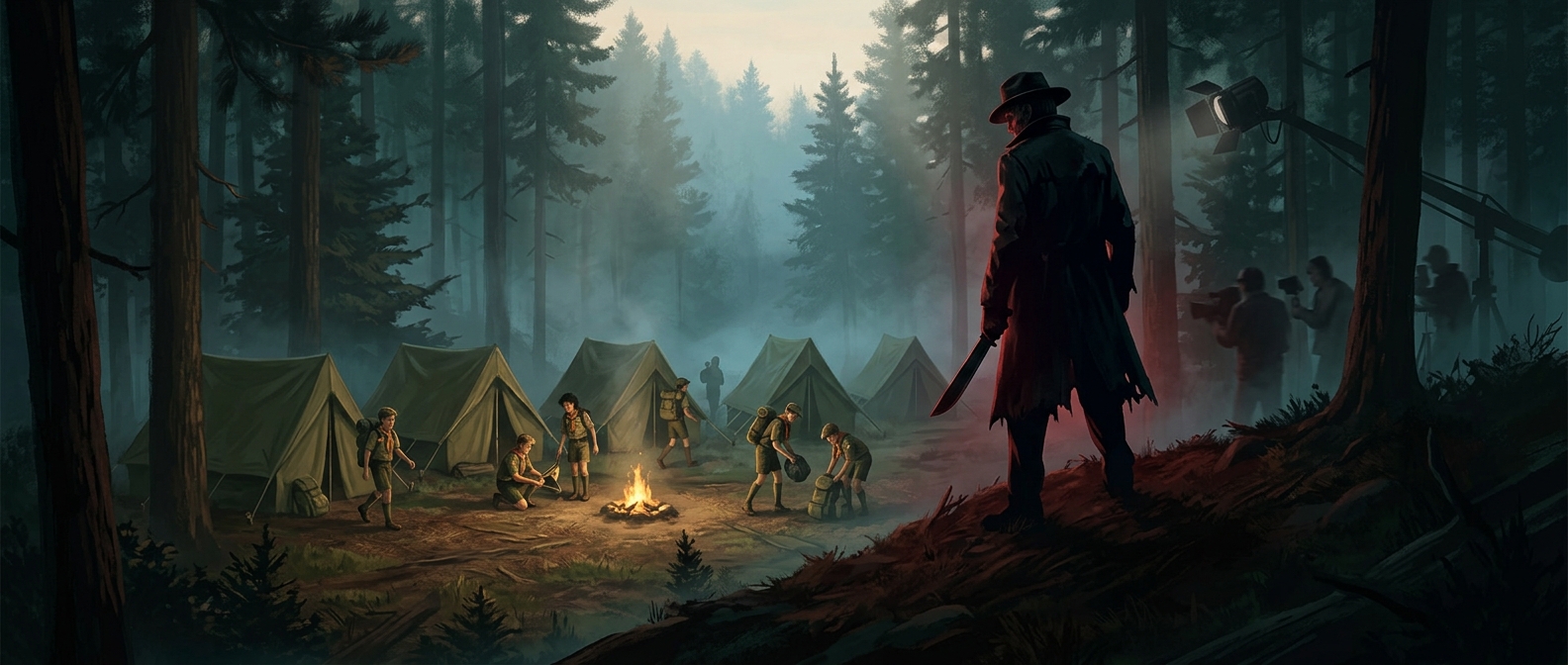
A Working Camp Became Camp Crystal Lake
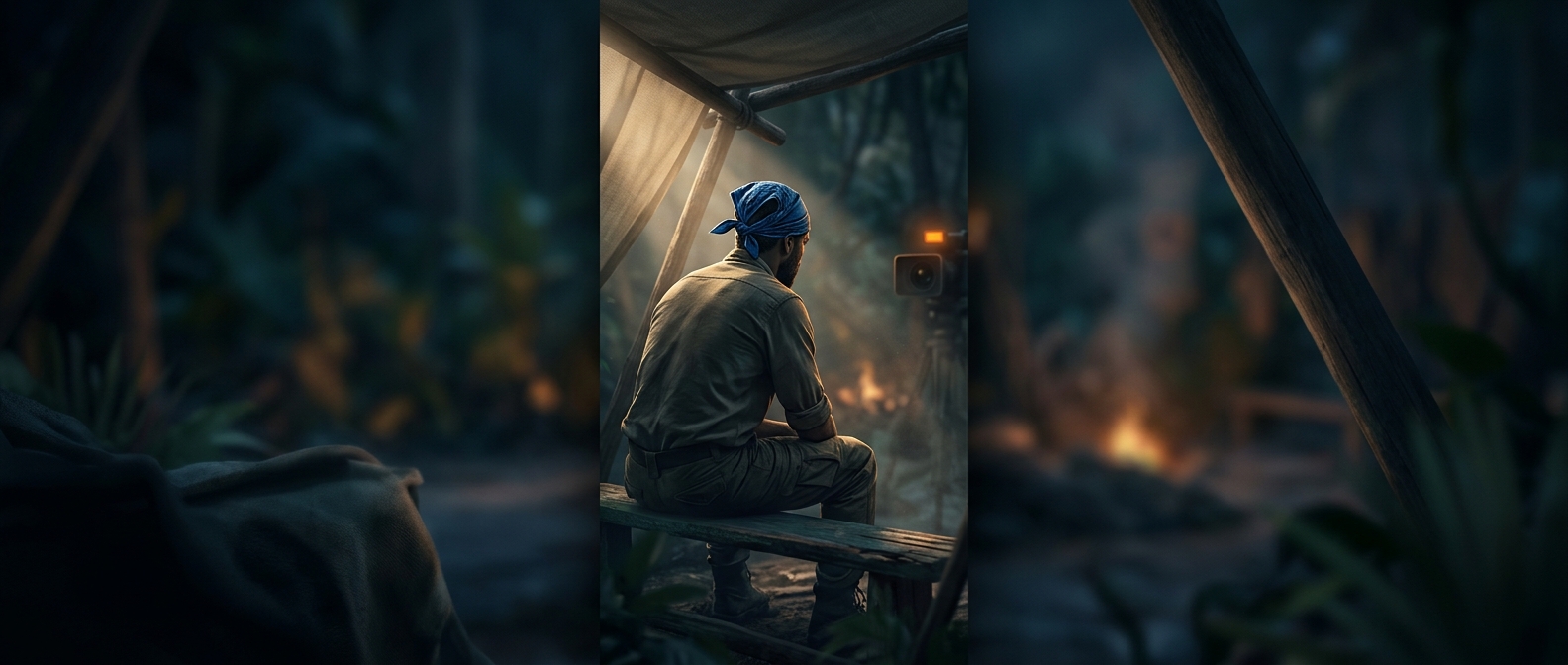
The filmmakers used Camp No-Be-Bo-Sco, a real Boy Scout camp in Hardwick Township, New Jersey, as the setting for Friday the 13th. Its cabins, lake, and surrounding woods were already arranged for outdoor life, giving the movie a believable place for counselors and campers to gather—and for its isolated horror to unfold.
That setting did more than supply scenery. A purpose-built movie set can look orderly or artificial; a functioning camp carries the marks of practical use. The same paths and facilities meant for learning outdoor skills could feel unsettling once the film framed them as a place cut off from help. The horror grows from the gap between what the camp is for and what happens there.
From Outdoor Skills to Movie Legend
In the film, the camp is called Camp Crystal Lake. In reality, No-Be-Bo-Sco was built for Scouts, not for a horror story. That contrast gives the location an unusually concrete afterlife: viewers can connect the fictional danger to an actual place designed for children to learn how to manage the outdoors.
The camp’s ordinary purpose makes the premise more vivid. Knots, cabins, and wooded trails belong to a setting meant to teach confidence and self-reliance; on screen, the same surroundings become part of a nightmare. The film’s fictional camp feels convincing because its real-world counterpart was made for exactly the kind of outdoor routines the story puts at risk.