How a Telephone Line Carried an Opera Across Town
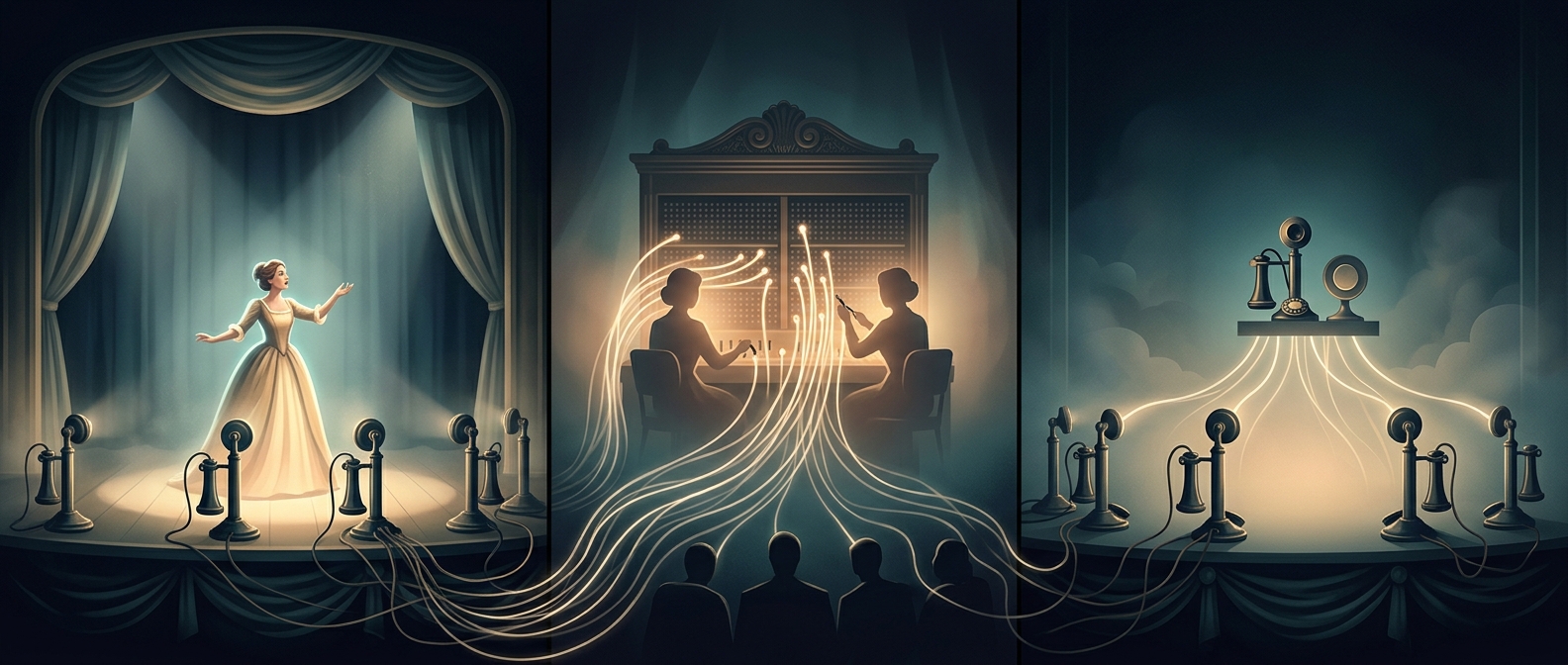
A live telephone performance turned the city’s existing communications network into a one-way listening system. Microphones placed near a theater’s stage picked up changing air pressure—the sound of voices and instruments—and converted it into changing electrical signals. Those signals traveled through telephone wires to subscribers, whose receivers turned them back into sound.
The line did not carry the performance as a modern recording or broadcast would. It carried a fragile electrical copy of the sound, in real time, through equipment built primarily for conversation. The listener could hear the event from another location, but could not see the stage or choose a better view of it.
Why the Music Could Sound Thin
Telephone equipment was designed to make speech intelligible, not to reproduce the full range and force of an orchestra. A receiver could convey the shape of a melody and the words of a singer while losing much of the music’s bass, richness, and dramatic volume. Distance from the stage also mattered: microphones had to capture a complicated mix of voices, instruments, and room echoes from a limited position.
The result was an unusual tradeoff. A subscriber gained access to a performance without traveling to the theater, but the telephone flattened a spacious, visual event into faint sound at the ear. Even when the connection worked, the opera arrived as an outline of the experience rather than its full-bodied equivalent. The wires could extend the theater’s reach; they could not carry its acoustics or its sightlines.