How a Hand Crank Becomes Radio Power
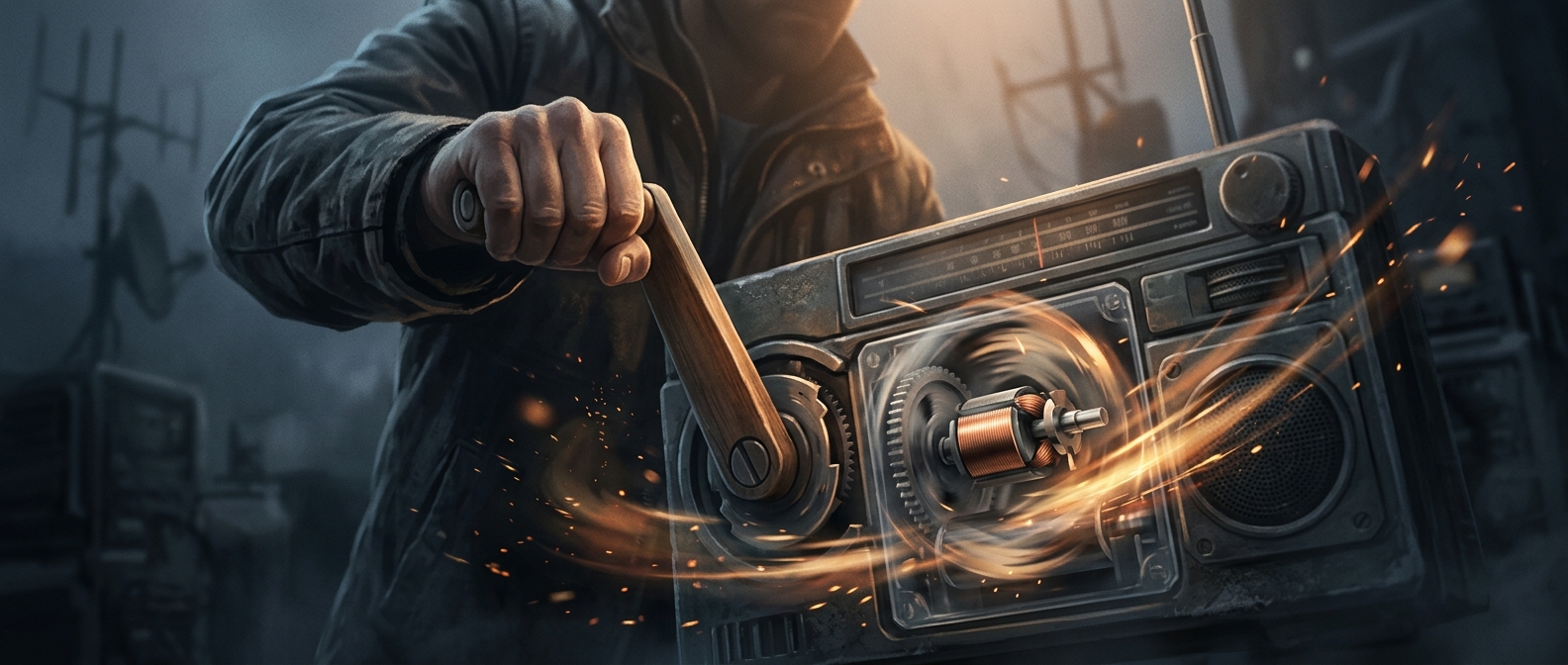
Inside the crank is a small generator. Turning its handle spins a coil of wire near a magnet—or spins a magnet near a coil. As the magnetic field through the wire changes, it pushes electric charge through the circuit. This effect, called electromagnetic induction, turns the motion of your hand into electrical energy.
Gears may make the generator spin faster than the handle, helping it produce usable power even when you crank slowly. The harder and steadier you turn, the more energy you supply; the crank’s resistance is the feel of that work being taken up by the generator.
From Electricity to Sound
The current then powers the radio’s electronics: the receiver selects a broadcast signal, and an amplifier strengthens it enough to drive a speaker. Because a hand crank produces power only while it is being turned, some models store energy in a rechargeable battery or capacitor—a component that holds electrical charge—so the sound can continue after you stop. Others may need intermittent cranking during use.
That makes the radio a small, visible chain of conversions: muscle supplies motion, the generator makes electricity, and the speaker turns the radio signal back into sound. The crank does not create energy; it lets the listener provide it directly when another power source is unavailable.