The crew powered the pump, stroke by stroke
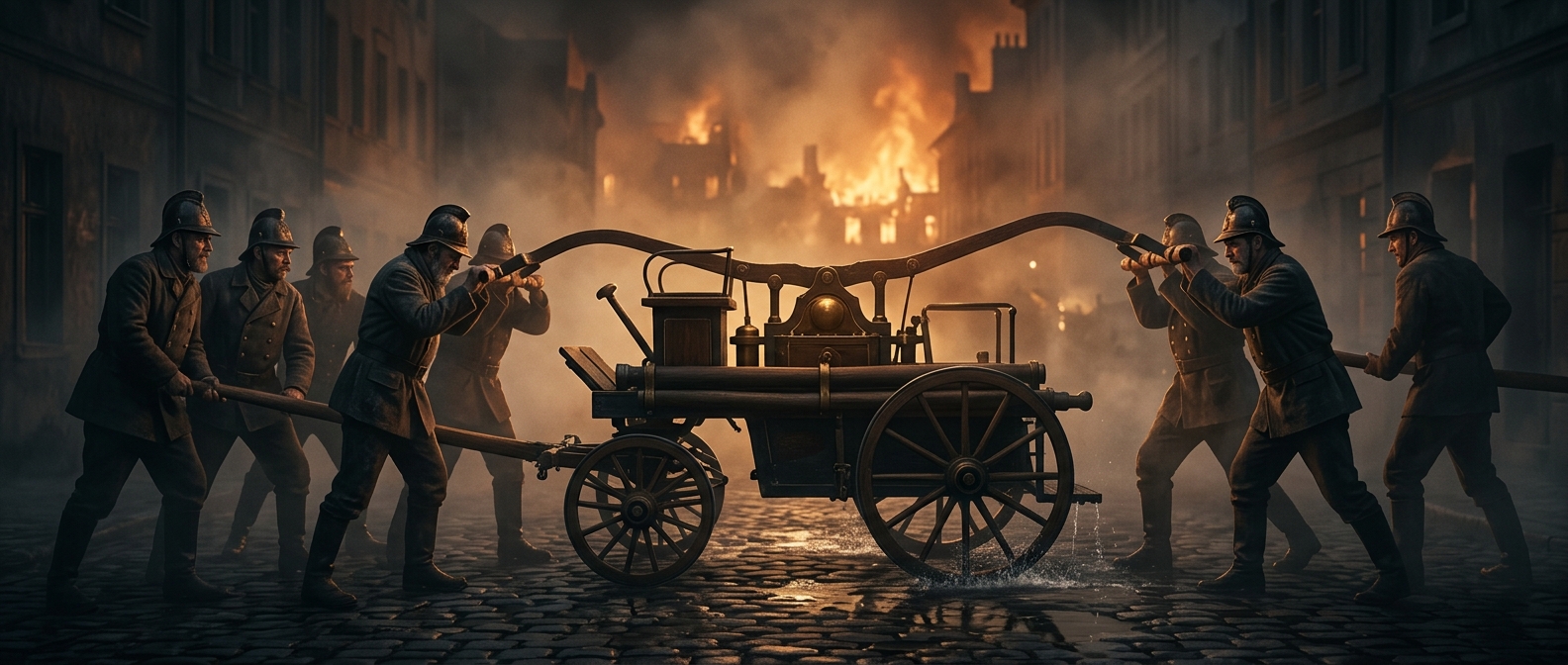
A hand-powered fire engine turned muscle into water pressure. As firefighters moved its long handles up and down, the motion drove pistons inside the pump. Valves opened and closed in sequence: water entered the pump chamber on one part of the stroke, then was pushed toward the hose on the next. The machine could direct water more forcefully than people carrying buckets, but it could not create a steady supply on its own.
That meant the engine needed water close by. Depending on the setup, crews might feed it from a source such as a well or pond, or keep it supplied with buckets. The pump’s output depended on the people working it—and on keeping enough water flowing into the mechanism while it was under pressure.
Firefighting became a problem of coordination
The handles were built for a group, not an individual. Firefighters had to pump together, while others managed the hose and water supply. If the crew’s rhythm faltered, or the supply ran short, the stream weakened. The engine also had to be brought near enough to the fire and a usable water source for its hose to reach the target.
Those constraints shaped the work: a fire engine was not simply a vehicle that arrived and sprayed water. It was a human-powered pumping station, dependent on a coordinated crew and a nearby source. Its effectiveness could change with the people at the handles, even while the fire itself kept spreading.