How Itaipu made room for its dam
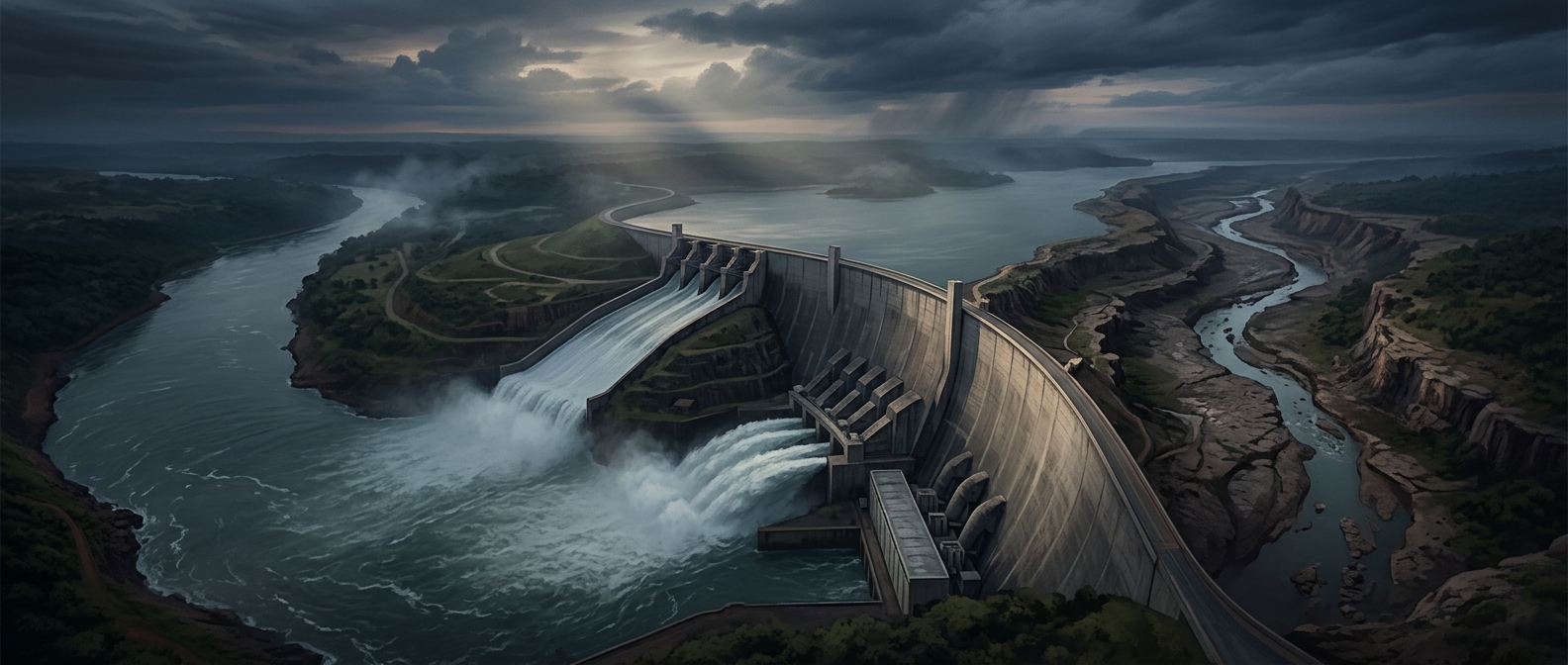
A dam needs a firm foundation across the river, but building that foundation in a flowing Paraná would have meant working underwater against the current. Itaipu’s engineers solved the problem by excavating a separate route through rock. Temporary barriers, called cofferdams, directed the river into that channel, leaving a stretch of the original riverbed exposed for construction.
The bypass had to carry the river’s flow reliably while crews worked nearby. That made it more than a trench: its shape and capacity had to manage a powerful current without sending water back into the construction site. Cutting the route through solid rock also meant removing an enormous volume of material before the main dam could rise.
A temporary route with lasting consequences
Once the river was diverted, crews could build across its former course on dry ground. The channel was a construction tool, not a permanent replacement for the Paraná’s natural path. After the dam and its river controls were ready, the diversion could be closed and the water held back to form Itaipu’s reservoir.
That sequence turned the river itself into part of the engineering plan: first redirect it, then build where it had flowed, and finally close the bypass. The scale of the work is captured in that reversal—a river was moved aside so a dam could occupy its bed.