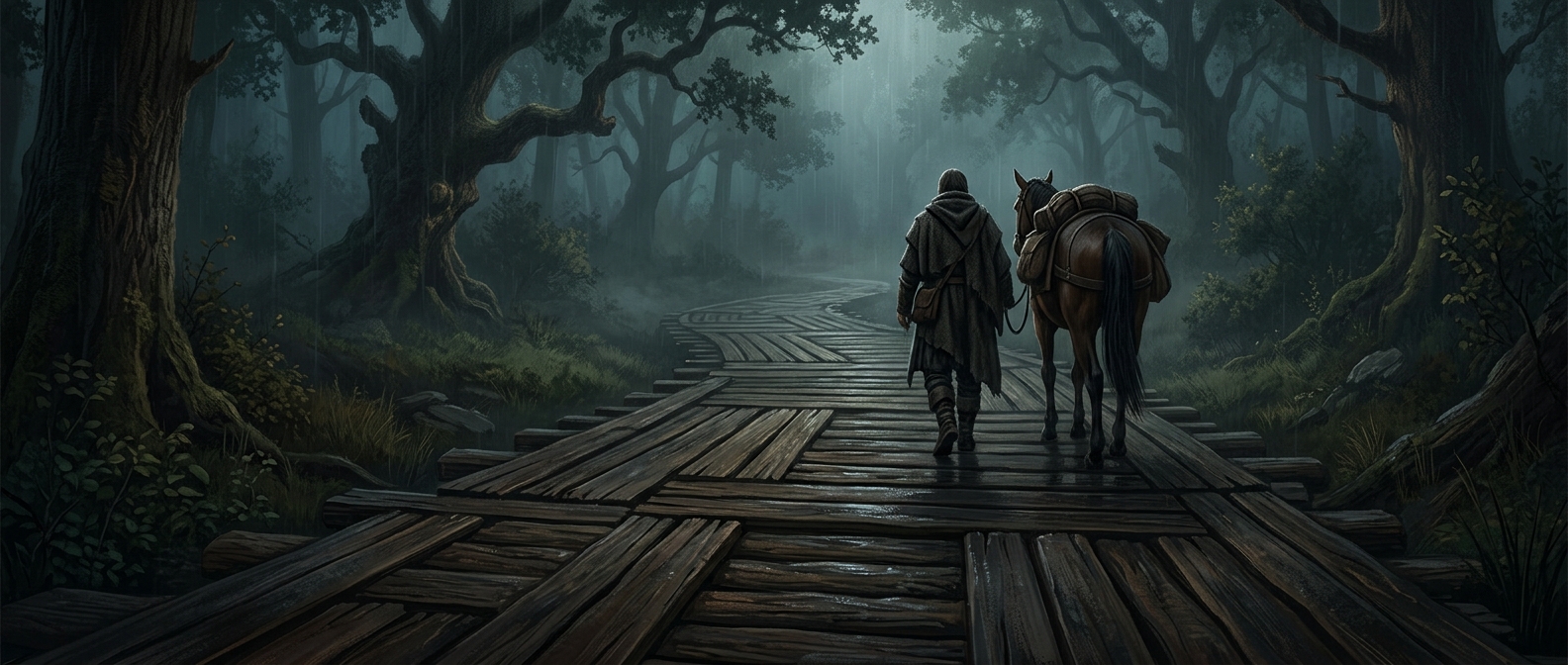
A road built from trees
In prehistoric Europe, a route across wet ground could be made by laying timber over it. Builders placed poles or split trunks across the direction of travel, creating a raised trackway—a primitive road surface that spread a traveler’s weight across a wider area instead of letting feet, carts, or animals press straight into soft soil.
This was a practical answer to a landscape problem. In a bog or marsh, the ground might look passable but give way under repeated traffic. A timber walkway offered a more reliable line through it, connecting dry patches or making a difficult crossing usable.
How the track stayed in place
The logs did not turn a swamp into solid ground. They formed a surface that could shift, sink, or become slippery, and building one required cutting and carrying substantial amounts of wood. Some trackways used laid poles; others used split planks or more carefully fitted timbers. Their construction depended on what materials were available and how wet the route was.
The wood itself also shaped what survives for archaeologists to find. In waterlogged, oxygen-poor soil, timber decays slowly, so parts of ancient paths can remain preserved long after exposed wood would have rotted away. Those remains reveal that people were engineering routes through difficult terrain well before stone paving became familiar.
A narrow path with a lasting effect
A wooden trackway was not a smooth, permanent highway. It was a targeted piece of infrastructure: labor-intensive to build, useful where ordinary ground could not carry traffic, and vulnerable to wear and decay. Its importance lay in making a crossing possible. In places where mud could stop movement altogether, a line of timber could turn an impassable wetland into a route people could actually use.