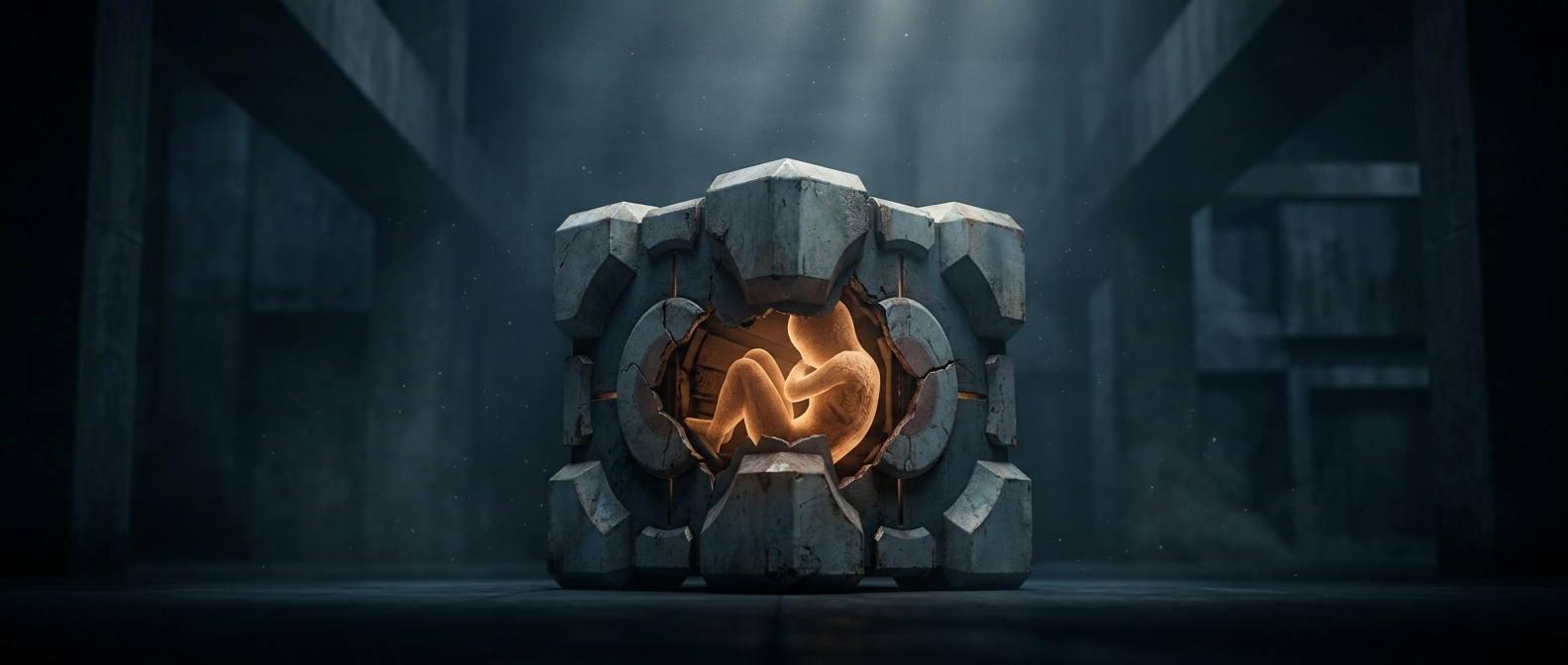
A puzzle object becomes a possible person
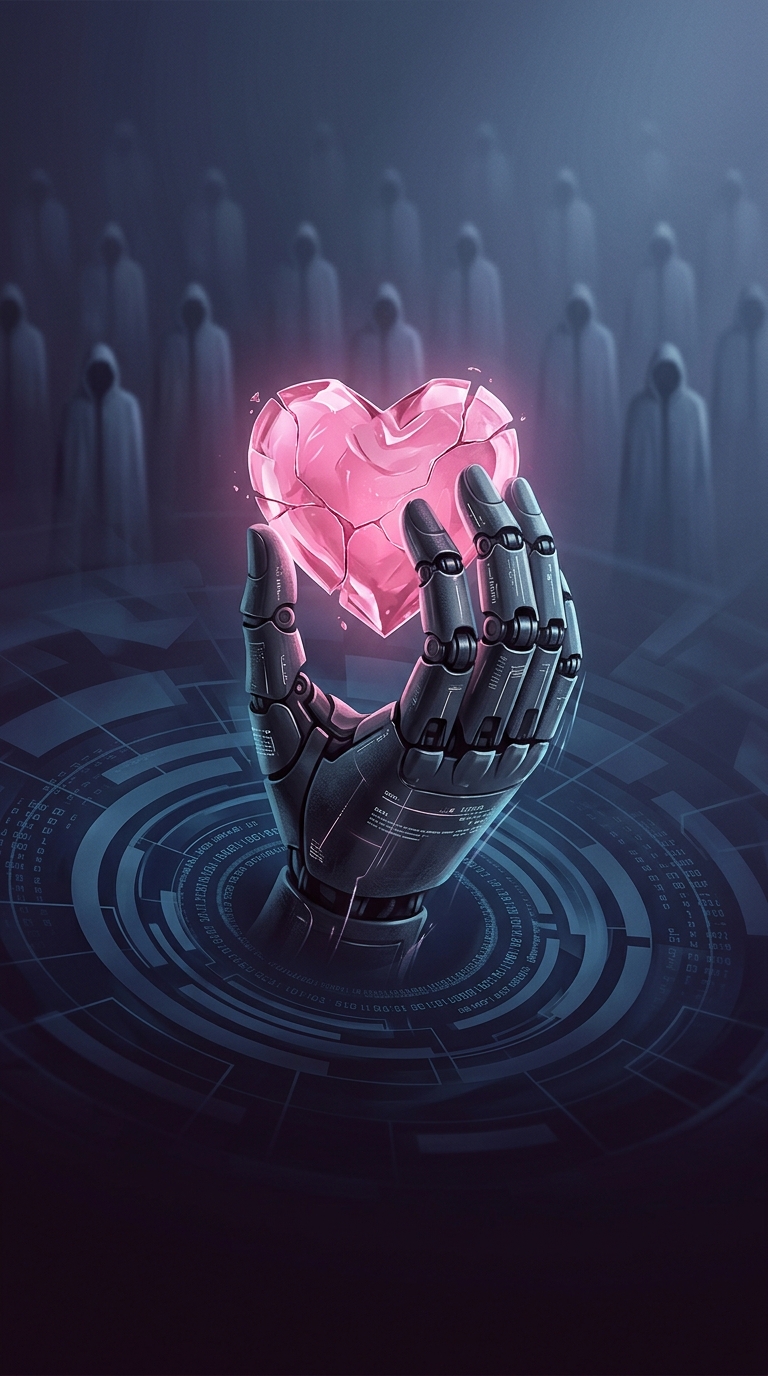
In Portal, a weighted storage cube is normally just a tool: set it on a floor switch, and a door opens. The “companion” version looks much the same, but its heart decorations and the facility’s strange warnings invite the player to treat it as more than equipment. The game hints that the cubes may contain the bodies of dead volunteers, without confirming that they do. That uncertainty is the point: an ordinary object suddenly carries a grim possibility.
The puzzle makes the joke personal
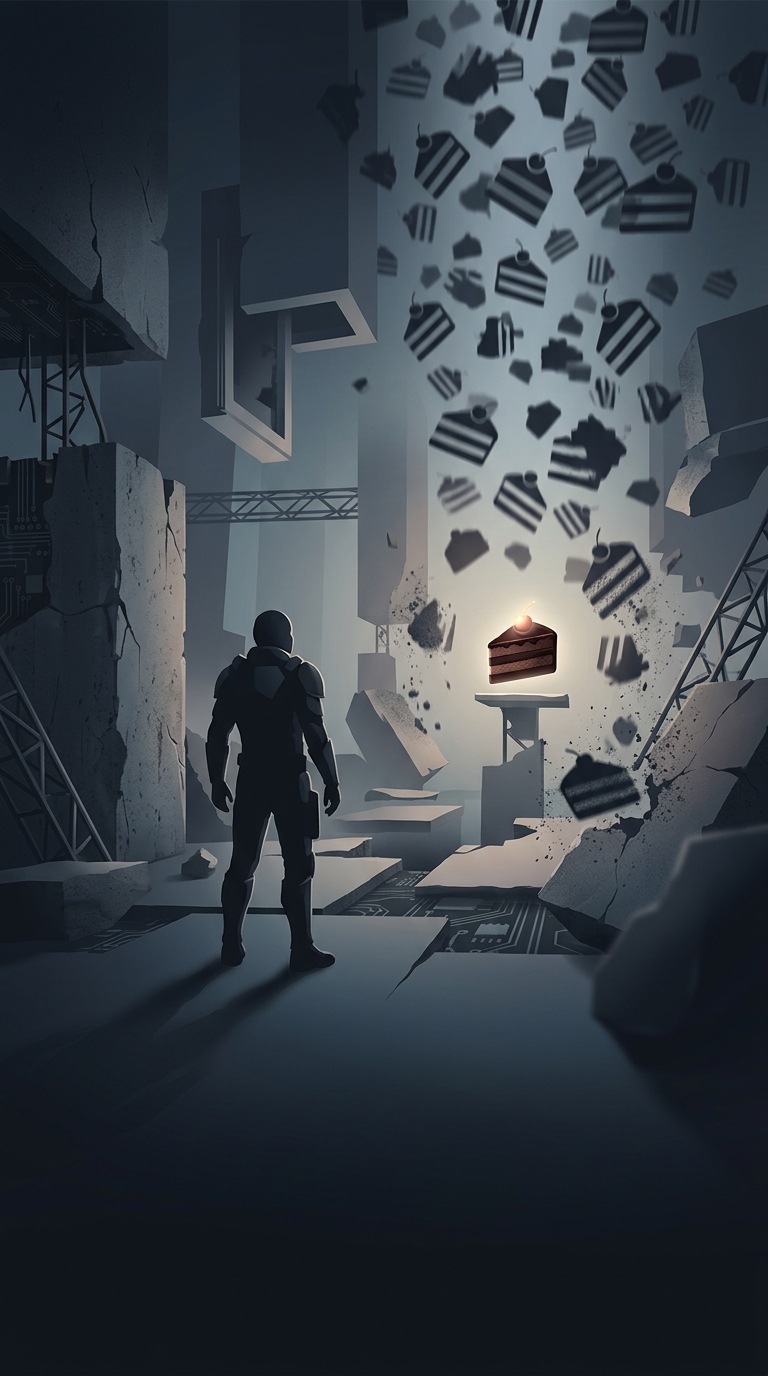
The player is asked to carry the cube through a test chamber and use it to solve puzzles. Then the chamber requires it to be destroyed in an incinerator before the player can continue. That turns a routine game action—discarding an object after it has served its purpose—into a small moral test. The cube has no demonstrated ability to feel, but the game has given it enough human associations that destroying it can feel uncomfortable.
The humor depends on the mismatch. The institution treats a potentially tragic secret as a casual matter of test procedure, while its artificial intelligence warns the player not to listen if the cube starts talking. The warning is funny because it is absurd; it is eerie because it suggests there might be something to hear.
Uncertainty does the unsettling work
The cube never needs to speak or reveal what it contains. The player supplies those possibilities, caught between the game’s clear instruction to use the object and its deliberately disturbing hints about what the object might be. By making the player carry the cube, rely on it, and finally destroy it, Portal turns a simple puzzle prop into a test of how readily we assign feeling—and personhood—to something designed to look like a companion.