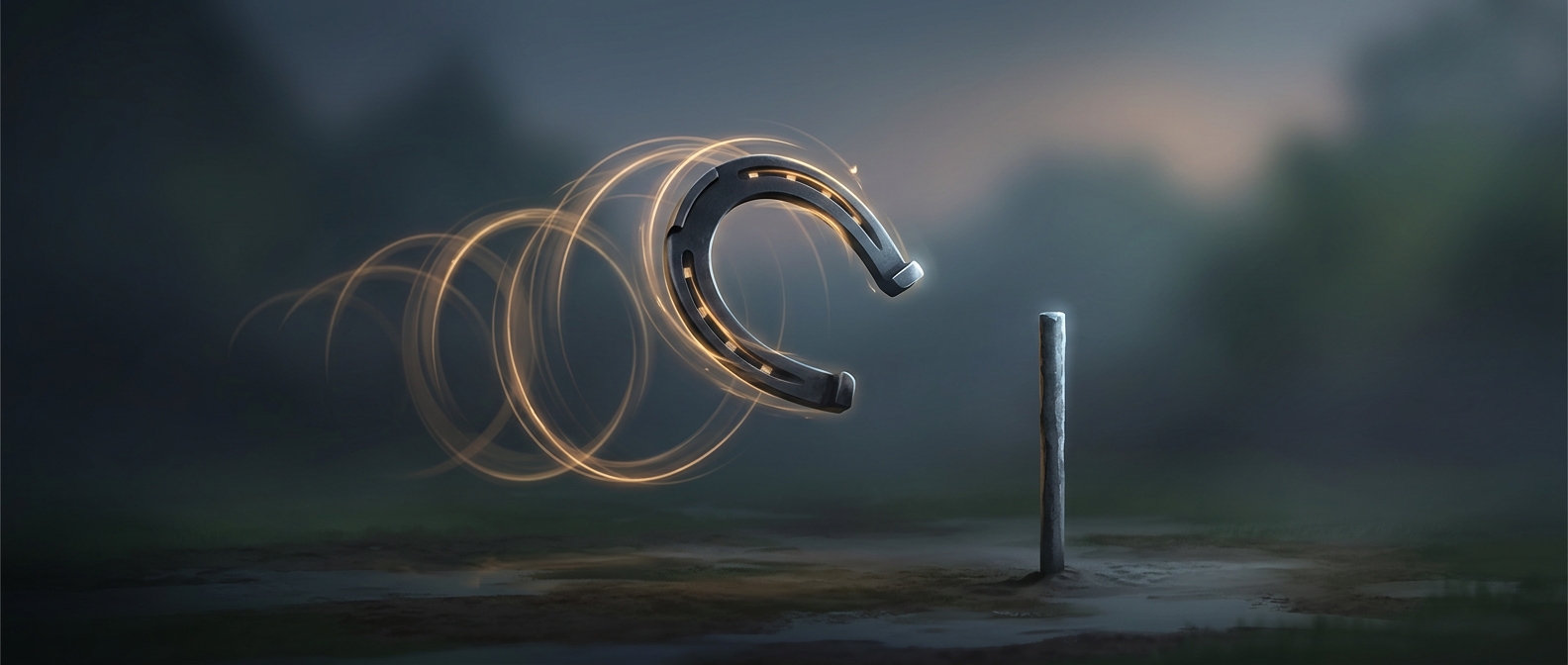
Why a Horseshoe Turns in Flight
A pitched horseshoe is not simply thrown toward the stake; the player also gives it a controlled spin. Pressure from the fingers and a small turn of the wrist set the shoe rotating as it leaves the hand. That rotation is angular momentum: once the shoe is spinning, it tends to keep turning in the same direction while it travels.
The spin helps make the shoe’s orientation at landing more predictable. The player can tune the grip and release so the open ends arrive facing the stake, where they have a chance to pass around it. Too little or too much rotation can leave the shoe poorly aligned, even if the throw reaches the right spot.
The Release Is a Timing Problem
A ringer requires more than hitting near the stake: the shoe must land with its arms positioned to surround it. Players therefore coordinate the shoe’s starting angle, its rotation, and the arc of the throw. The familiar one-and-a-quarter-turn delivery is one way to make that timing repeatable, though pitchers may favor different grips and releases.
The important skill is not spin for its own sake. It is controlling how much the shoe turns before contact, so its opening arrives in the right place at the right moment. A throw can look like a simple toss, but its success depends on a carefully timed relationship between the shoe’s rotation and its flight.