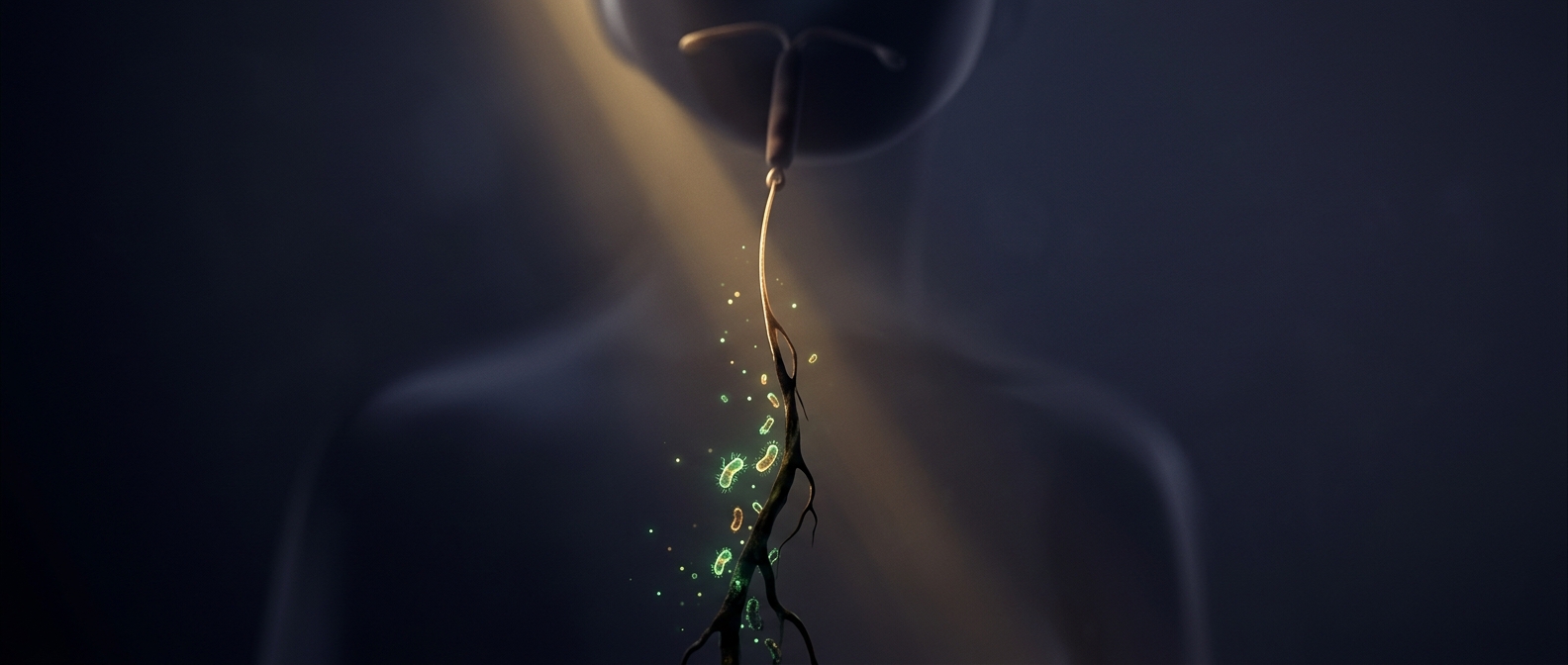
How a removal string became a pathway inward
An intrauterine device (IUD) sits inside the uterus to prevent pregnancy. A thin string extends through the cervix into the vagina so a clinician can check the device and remove it without surgery. In the Dalkon Shield, that string was not a single smooth filament: it was made of many fine strands braided together.
The spaces between those strands could act like narrow channels. Fluid could wick—move through tiny gaps—along the string, carrying bacteria from the vagina toward the uterus. The string’s purpose was to provide access from the outside; its construction could also provide a route in the opposite direction.
Why the design mattered
The string did not create infection by itself, and an infection was not an inevitable result of using the device. But a pathway that could help bacteria travel upward mattered because infection in the upper reproductive tract can become severe. The multifilament design was implicated in serious pelvic infections associated with the Dalkon Shield, including cases that proved fatal.
The episode exposed a consequential design tradeoff: a small component intended to make a device easier to monitor and remove could affect safety throughout the body. A string that looks like a simple connector can also interact with fluids and microbes, turning its material and structure into part of the medical device’s function. In this case, the route meant to make removal possible also had to be considered as a possible route inward.