A melody can cross the boundary with you
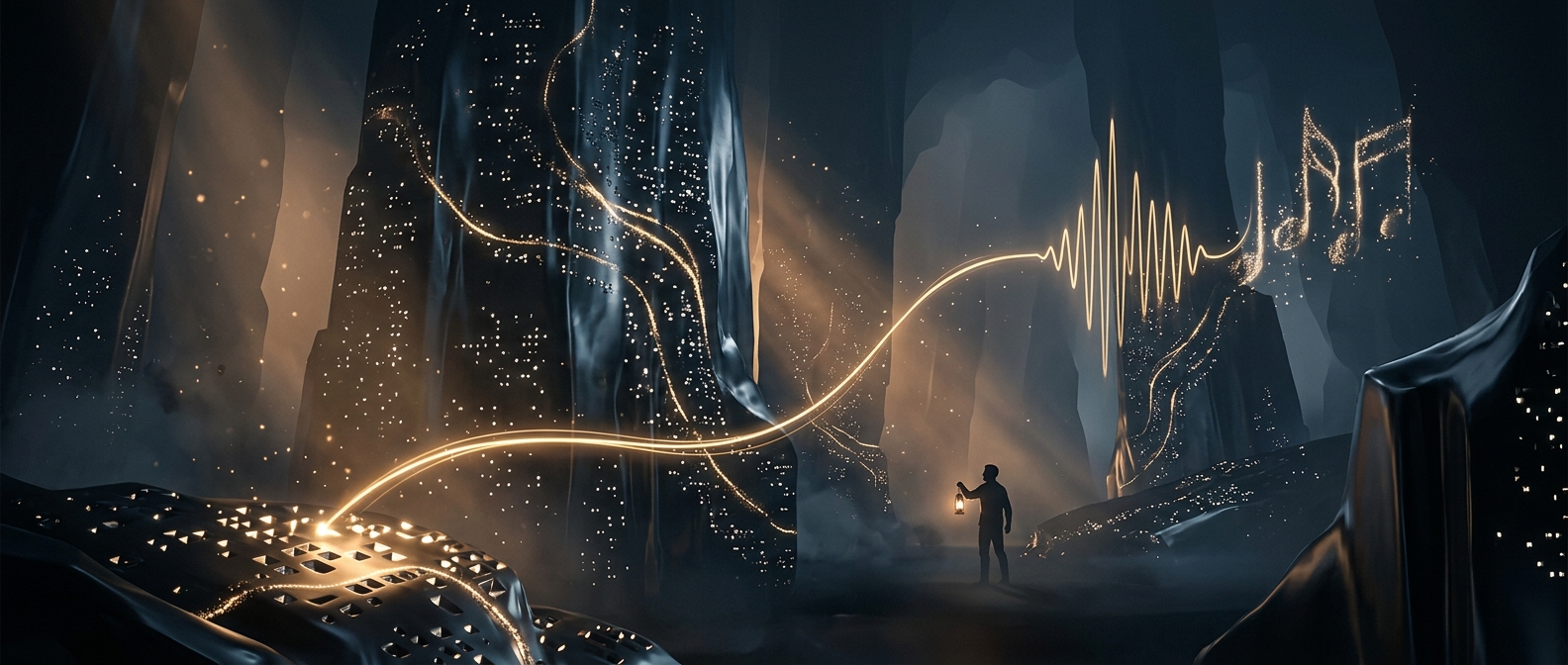
A game does not have to switch from one finished track to another the moment a player enters a new area. Composers can instead write a transition that lets a musical idea from the village persist as the dungeon’s sound takes shape. A familiar tune might continue in a darker register, move to a different instrument, or be joined by new layers that change its mood.
The result is a musical handoff: the player hears continuity even as the setting changes. The village melody remains a thread connecting the two places, while the added sounds signal that the dungeon has different emotional stakes.
The game has to make the change feel timed
To pull off that handoff, the music system needs a suitable moment to act. The game can detect that the player has crossed an area boundary, then start the transition at a musical point—such as the end of a phrase—rather than cutting in halfway through a beat. If the new and old material share a compatible tempo or musical structure, the shift is easier to make smoothly.
The composer and developers are solving two problems at once: the music must respond to where the player goes, but it must also sound as though it belongs to one continuous piece. A transition can be written to work over a short span, so the game does not need to stop the music while it prepares an entirely unrelated track.
The boundary becomes part of the score
That matters because players rarely cross a doorway at a perfectly arranged moment. A rigid track switch can make a world feel like a set of separate scenes; a designed transition can make the journey itself sound connected. The change in music then does more than announce a new location: it lets the old place echo briefly inside the new one.