Why Jaws came with a mid-movie interruption
LaserDisc stored a film as a pattern of tiny marks read by a laser from a 12-inch disc. The picture and sound were encoded along a spiral track, but the early format could fit only about half an hour of video on each side. When one side ran out, the viewer had to open the player, turn the disc over, and start the other side.
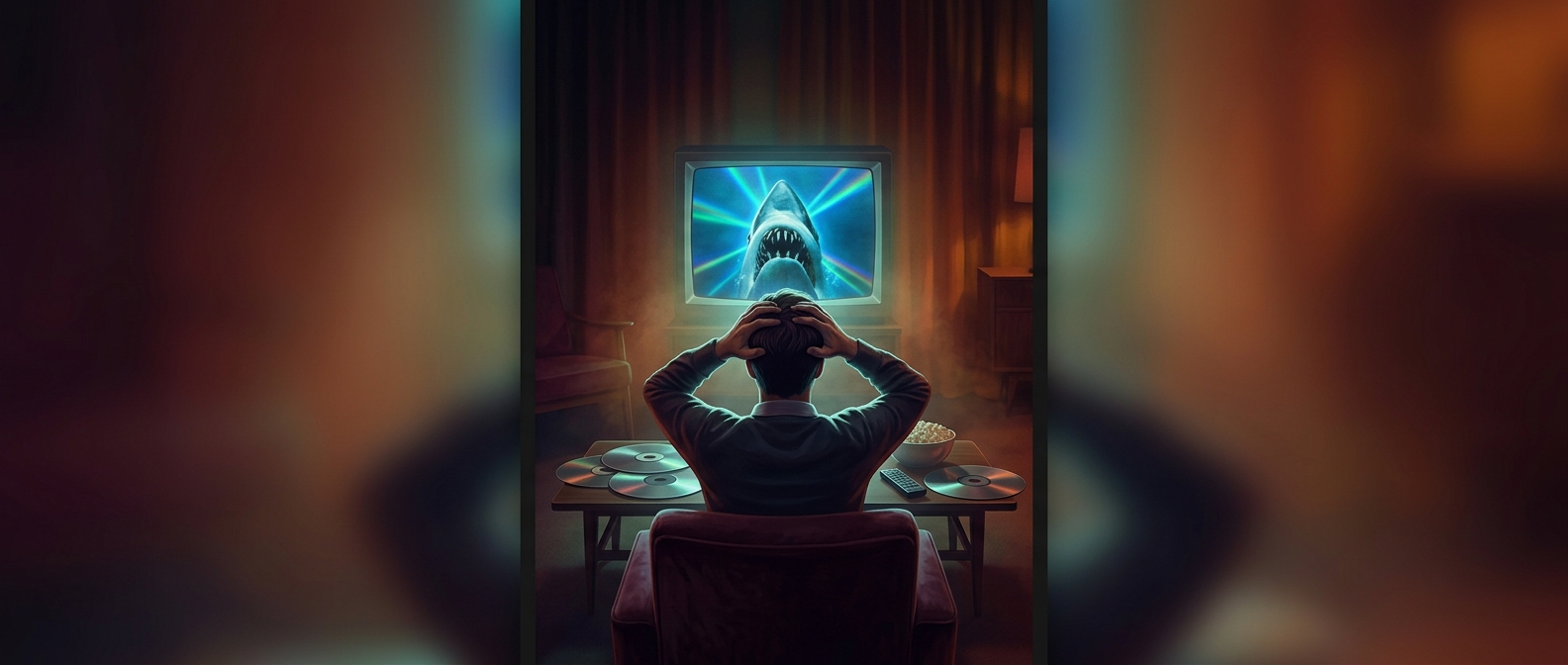
That limit shaped the experience of Jaws, the first movie released on LaserDisc. Its shark-attack suspense could be interrupted not by a commercial break or a scene change, but by the practical need to flip the disc.
The tradeoff behind the format
Early LaserDisc players read the disc at a steady rate, a method that preserved a consistent picture but used up disc space relatively quickly. Later versions could vary the disc’s rotation speed as the laser moved outward, fitting more video on a side. Even then, long films could require multiple sides or discs.
LaserDisc offered a sharp image and direct access to scenes compared with tape, but it was still a physical medium with a hard capacity limit. For viewers of Jaws, that meant the technology’s promise of a movie at home came with a distinctly hands-on intermission: at the tensest point, someone might have to get up and turn the disc.