Why a Date’s Oversharing Can Make Everyone Squirm
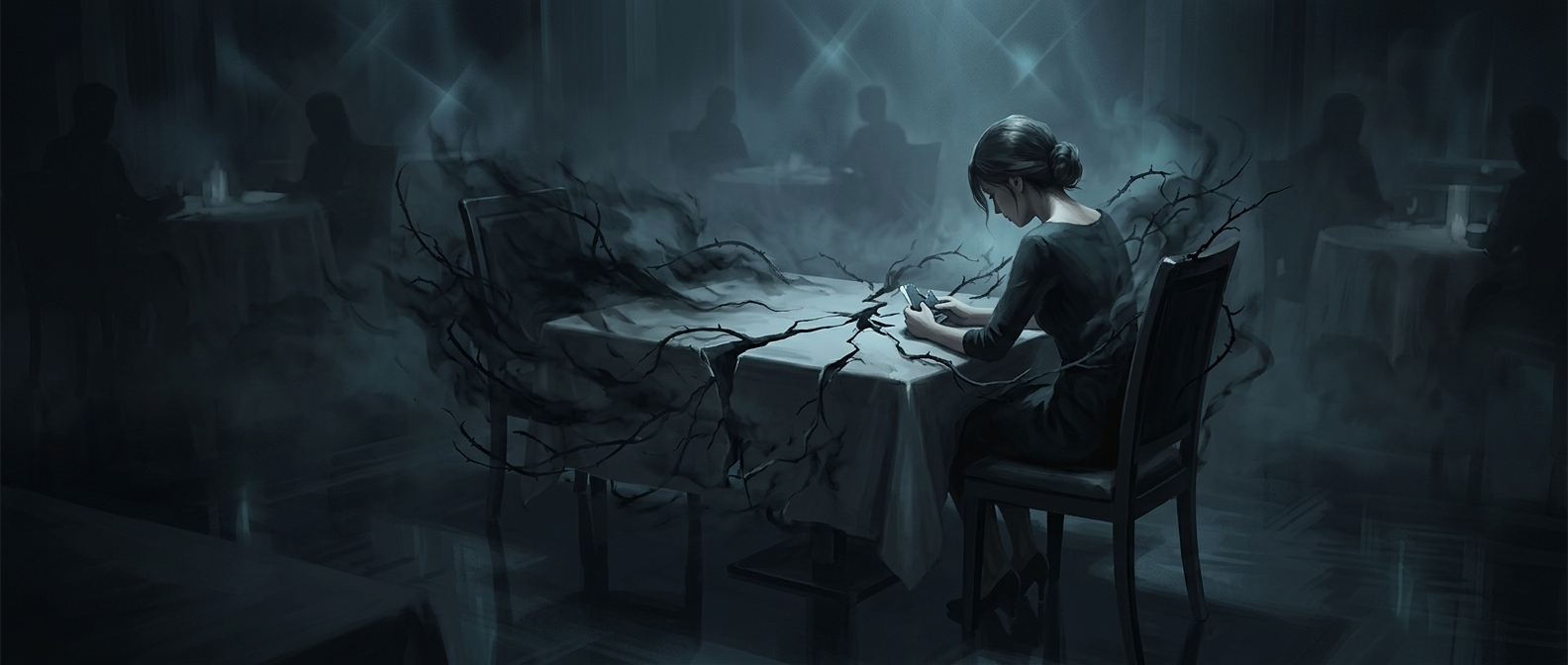
A first date is a small social performance: both people are trying to learn about each other while also showing that they can handle the situation. Complaining at length about an ex can abruptly change the script. Instead of a conversation about the two people at the table, the date becomes an audience for unresolved conflict—and the new partner may wonder whether this is how future disagreements will be handled, too.
That mismatch is part of what makes the moment uncomfortable. The speaker may act as if the story is ordinary, while the date and server recognize that the conversation has become unusually personal for the setting. When people in the same room respond to the same moment in different ways, the gap can feel more exposing than the disclosure itself.
The Bystander’s Secondhand Embarrassment
Secondhand embarrassment is discomfort we feel when someone else appears to violate a social expectation or lose face. We are not embarrassed for ourselves in the literal sense, but we can mentally take the other person’s perspective: we imagine how they might look to everyone watching and how they could recover.
On a date, that perspective-taking has several targets. The partner may feel put on the spot, while the server is expected to stay polite and keep the meal moving. Because neither can easily leave the interaction without making it more awkward, their silence can seem especially charged. The discomfort comes not only from hearing intimate details, but from watching people navigate a moment they did not choose.
Why the Silence Feels So Loud
Silence provides no easy cue for how the speaker will respond. Will they notice the change in mood, keep talking, or take offense? That uncertainty can prompt bystanders to monitor faces and tone closely, trying to predict what happens next. The more attention they give the scene, the more intensely awkward it can feel.
A revealing detail is that the speaker may not experience the same embarrassment at all. If they do not recognize the social mismatch, they may see their story as honest conversation. The audience, meanwhile, is already working out how to restore the date to a shared, ordinary interaction.