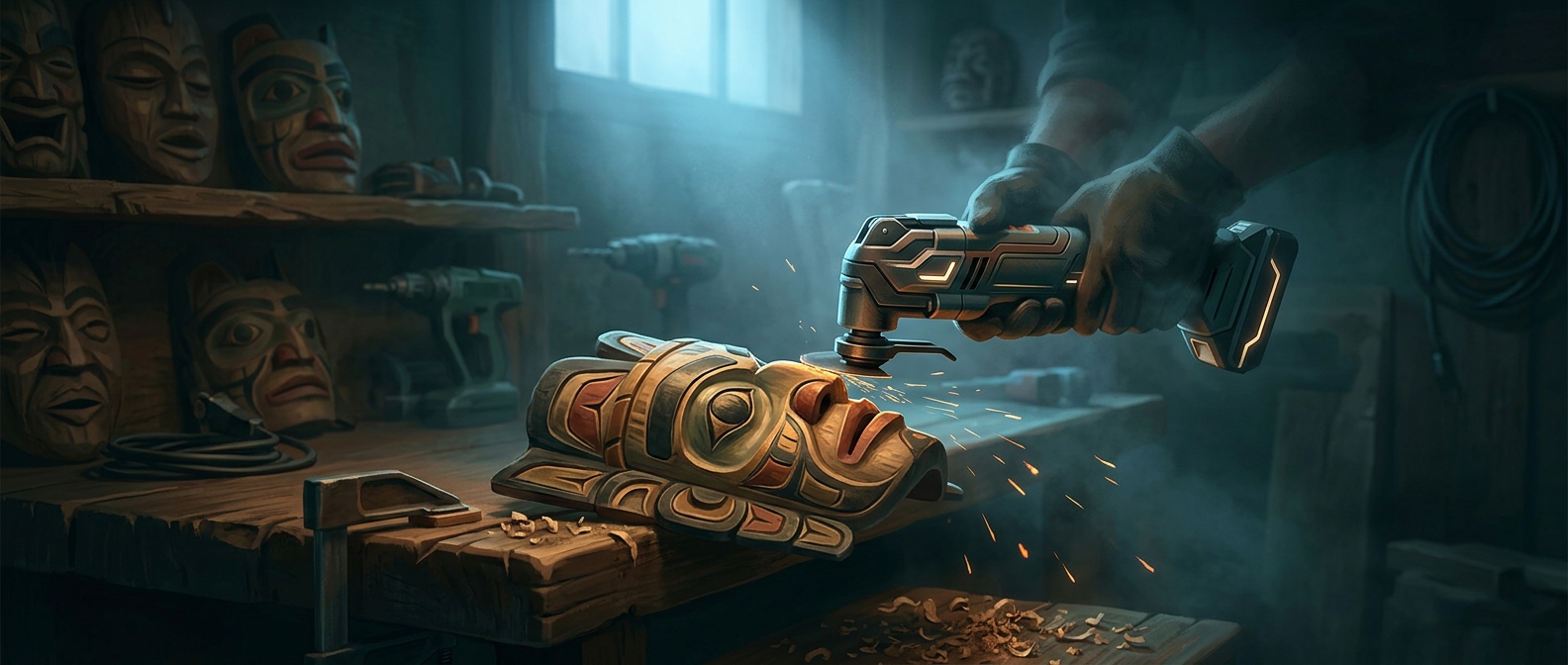
How a “hand-carved” souvenir reaches the shelf
A carving can be shaped by hand and still come from a production line. In workshops serving busy tourist markets, workers may use belt saws to cut rough blanks, then electric sanders to smooth surfaces and spray lacquer to finish them. The tools speed up repetitive stages that would otherwise take much longer.
That distinction matters: “hand-carved” may describe part of the process, not every step. A worker might carve the recognizable details by hand after machines have shaped the basic form—or use hand tools mainly for finishing. Shop labels do not always spell out where that line falls.
Demand changes what gets made
Tourist demand often favors familiar designs that are easy to recognize, carry, and buy quickly. Producing many similar pieces helps workshops keep shelves stocked and prices accessible. Power tools make that volume possible, while workers’ skill can still shape the details and finish.
The result sits between one-of-a-kind craft and fully automated manufacturing. It may reflect local carving traditions, but its production can also be adapted to the pace and preferences of the souvenir trade.
What to look for as a traveler
If the process matters to you, ask which parts are carved by hand and which are machine-shaped or finished. A clear answer tells you more than the word “handmade” alone. Looking closely at repeated designs can also reveal how standardized a piece is, though repetition by itself does not show exactly how it was made.
The useful question is not simply whether a machine touched the wood. It is where human skill enters the process—and whether the seller can explain it.