Why the Douro’s granite troughs matter
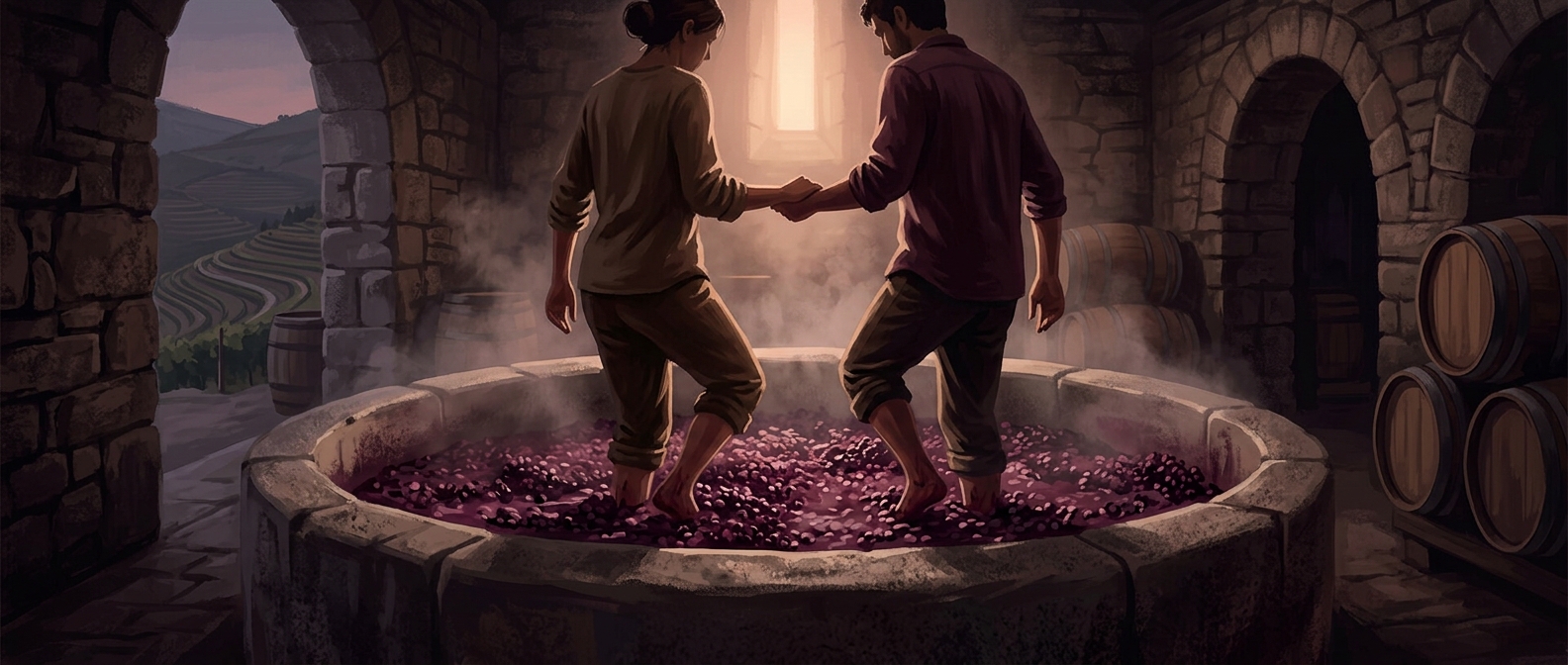
In Portugal’s Douro Valley, a lagar is a broad, shallow stone trough used to crush grapes. Its flat floor gives a group of people room to tread together, turning a harvest task into a coordinated part of winemaking. The stone is sturdy enough for repeated use and can be cleaned between batches.
Feet do more than crush
Treading breaks grape skins so juice can flow and begin fermenting. The skins also release color and compounds that shape a wine’s texture. Bare feet provide a relatively gentle way to work the fruit: they can rupture skins without grinding the seeds as aggressively as some mechanical crushing methods might. That distinction matters because crushed seeds can contribute harsh, bitter flavors.
The harvest master’s calls help keep the group moving across the lagar rather than leaving some grapes untouched. Rhythm is practical as well as ceremonial: consistent coverage helps turn a mass of whole fruit into an even mixture of juice and skins, ready for the next stages of winemaking.
A harvest leaves its mark
The purple staining comes mainly from pigments in grape skins, which are released during treading and can cling to skin after the work is done. It is a small, visible trace of the same contact that gives red wine its color. In the lagar, the harvest is not just bringing grapes in from the vines; it is the moment people begin transforming them by hand—and, in the traditional method, by foot.