A walkway cut below the waterline
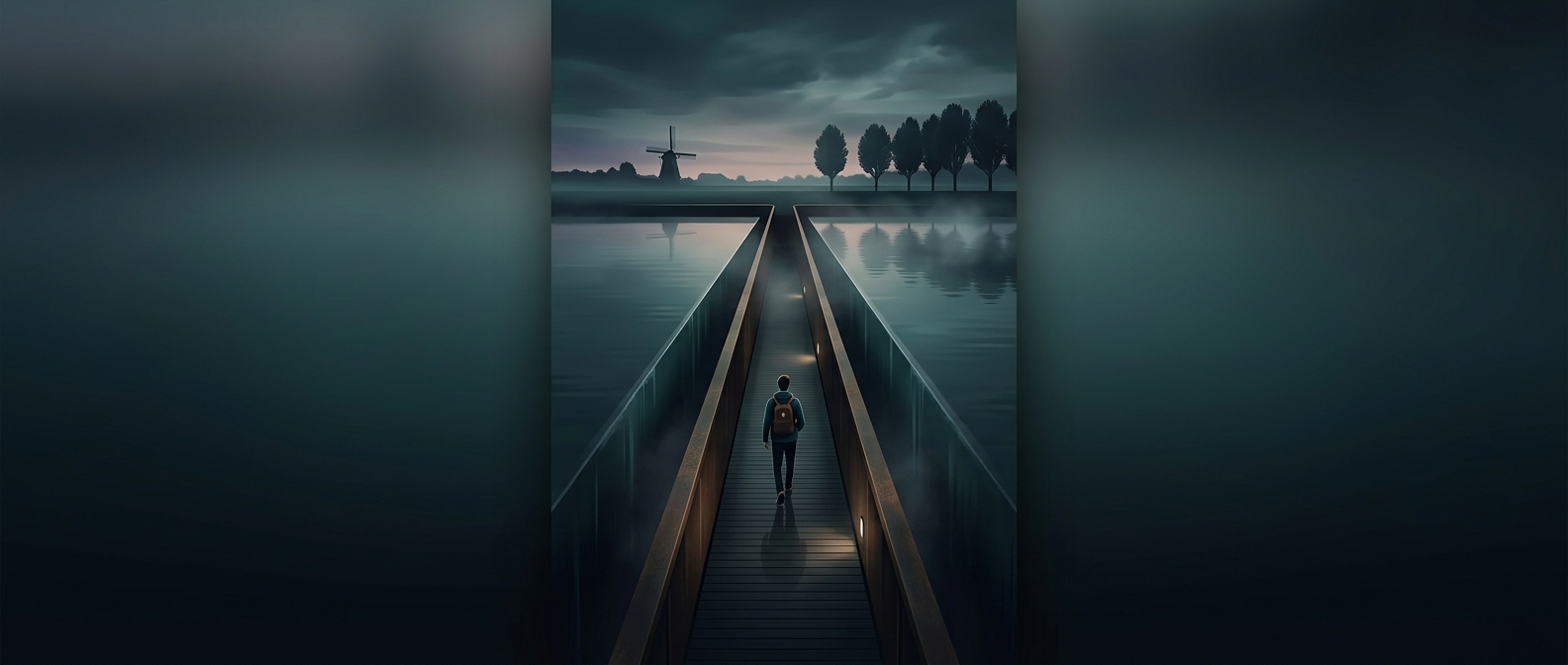
At Fort de Roovere in the Netherlands, the Moses Bridge crosses the old moat by dipping down into it rather than rising above it. Its timber floor sits low enough that the water appears to continue on either side, while the bridge’s solid side walls keep the moat out of the walking channel. From the banks, those walls are mostly hidden by the water, so visitors seem to pass through the moat itself.
The effect depends on a simple change in viewpoint: from the path, the bridge is nearly invisible; from inside it, the water is close beside you. The name evokes the biblical story of Moses parting the sea, but the bridge works through ordinary construction, not a gap in the water.
Crossing without changing the view
The fort’s moat was part of a defensive landscape, where open water helped protect the earthworks. A conventional raised bridge would have been easy to spot and would have interrupted the low profile of the fort. Sinking the crossing keeps it discreet while still giving visitors a direct route across.
That choice turns an engineering constraint into the experience. The bridge must hold back water at its sides and keep the passage usable, but its most striking feature is what it avoids: no high span, no sweeping view over the moat. You cross at water level, with the banks and the water seeming to close around the path.