Why an Owl on the Roof Could Seem Like a Warning
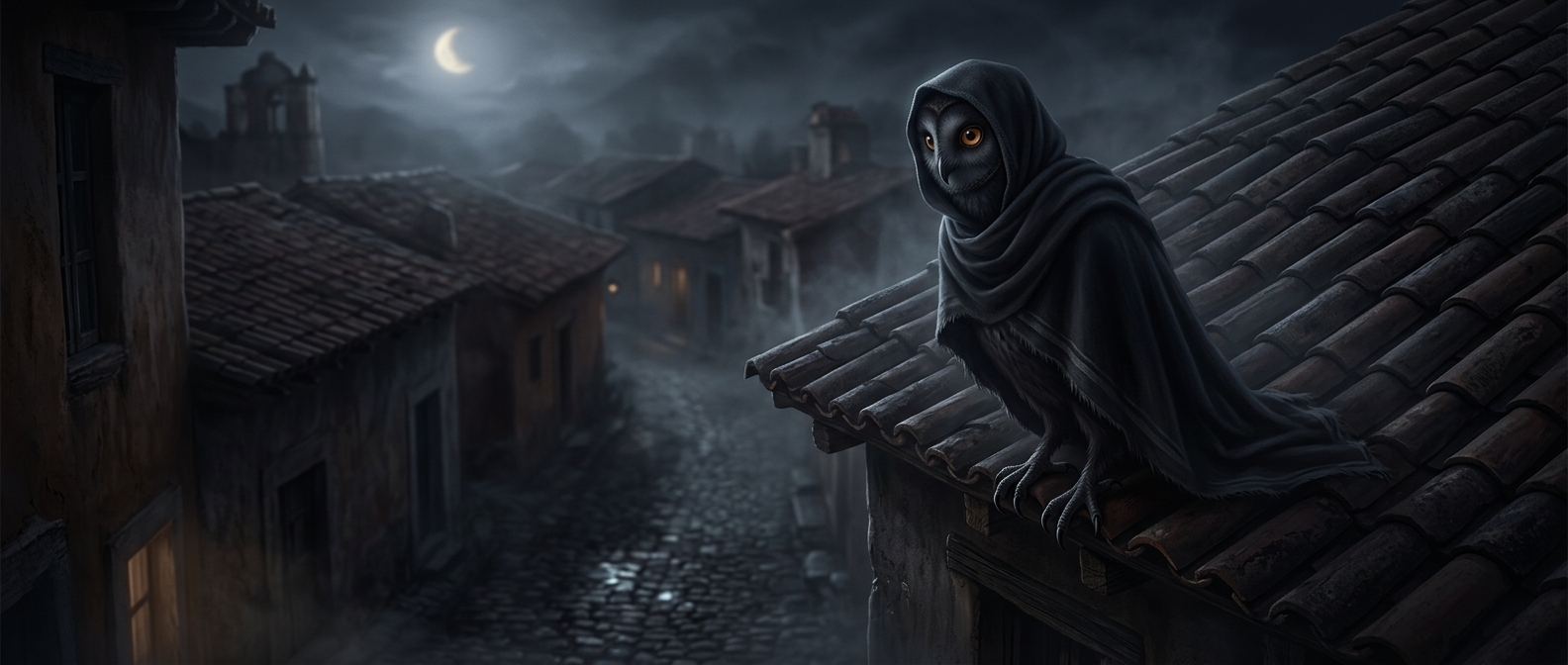
In Mexican folklore, an owl calling or appearing around midnight could be interpreted not simply as wildlife but as a witch in bird form, watching from the rooftops. The belief gave an ordinary nighttime encounter a human intention: someone might be observing the household or preparing mischief.
That interpretation mattered because darkness hides the details that would settle the question. A flutter of wings, a shifting shadow on roof tiles, or an unfamiliar call could be heard or glimpsed without revealing its source. Folklore supplied a story for that uncertainty—and a reason to pay attention.
How the Story Changes What People Notice
Once an owl is associated with a disguised watcher, small sounds can take on added weight. A roof becomes a place from which someone might spy; a sudden rustle becomes a possible sign of movement rather than background noise. The belief does not require every owl to be treated as supernatural. Its force lies in making one unsettling encounter feel like a clue.
Such stories also turn a private experience into something a community can recognize and discuss. People who have heard an owl at night can connect the same concrete details—darkness, a rooftop, a brief glimpse—to a shared account of hidden mischief. The next time wings stir above the house, the sound may be ordinary, but the folklore gives it a second meaning.