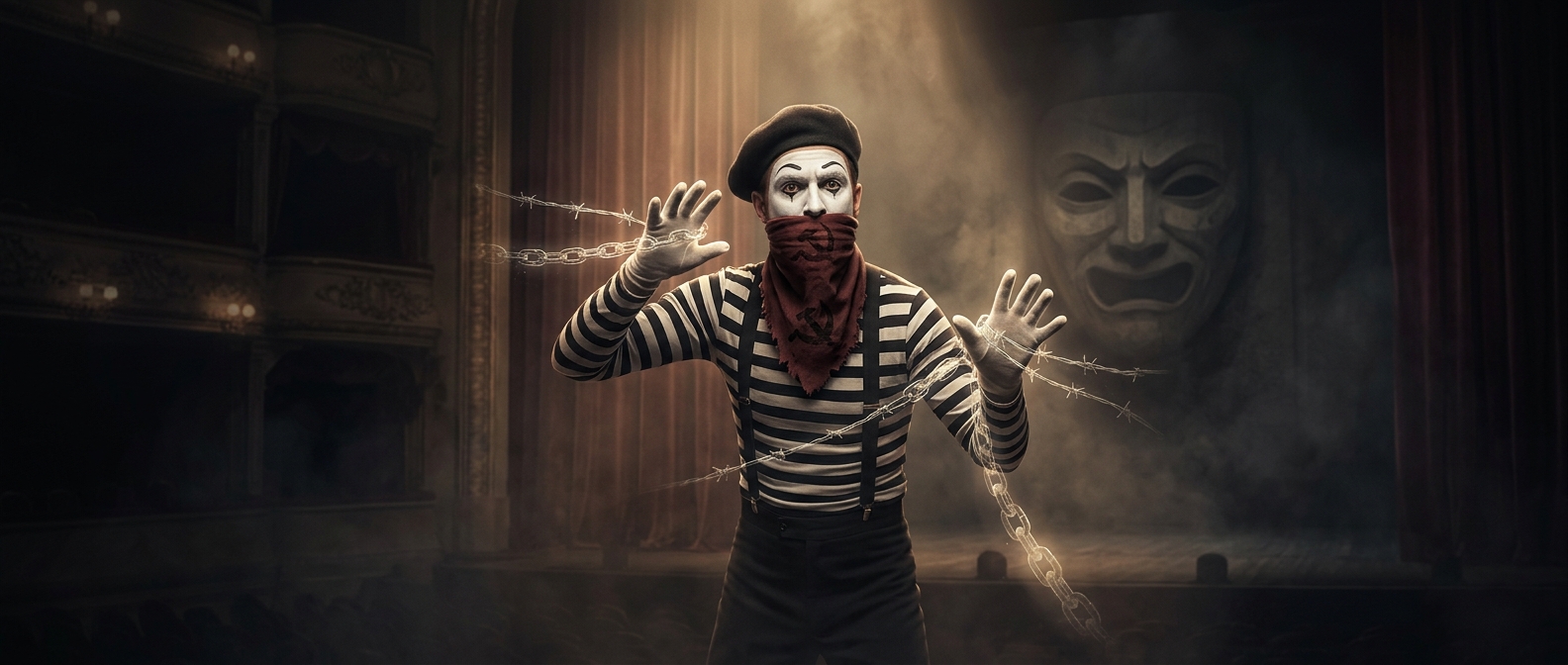
How silence became a performance tool
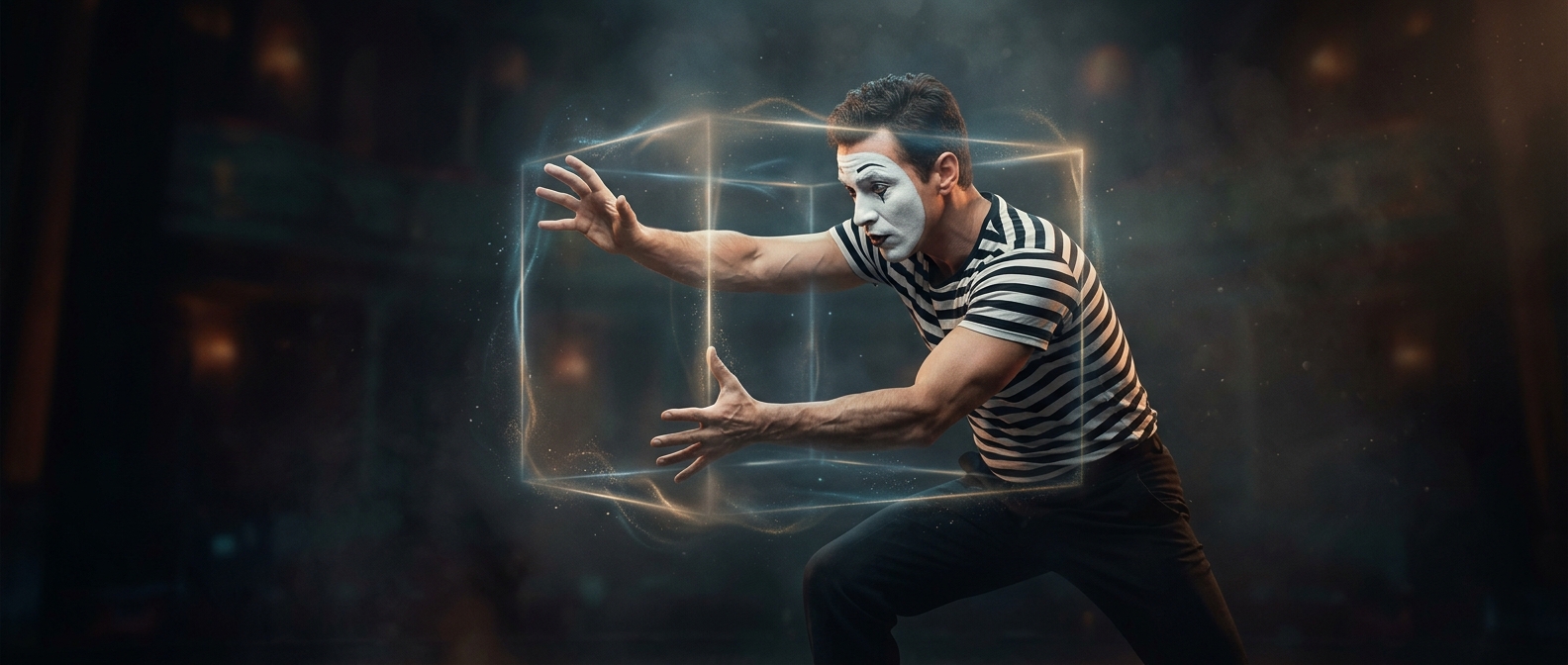
A ban on spoken acts did not necessarily stop performers from drawing a crowd; it changed what they could use to hold one. If an actor could not deliver an unlicensed story aloud, gestures and movement offered another route. A turn of the body could suggest a character entering, a repeated motion could make an action legible, and an exaggerated reaction could show what had just happened—all without spoken lines.
Making a story readable without words
This approach put unusual pressure on the performer’s body. Audiences had to recognize not just what an actor was doing, but what the movement meant. Clear, enlarged gestures helped a story read from a distance, while changes in posture or expression could distinguish one character or emotion from another. The audience supplied some of the missing information, connecting the visible actions into a scene.
The restriction therefore shaped the art itself: instead of treating silence as an absence, performers made it part of the technique. A speech ban could limit what was said, but it could not fully prevent an actor from communicating through movement. That practical workaround helped make gesture-driven storytelling a recognizable form of entertainment.