How a Capuchin Becomes a Screen Performer
A monkey’s film role is built from small, repeatable actions—not from understanding a script or playing a character in the human sense. A trained animal may learn to respond to cues with a particular movement or behavior. The director and editor then shape those moments into a scene that appears continuous and purposeful.
That process makes an animal performer’s work different from a human actor’s. A capuchin can handle objects and move through a set, but it cannot reliably deliver a long sequence of dialogue-driven actions on command. Scenes are therefore designed around what the animal can safely and consistently do, with camera angles and editing supplying much of the storytelling.
Why the Credits Add Up
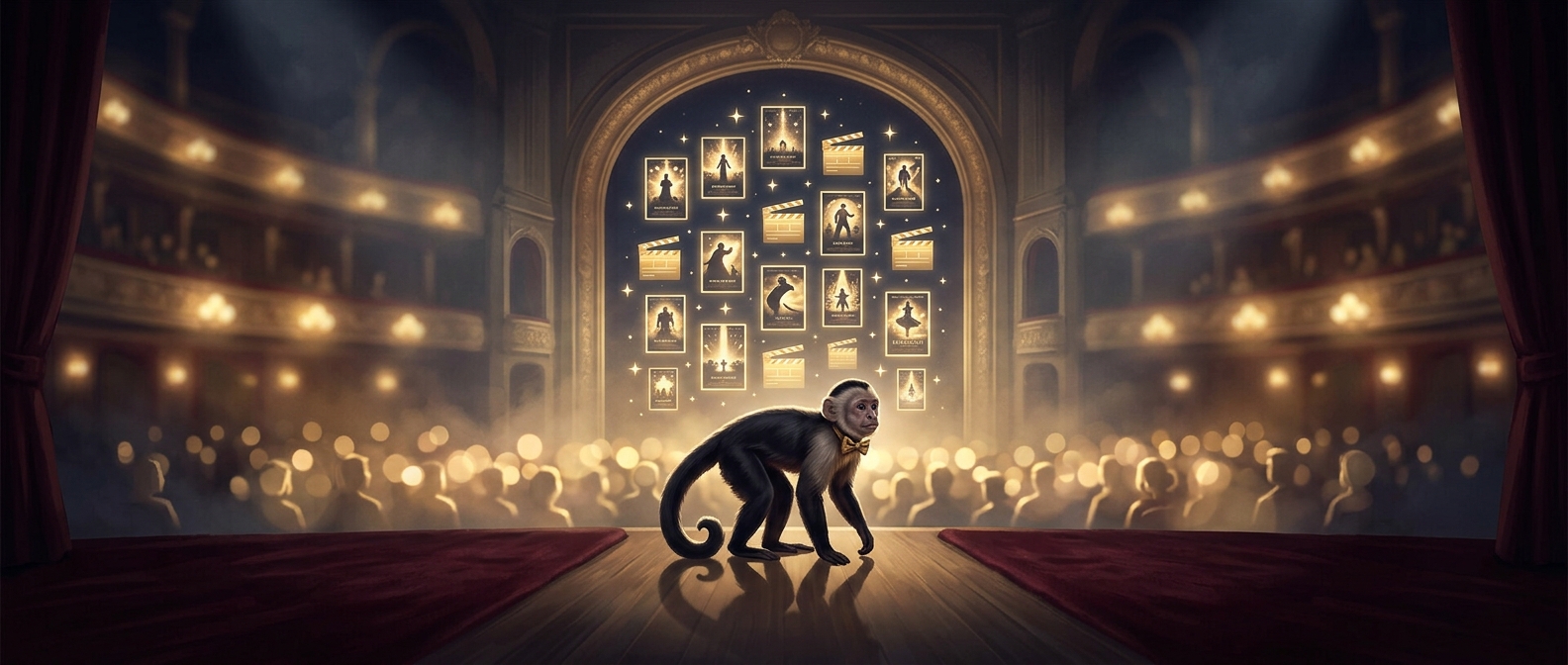
A screen credit can come from a short appearance as well as a substantial role. Across productions, even brief appearances require an animal to work within the practical limits of a set: lights, cameras, people, and repeated takes. The performance must fit the scene without asking the animal to behave like a human cast member.
That is the hidden craft behind a familiar face in multiple films. The audience sees a character appear at just the right moment; the finished scene is the result of trained behavior, careful staging, and editorial choices working together.