The pose underneath the animation
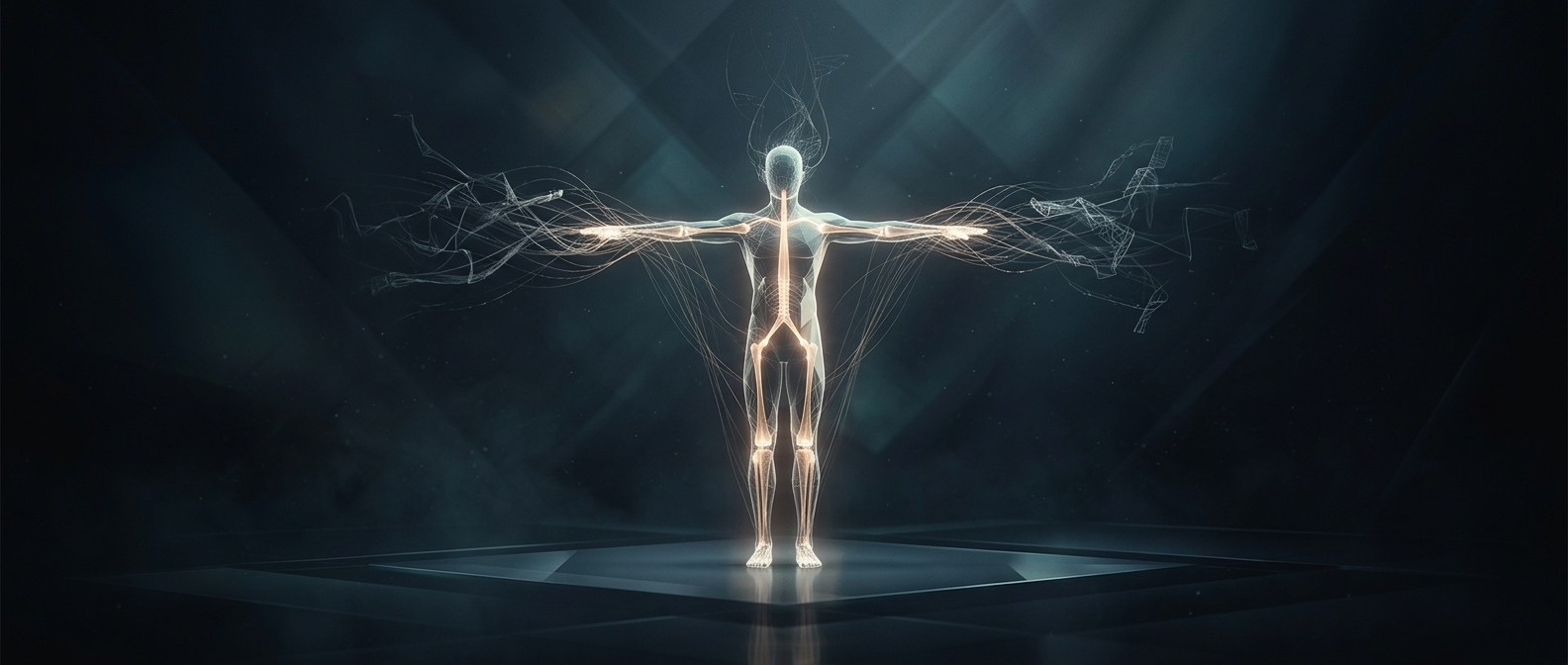
A game character is more than a shaped mesh. Beneath the visible surface is a rig: a set of virtual bones and joints that tells the game how parts of the body can move. The mesh is attached to that rig, with each patch of skin assigned to one or more bones. When a bone moves, the attached vertices move with it, bending an arm or turning a head.
Artists need a known starting arrangement for building and testing this setup. A common choice is the T-pose, because straight, outstretched arms make it easier to position the rig and check how the mesh follows it. The game can then play animation data that changes the bones’ positions and rotations over time.
When the movement never arrives
The pose becomes conspicuous when the character model loads but its animation does not. The game may have the mesh and rig ready while an animation file is missing, an animation has not been assigned, or the code that should start it has failed. With no new bone movements to apply, the character stays in its starting arrangement.
That makes a T-pose a useful clue, not a diagnosis: it points toward a problem in the path between the character’s rig and its animation, but does not identify the specific cause. For developers, the stiff figure can reveal that the model itself loaded while the motion system did not. For players, it turns an invisible technical gap into an unmistakable sight: a character ready to move, but receiving no instructions.