Why a rooftop approach has to be planned in three dimensions
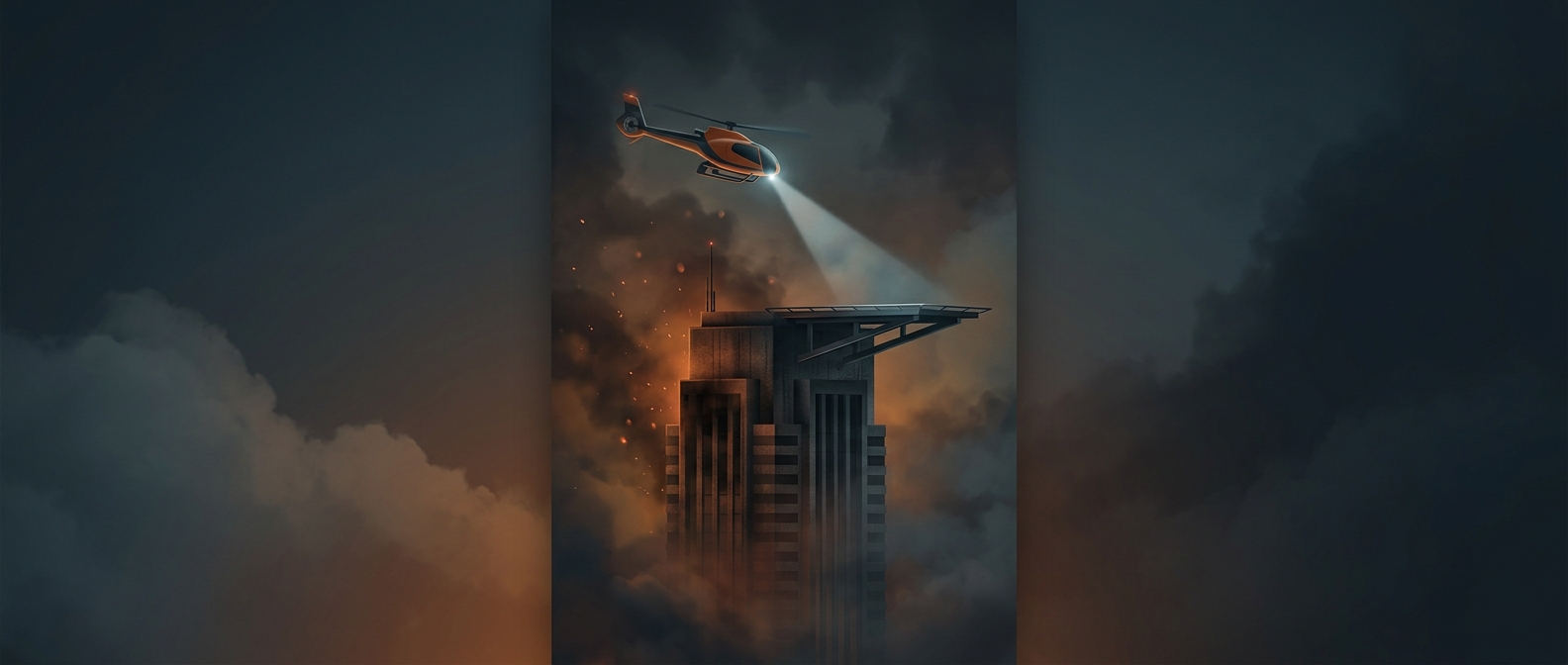
A roof can look like an open landing spot from above, but a helicopter must reach it without its rotor blades or tail coming too close to nearby walls, antennas, lights, or other aircraft. The pilot therefore needs a usable path not just to the pad, but away from it again. A route that clears the roof on descent may leave too little room to climb out if the landing must be abandoned.
Wind complicates that geometry. Buildings bend and speed up the air around their edges, creating shifting currents that can disturb a helicopter close to the roof. The main rotor also pushes air downward; near a building, that flow can be disrupted and become turbulent. Pilots account for wind and obstacles when choosing an approach, then make small corrections to keep the aircraft stable over the landing area.
The landing area is part of the flight plan
A hospital pad is designed as a defined touchdown area, not simply a flat patch of roof. Markings and lighting help pilots identify it, while the structure must support the aircraft and its loads. Nearby rooftop equipment and the pad’s edges matter too: a helicopter may fit on the painted surface while its rotors still need a much larger clear envelope.
That is why the final descent is only one part of the maneuver. The pilot must arrive aligned with a safe approach, preserve control in disturbed air, and leave a clear route for takeoff. On a rooftop, the margin for improvising is limited; the safest landing is shaped by the path in and the path back out.