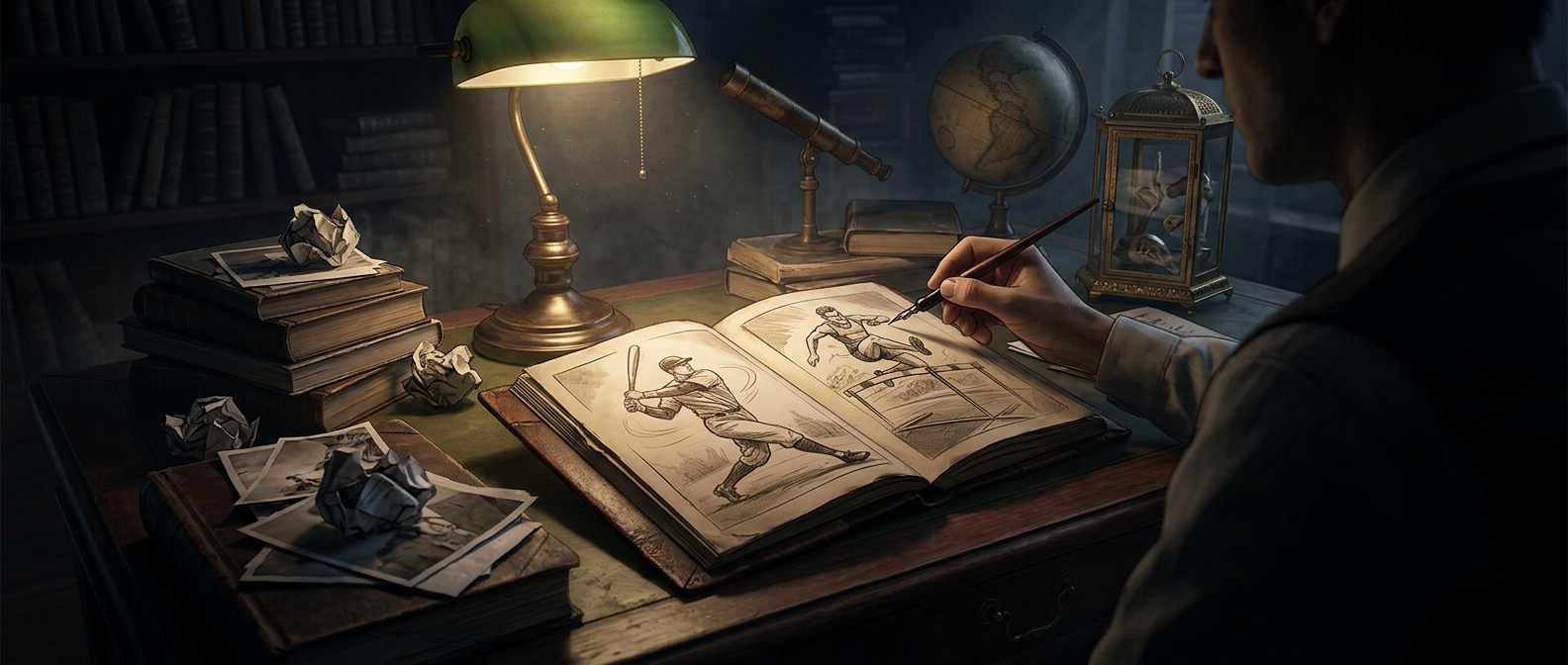
A sports page became a collecting machine
In 1918, Robert Ripley was drawing for a newspaper sports page when a quiet news day left him short on material. He filled the gap with sketches about unusual athletic records and competitors, under the title “Champs and Chumps.” The feature’s appeal lay in its contrast with routine game coverage: it offered readers a quick surprise about what people could do, or how oddly a contest could unfold.
Editors’ response turned a one-day solution into a repeatable format. Rather than depend on a steady supply of major sports stories, Ripley could build each installment around a self-contained curiosity. The drawing made the item easy to scan, while the unusual fact gave readers a reason to stop.
From sports curiosities to a broader world of oddities
The format also gave Ripley room to widen his subject matter. Once readers and editors were interested in the strange and unexpected, the same approach could reach beyond athletics: find a fact that sounds hard to believe, present it plainly, and let its oddness carry the story. His collection grew from that editorial habit—not from a grand plan for an attraction or a brand, but from a feature that could keep finding new material.
That shift mattered because it changed the organizing principle. The subjects no longer needed to belong to one sport or even one field; they only needed to be surprising enough to merit a place beside the others. A slow day on the sports desk had supplied the seed of an enduring format: a growing assortment of curiosities, held together by the question of what readers would find extraordinary.