How Mabel Normand Took Charge on a Keystone Set
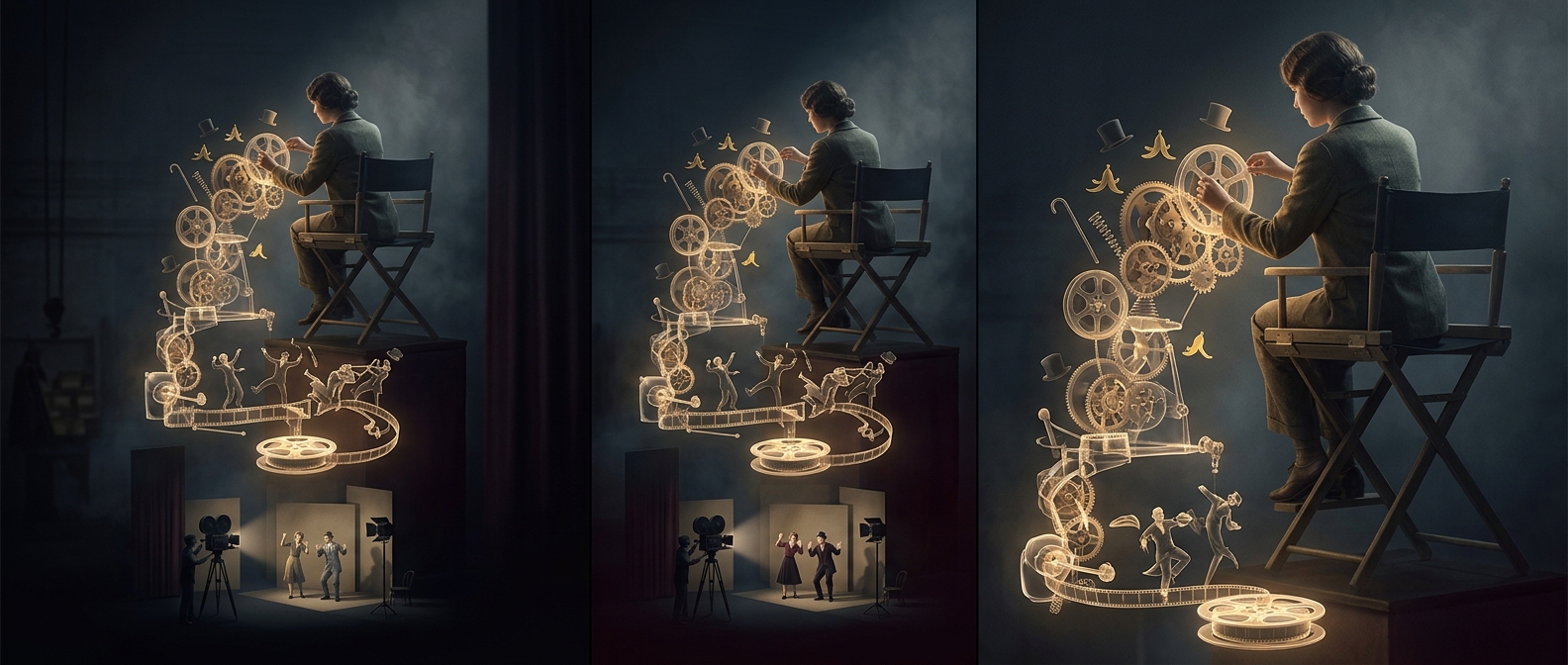
In Keystone’s fast-moving silent comedies, directing was not always a matter of standing apart from the action. Mabel Normand could help shape a scene from inside it: performing, judging how a gag played, and guiding her co-stars. That made her a director in practice as well as a screen performer, even when later accounts gave more attention to the men around her.
Comedy Built Through Physical Decisions
A slapstick sequence depends on precise choices: where a performer moves, when a collision or fall happens, and how long the camera holds before the next gag. Normand’s experience as both actor and director put her in a position to make those choices while understanding what they demanded of the performers. Her own stunts gave her firsthand knowledge of the timing and physical commitment the comedy required.
That context matters for Charlie Chaplin’s early Keystone work. He was still a newcomer when Normand directed him, so the familiar image of Chaplin as a fully formed comic auteur can obscure how comedy was developed collaboratively on set. Normand was among the people helping shape the performances and scenes that audiences saw.
Why Her Contribution Was Easy to Miss
Silent comedy is often remembered through its most famous faces, while the work of directing can disappear behind the performances. When a woman performed, staged action, and directed male co-stars, those roles could be especially easy to separate in later retellings: the man became the comic genius, while her influence receded.
Recognizing Normand’s role changes the picture of Keystone comedy. Its physical humor was not shaped by Chaplin alone; it also came from a woman who could devise the action, perform it, and direct others through it.