How Poe’s obituary became a character attack
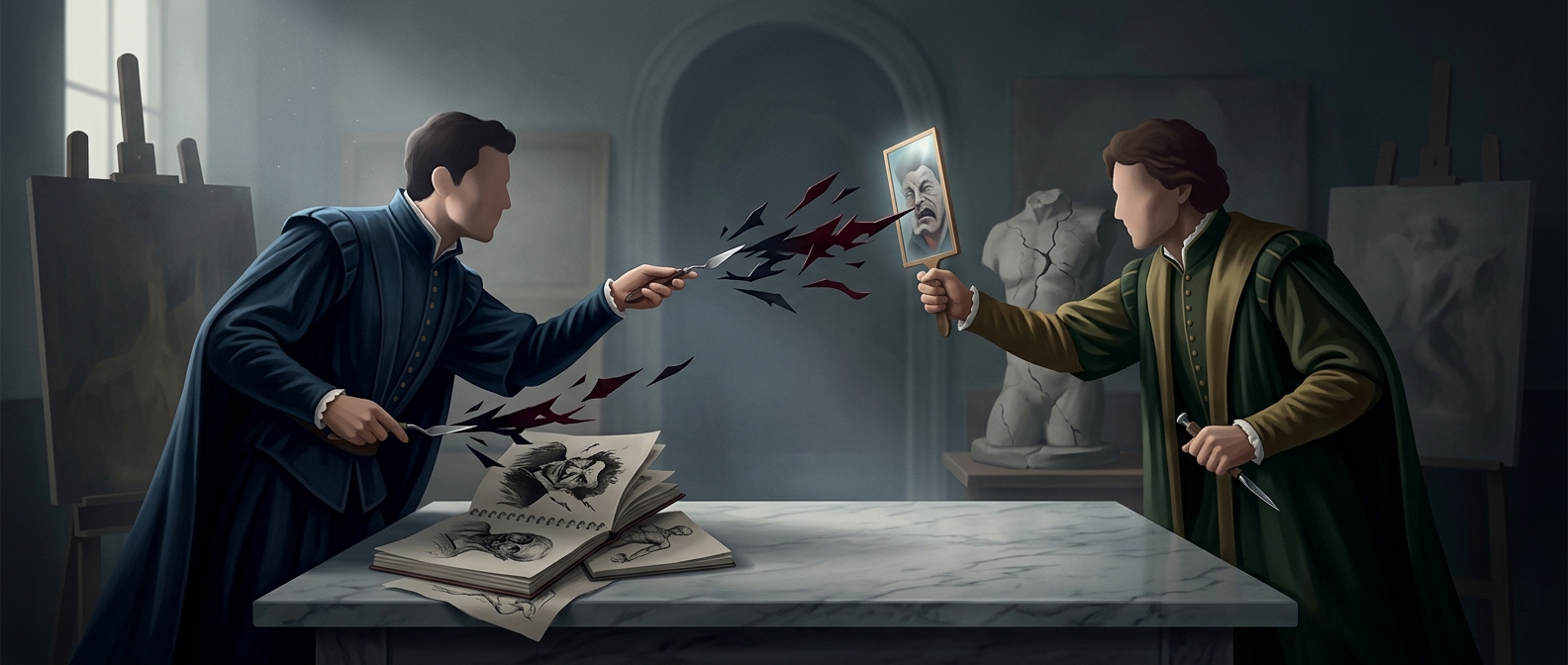
After Edgar Allan Poe died in 1849, Rufus Griswold published an obituary under the pseudonym “Ludwig.” Griswold was not a neutral observer: he was a literary critic with a strained relationship with Poe, who had publicly criticized him. Writing under a borrowed name let Griswold present his judgment as though it came from an outside commentator.
The obituary did more than report Poe’s death. It cast him as morally disreputable, dwelling on alleged drinking and depravity rather than treating those claims cautiously or separating them from his literary work. Because it appeared at the moment readers were looking for an account of the dead writer, it helped establish a damaging story before Poe could answer it.
The obituary was only the beginning
Griswold later extended that portrayal in a memoir attached to an edition of Poe’s writings. The distinction matters: the obituary supplied a sharp first impression, while the memoir gave readers a longer biographical frame through which to interpret Poe. Reprinting Poe’s work alongside Griswold’s account also placed the hostile portrait close to the literature itself.
Poe’s reputation was not erased—his writing continued to circulate—but Griswold’s version helped make the image of the unstable, dissolute author part of how readers encountered him. A pseudonymous obituary could therefore outlast its disguise: the name “Ludwig” concealed the writer, while the story it told became attached to Poe.