Why Narnia’s mix bothered Tolkien
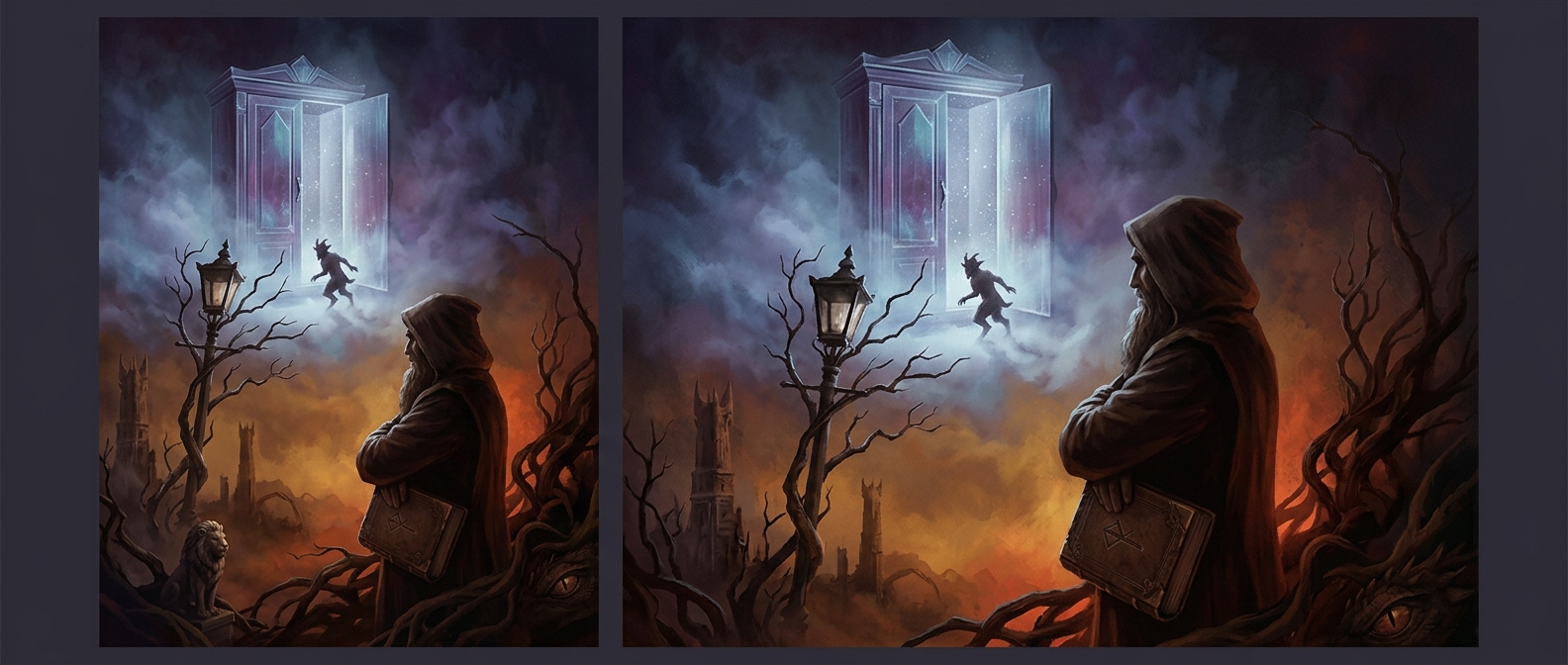
In The Lion, the Witch and the Wardrobe, children enter a world where a Greek faun can share the landscape with talking beavers—and where Father Christmas arrives with gifts. C. S. Lewis treated that collision as part of Narnia’s imaginative freedom. J. R. R. Tolkien found it jarring: to him, the figures seemed drawn from different mythic worlds without a convincing reason to belong together.
The disagreement was more than a matter of taste. Tolkien cared deeply about the feeling that an imagined world had its own history and internal logic. He built Middle-earth through connected languages, peoples, legends, and timelines. When a familiar figure such as Father Christmas appeared alongside creatures from classical mythology, the pieces could feel less like parts of one world than like separate traditions placed side by side.
Two different ideas of fantasy
Lewis was more willing to let a story combine inherited images if they served its emotional or spiritual purpose. Narnia’s mixture gives readers a recognizable, storybook landscape, while its Christian themes shape the larger meaning of the adventure. The book does not ask its creatures to come from a single mythological system.
Tolkien’s objection highlights a real creative tradeoff. A collage of myths can make a fantasy world feel immediately rich and surprising; a tightly connected mythology can make it feel ancient and coherent. Each approach asks readers to accept a different kind of imaginative contract.
Their disagreement did not mean Tolkien rejected Lewis as a friend or fellow writer. It shows how sharply two major fantasy authors could differ over what made an invented world believable—and why Narnia’s memorable mixture delighted some readers while bothering Tolkien.