A Millennium project that outlasted its deadline
The London Eye was conceived as a celebratory attraction for the turn of the millennium, not as a permanent fixture on the South Bank. Its success changed the calculation: steady demand made the wheel valuable enough to keep operating, and it became part of the city’s visitor economy rather than a short-lived event installation.
That shift is more than a story of popularity. A landmark attraction needs a dependable stream of riders to justify its upkeep and the riverside space it occupies. The Eye’s appeal is easy to understand: it turns a familiar city into a slow-moving panorama, giving visitors time to pick out the Thames, bridges and rooftops from above.
Why the ride takes half an hour
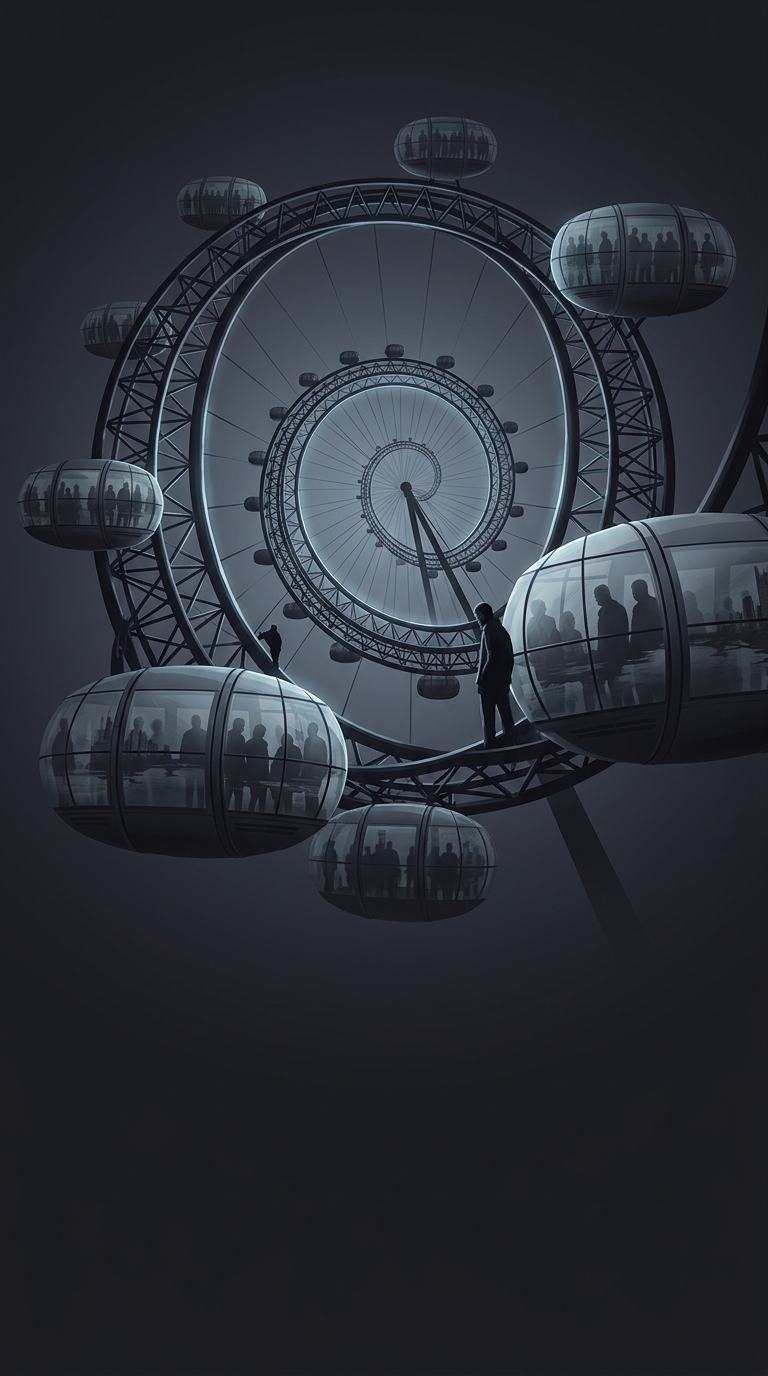
Each glass capsule is attached around the outside of the wheel. As the structure turns, the capsules stay upright, so passengers can look out through the glass without the pod swinging like a conventional amusement-park gondola. The wheel moves slowly enough for boarding and views to feel unhurried; one circuit takes about 30 minutes.
That leisurely pace also makes the ride work as sightseeing. Instead of offering one sudden view at the top, the Eye gradually changes the angle, revealing different parts of London throughout the trip. What began as a time-limited celebration thus became a lasting attraction: the city’s skyline itself supplied a reason for visitors to keep coming back.