A flock problem with a visual trigger
In a crowded poultry flock, one bird’s injury could become a cue for further attacks. Chickens peck at conspicuous marks, and a wound could draw repeated attention until the injured bird suffered more damage. Farmers therefore tried to interrupt the chain before it spread through the flock.
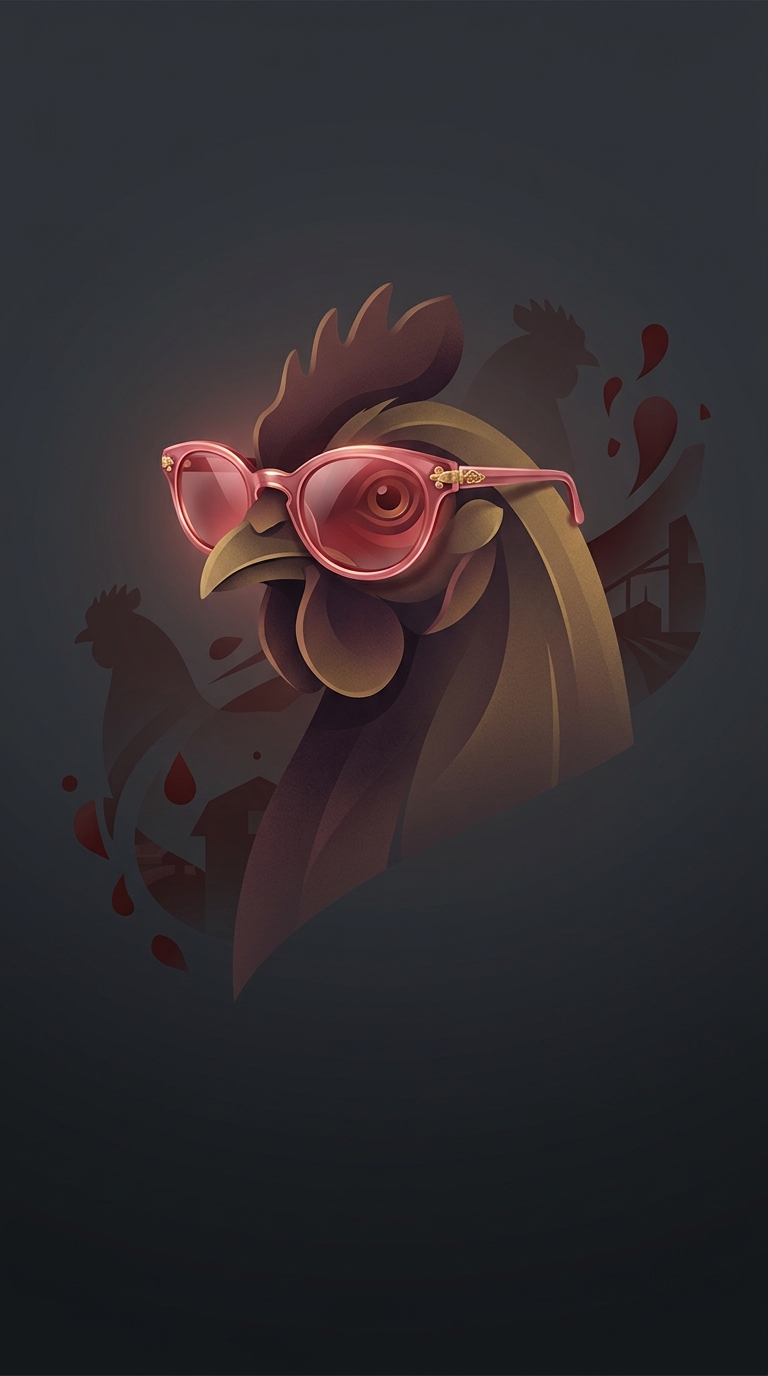
The rose-colored lenses were meant to make fresh blood less visually striking. They did not change the birds’ behavior directly; they changed the scene the birds saw. That made the glasses a blunt form of behavior management, aimed at a particular trigger rather than at the crowding or stress that could help produce pecking in the first place.
A wearable fix, with limits
These devices turned a flock-wide problem into a task performed bird by bird: catch each chicken and fit it with eyewear. Designs varied, but the underlying bargain was the same—add a small restraint to each animal in hopes of preventing costly injuries across the group. The approach was practical in a way that redesigning a whole poultry operation was not, especially when farmers were trying to manage large numbers of birds.
But tinted lenses could only address what a chicken could see. They could not remove the conditions that prompted aggression, and they could not guarantee that pecking would stop. The spectacles are a striking example of an early industrial-era instinct: when a crowded system produced a recurring problem, try to control the behavior with a device—even if the device had to be fitted to every bird.