Why bread can change the order
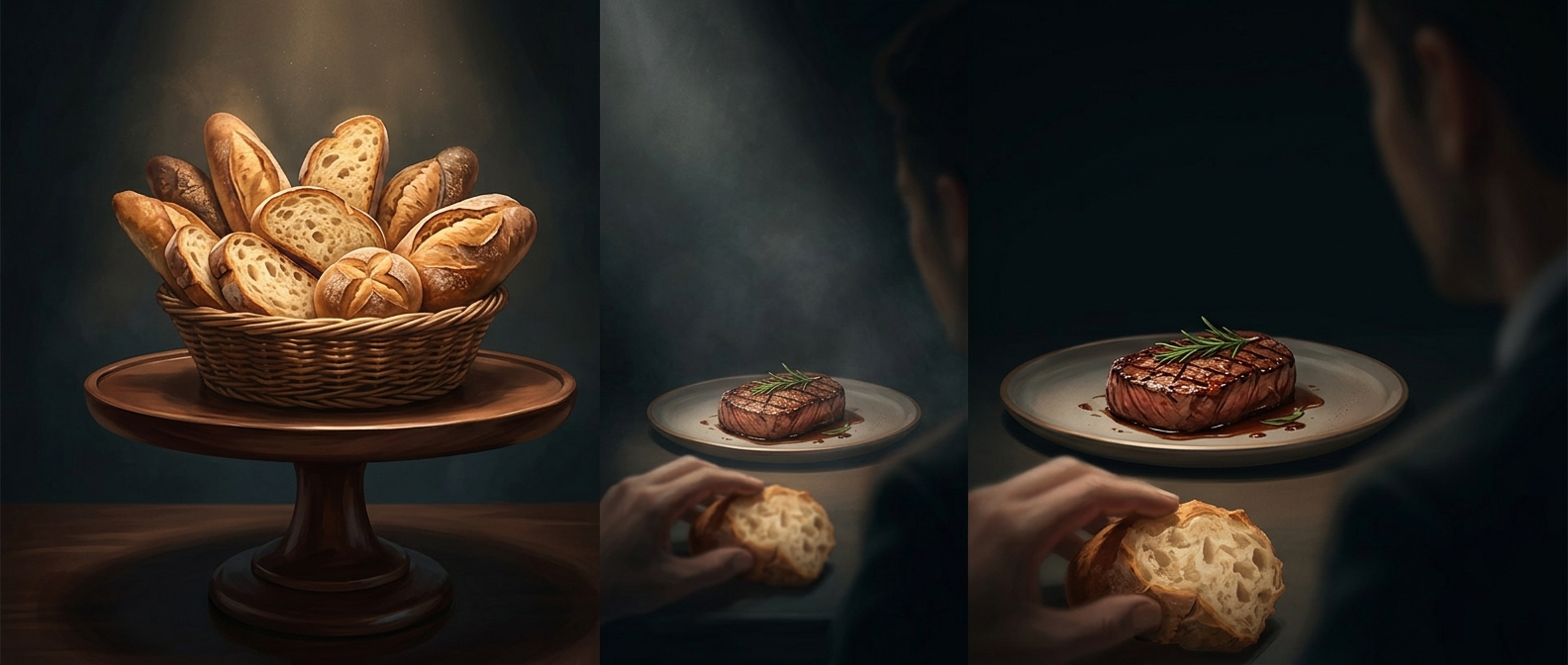
Bread arrives while diners are still deciding, so it can affect appetite before the main course does. Eating a few pieces adds food to the stomach and takes the edge off hunger. By the time a steak or other meat entrée arrives, a diner who feels less hungry may choose a smaller portion, skip an extra side, or stop sooner.
That matters because the restaurant’s economics are not determined by the menu price alone. What counts is the contribution margin: the money left from a sale after paying the costs directly tied to that dish. A meat cut may bring in more revenue than bread, but it can also cost more to buy. If inexpensive bread reduces demand for a costly entrée, the restaurant could lose more in sales than it saves in food costs.
A low-cost gesture with a tradeoff
Still, bread can be an economical way to make the wait feel less empty. Flour-based bread is often inexpensive relative to meat, and a basket also signals hospitality: guests have something to share before their meals arrive. Those benefits may help create a pleasant experience, even if diners eat a little less later.
The effect is not automatic. Some guests barely touch the basket; others may order the same entrée and simply leave less of it. For a restaurant, the useful question is not whether free bread fills people up, but whether its low cost and welcome help offset any reduction in higher-priced orders. The basket can soften hunger—and quietly shift what a diner has room for when the menu decision becomes a meal.