A rainstorm meets a temporary room
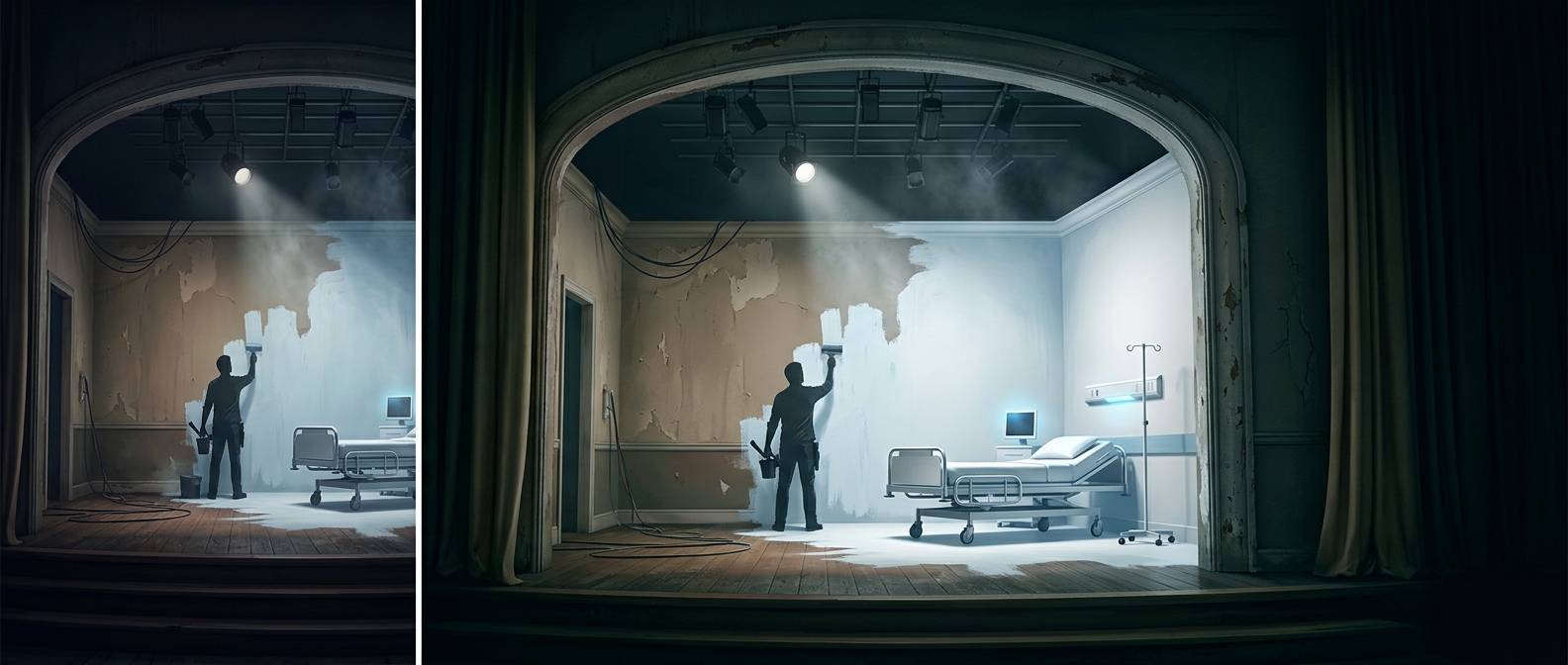
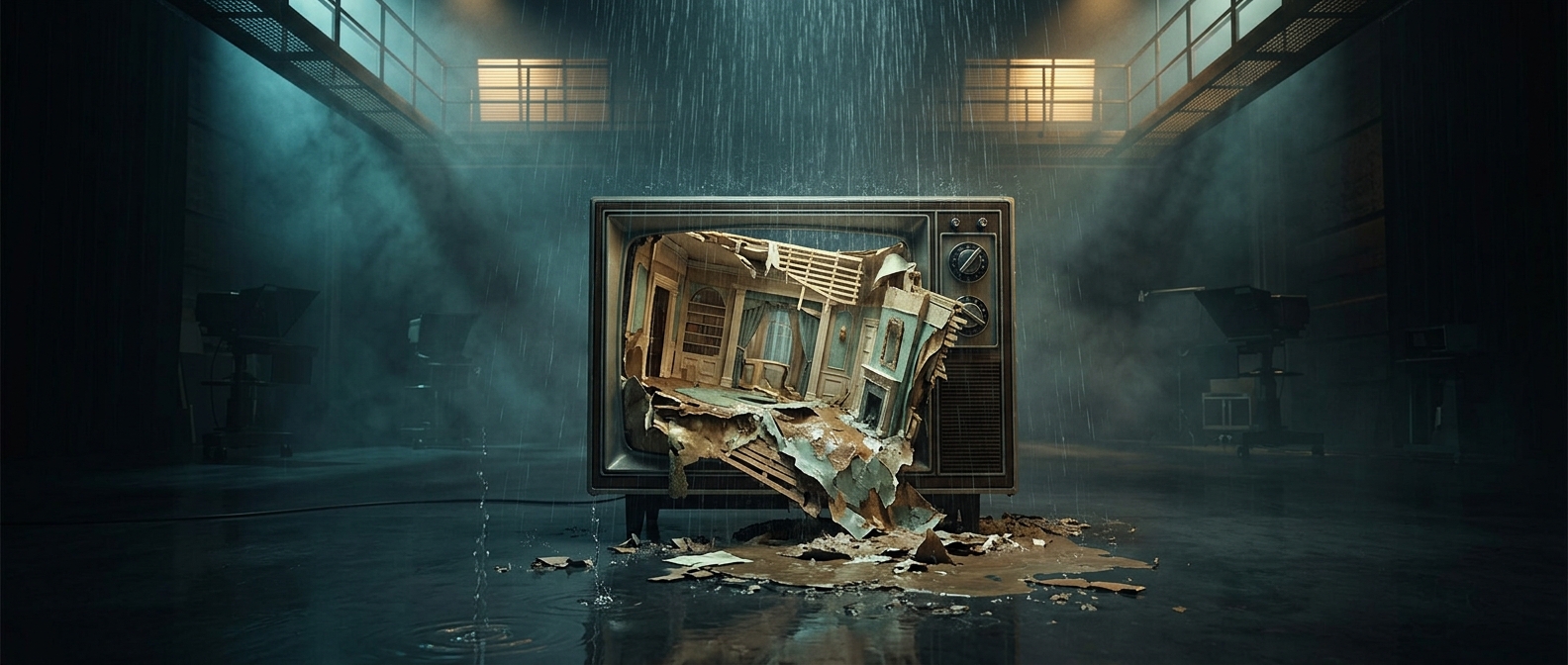
A television room may look solid on camera, but its walls are often scenic flats: lightweight panels built to create the appearance of a room, not to support a real building. Thin facing materials are quick to paint, cut, and replace, which makes them useful on sets. They are also vulnerable to water. Once soaked, paper coverings can peel or sag, while damp panels may soften or bend.
The trouble starts above the frame
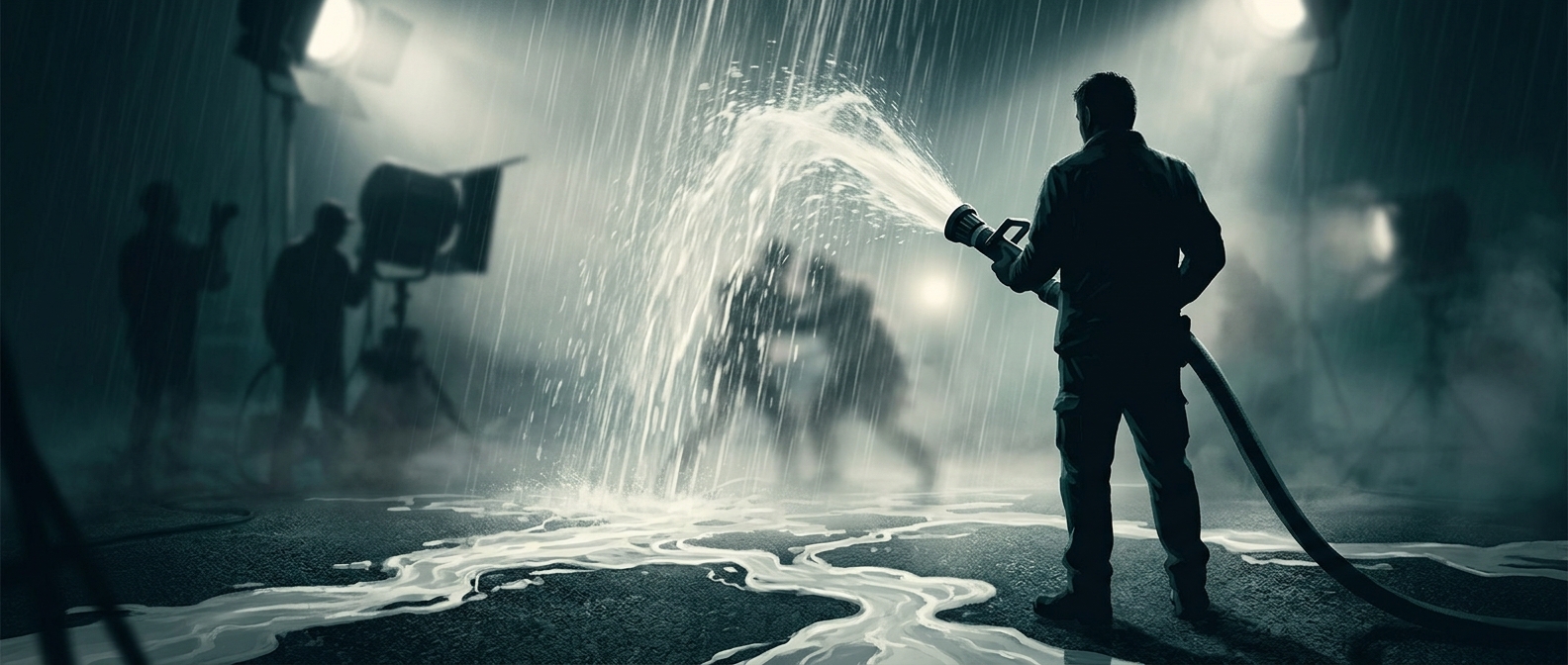
To make rain visible indoors, crews can send water down from rigs positioned over the set. The camera sees a storm; the set receives actual water. It runs down walls, collects at the floor, and can get into seams and edges that ordinary paint is meant to hide—not seal. A room designed for dry filming can become heavy, warped, and difficult to use again.
That creates more than a cleanup problem. A scene may need several takes, but wet walls and puddles change from one take to the next, making continuity harder. Water also has to be kept away from lights, cables, cameras, and other equipment, so the effect requires careful control as well as performance.
The set is part of the effect
A drenched room can look convincingly battered because the materials are light enough to show damage quickly. But that same vulnerability means a dramatic rain sequence may leave the production with a room that needs repair—or cannot be used again. On television, the apparent storm is brief; the physical consequences can outlast the scene.