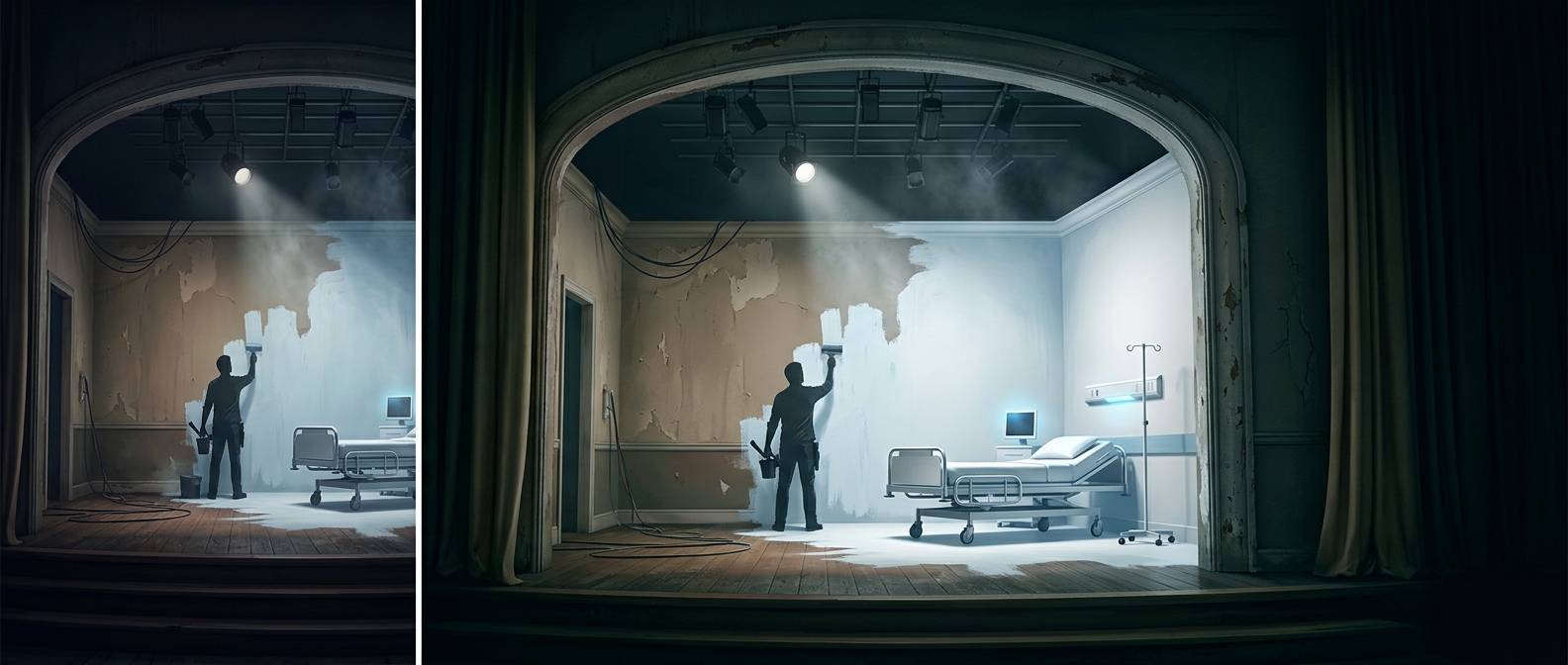
One set of walls, several believable places
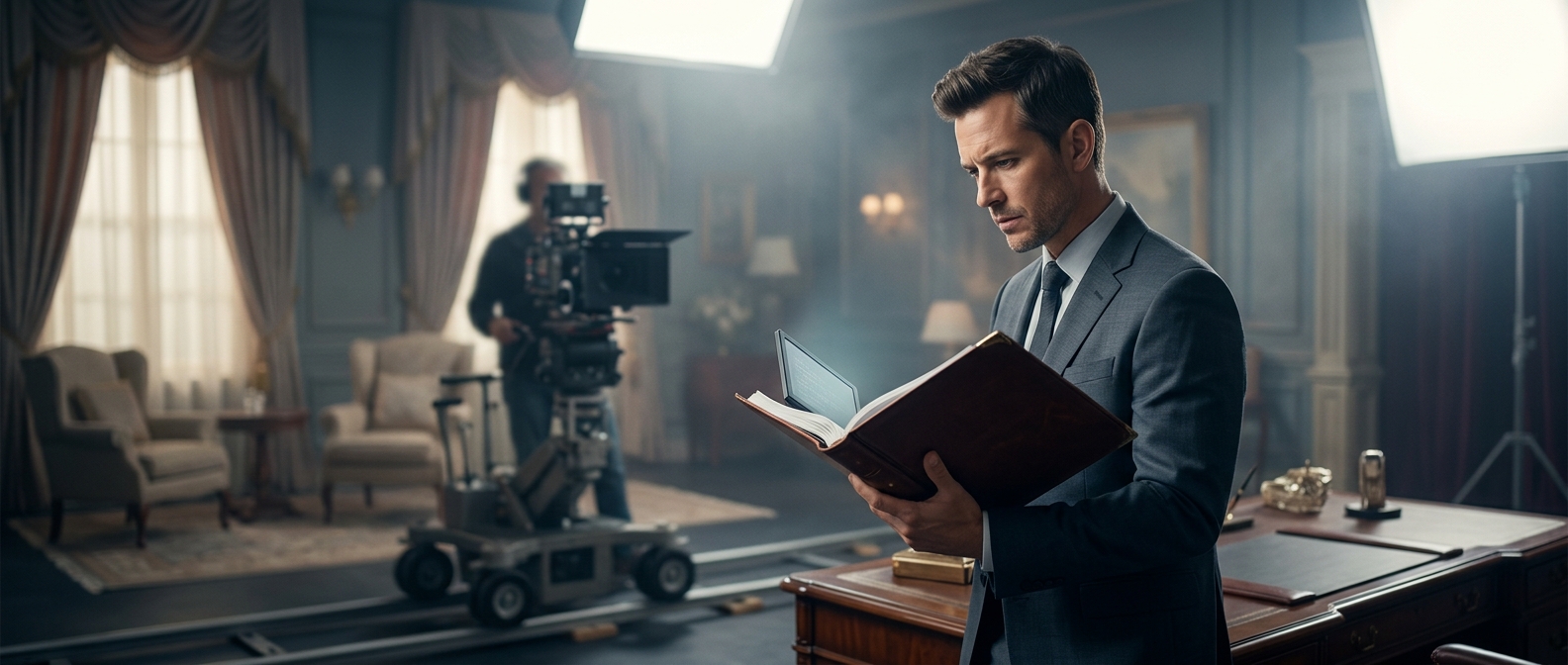
A daytime drama may need to move from a family argument to a hospital visit and then a police interview without building three complete interiors. Instead, the production can rearrange a limited collection of flats—lightweight, movable wall sections used to create rooms on a soundstage.
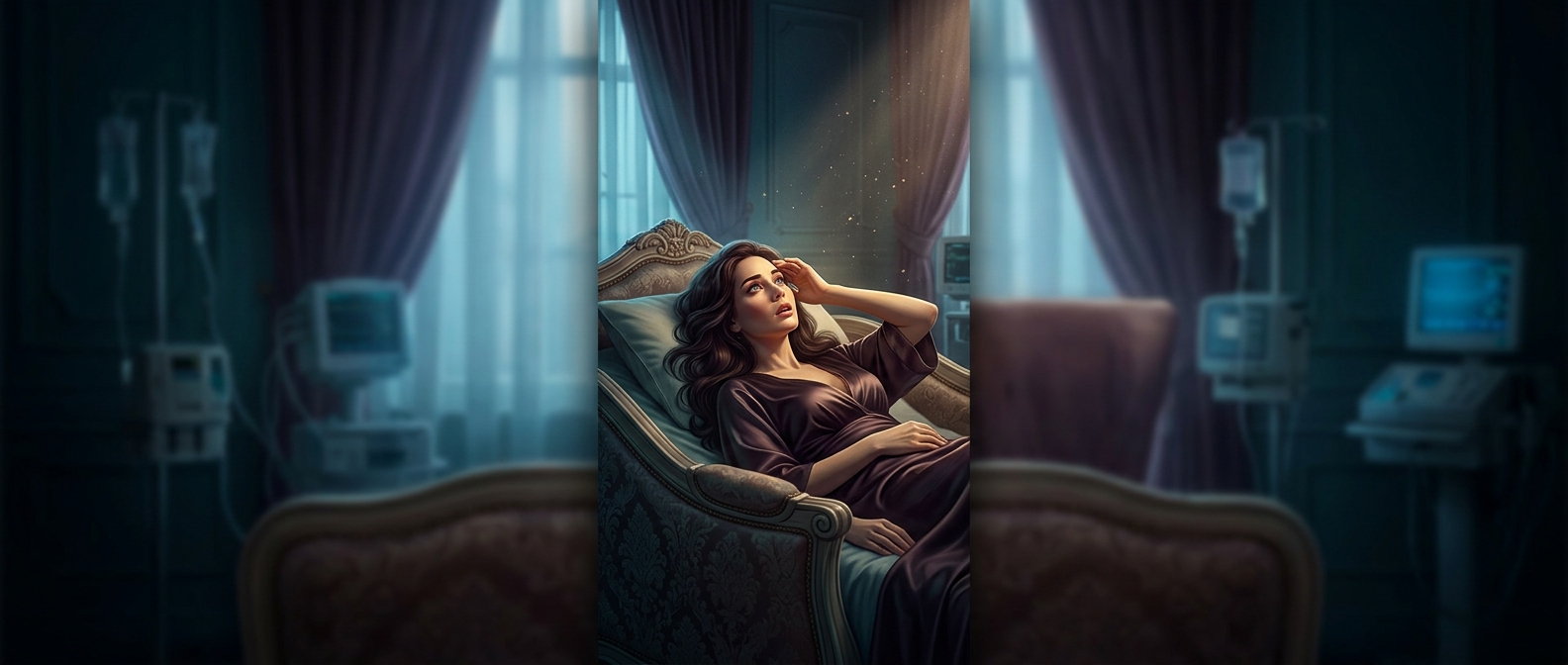
The same wall can read differently once the crew changes its surface and surroundings. Paint, wallpaper, doors, signs, furniture, and practical details such as a desk or medical equipment tell viewers what kind of room they are seeing. Camera angles help, too: the frame shows the finished corner, not the unused wall sections waiting just beyond it.
The production advantage—and the tradeoff
This setup makes frequent filming more manageable. Scenes in different story locations can be shot on the same stage, with the crew changing the room’s “dressing”—the removable objects and finishes that give a set its identity. A smaller, reusable set also means less construction and less space devoted to locations that might appear only briefly.
Reuse does impose limits. The available walls and camera positions shape how a room can be arranged, and a set must be reset carefully so that doors, furniture, and other details match from one scene to the next. The illusion works because viewers follow the characters and the story; they rarely see the backstage geography that makes the quick change possible.
So the mansion, station, and hospital do not have to exist as separate buildings onstage. Often, a few changed details—and a camera pointed in the right direction—are enough to make the same room serve three stories.