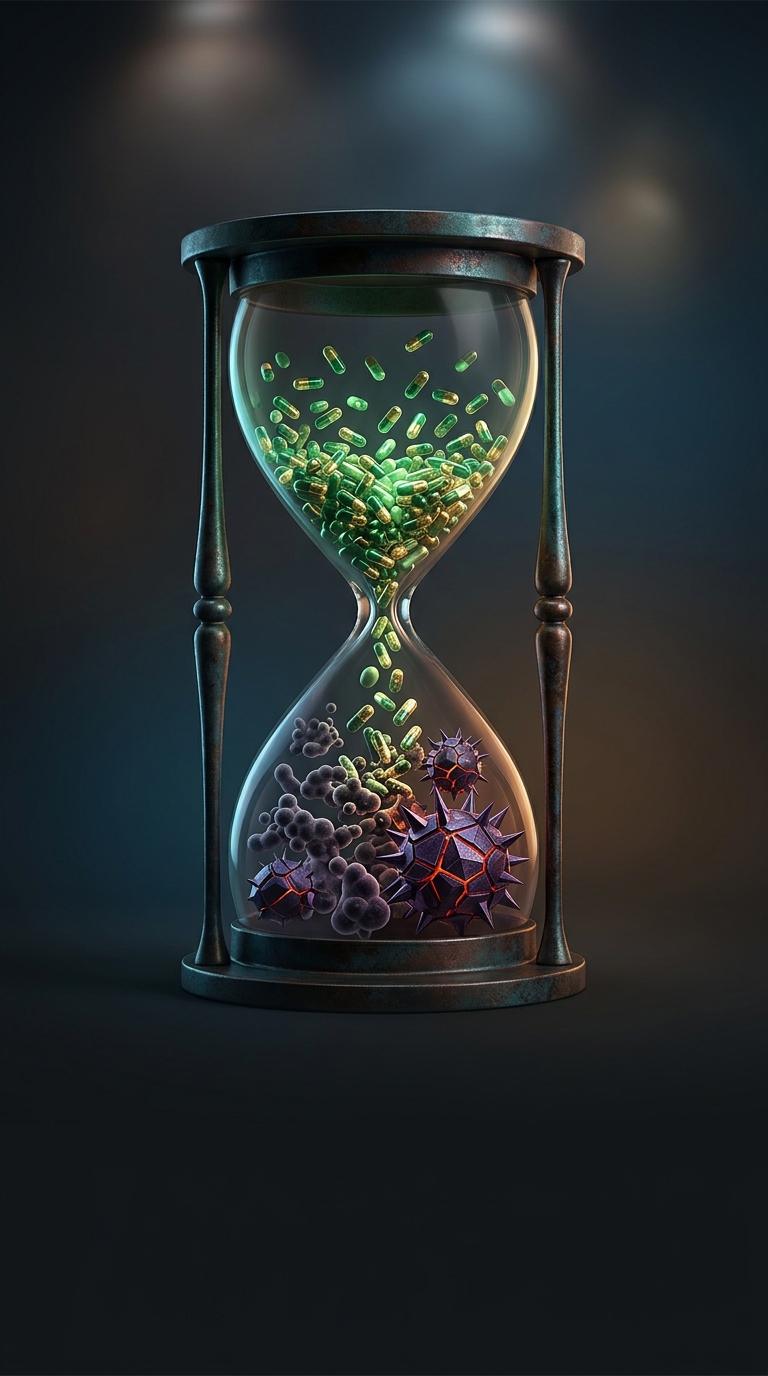
How resistance gains a foothold
Antibiotics do not teach bacteria to resist them. Instead, a bacterial population may already contain a few cells with traits that help them withstand a drug. Those traits can arise through random genetic changes, or bacteria can acquire resistance genes from other bacteria. When an antibiotic kills susceptible cells, resistant ones have more room to survive and multiply. This is natural selection in action.
The drug can also favor resistance when it is unnecessary, such as when an antibiotic is taken for a viral illness, or when it is used differently from the prescription. The goal is not simply to take a drug for a certain number of days: clinicians choose a treatment and duration for the infection, and patients should follow those directions rather than stopping early or extending treatment on their own.
Resistance can travel beyond one patient
Resistant bacteria can spread between people, through contaminated surfaces, or in health-care settings. Resistance genes can also move between bacteria, sometimes crossing from one bacterial species to another. So a course of antibiotics can have consequences beyond whether it clears one person’s infection: it can help resistant bacteria gain an advantage and leave more opportunities for them to spread.
That matters when an infection later needs treatment. A resistant bacterium may not respond to the usual medicine, forcing clinicians to use alternatives that may be less suitable or harder to give. If resistance accumulates across several drugs, some infections become much more difficult to treat. Using antibiotics only when they are appropriate—and taking them exactly as prescribed—reduces needless selection pressure while preserving effective options for future infections.