A boast turned into a sentence
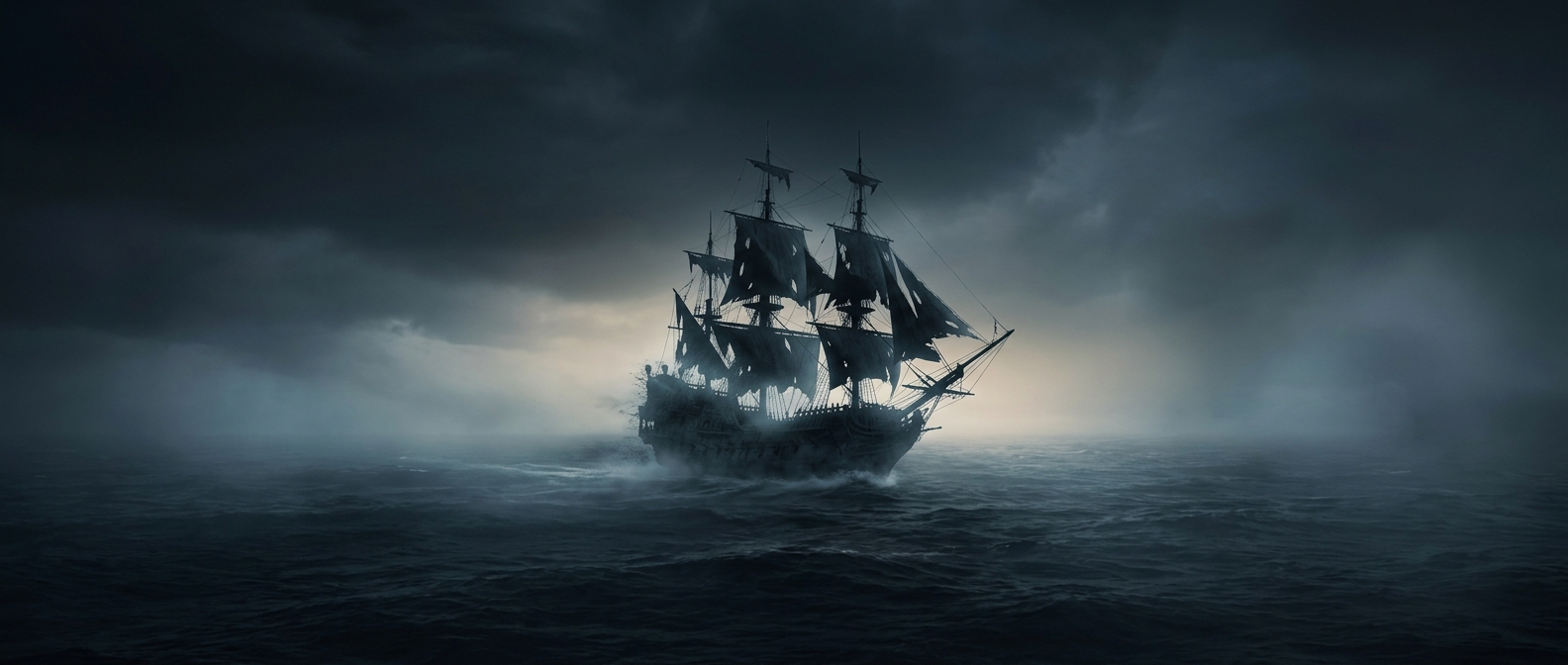
The Flying Dutchman is a maritime legend, not a single fixed account. In its familiar form, a captain vows to round the Cape of Good Hope despite a violent storm. The vow is not merely reckless seamanship: it is a challenge to forces he cannot command. The curse answers by making his defiance last forever. He gets the voyage he insisted on, but never the safe arrival that would give it an end.
Why the sea makes the punishment fit
For sailors, a cape was a real obstacle as well as a dramatic setting: wind, waves, and difficult navigation could make a passage perilous. The story turns that danger into a moral trap. A captain who treats the sea as something he can master is condemned to remain at its mercy, repeating the passage without reaching harbor.
That image gives the legend its force. The ship is not simply lost; it is caught between departure and destination, unable to join the ordinary world of vessels that finish their journeys. Its endless sailing makes one moment of pride permanent—and turns a storm at sea into a warning about refusing to yield when nature leaves no safe way through.