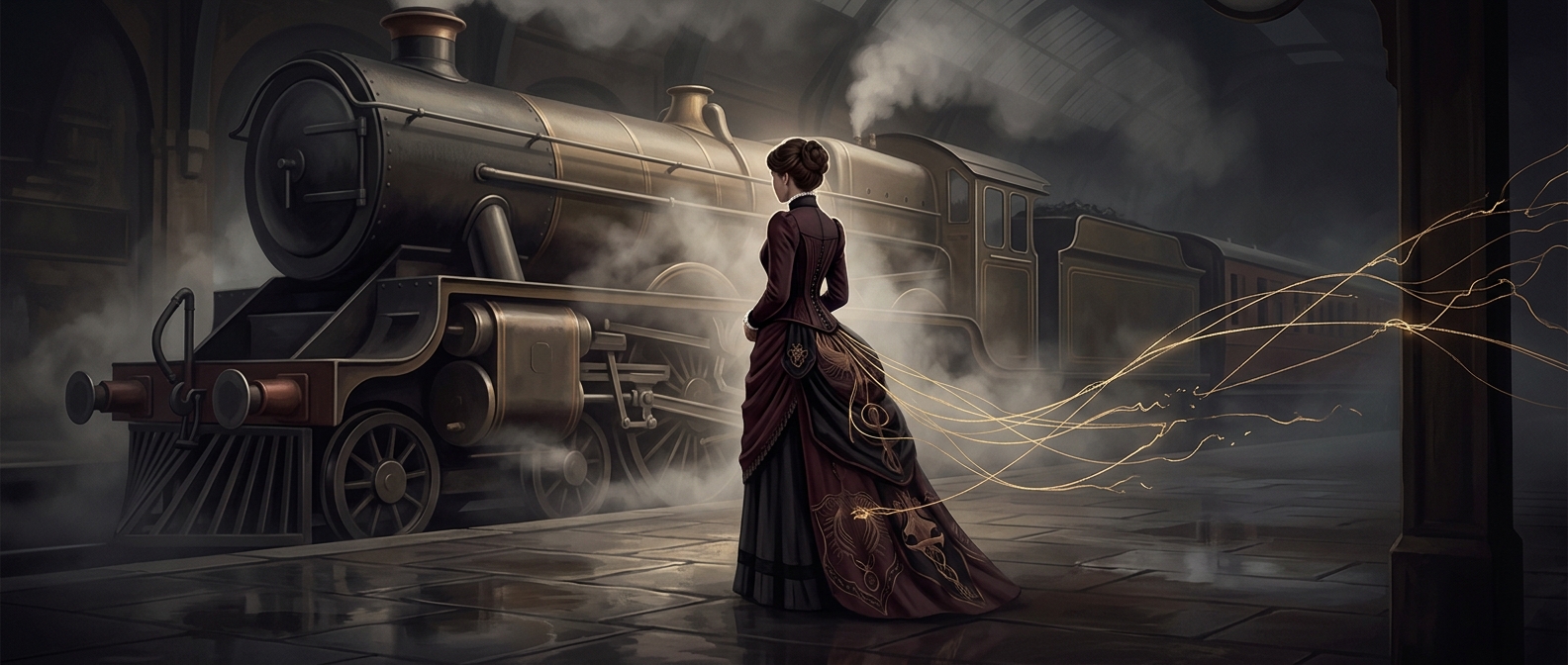
Why speed became a question about women’s bodies
In the Victorian era, railways made fast, mechanically powered travel part of ordinary life. That change prompted real questions about how the body handled motion, jolting, and speed. But some medical warnings went beyond discomfort: they treated women’s reproductive anatomy, especially the uterus, as unusually vulnerable to travel.
The concern made sense within a culture that often described women as physically delicate and defined their health through their reproductive capacity. The uterus was cast as a weak link, so a new experience like high-speed rail could be framed as a threat to women’s bodies—even when the train itself kept running faster.
The warning reveals the era’s assumptions
This was not simply a technical debate about what a locomotive could do. It also reflected who was considered suited to modern public life. If women were thought too fragile to withstand the speed, then travel could be portrayed as an activity that endangered them, reinforcing limits on their independence without needing to bar them outright.
The train’s growing speed exposed the gap between engineering capability and inherited ideas about female fragility. The striking point is that the alleged weak link was not the railway at all: it was a body interpreted through Victorian assumptions about women.